Portuguese
  Spanish


Born from a doctoral thesis at UFPI, the technology extracts natural foam from the buriti petiole and transforms it into panels for slabs, ceilings, and walls
The buriti biofoam was born from a simple and ingenious observation: the dry stalk of the palm tree, treated as waste in the interior of Piauí, had a density similar to that of styrofoam used to insulate buildings. From this perception, an engineer transformed an abundant residue from the Northeast into a thermal and acoustic insulator with sustainable appeal and its own production chain.
The material is extracted from the buriti petiole, the structure that supports the palm leaves, and molded into Thermaa line panels, designed for slabs, ceilings, and walls. A piece of plant that was going to be discarded became a construction input with market value.
From discarded stalk to insulator
For a long time, the buriti stalk was worthless. Communities used the fruit, pulp, and oil, but the structure that holds the leaves was left over and discarded. No one saw it as an industrial raw material.
-
Brazil Constructs 6.5 km Tunnel to Overcome Toughest Stretch in São Francisco River Water Transfer, Delivering 20,000 Liters per Second to Semi-Arid Northeast

-
Nearly Every Cable Car Worldwide, from Alpine Ski Lifts to South American Air Metros, Traces Back to the World’s Largest Cable Car Manufacturer, an Austrian Company Founded in 1893
-
Toxic Waste from Brazilian Cassava Processing Transformed into Patented Eco-Friendly Bricks, Passing National Standards and Promising Lower Costs
-
Brazil’s Busiest Port to Triple Soybean Loading Speed with $1.1 Billion Investment in Paraná Terminal, Reaching 8,000 Tons per Hour


The turning point came when this residue was looked at with material engineering eyes. Instead of asking how to discard the stalk, the question became what it could replace. The answer appeared in the comparison with one of the most common and most polluting construction materials: expanded polystyrene, the popular styrofoam.
According to UFPI, the material was developed from a doctoral thesis in the Graduate Program in Science and Materials Engineering at the university. It’s not a garage guess: it’s academic science applied to a real problem in the semi-arid region.
The insight: density similar to styrofoam
The technical heart of the story lies in a happy coincidence. Engineer Felippe Fabrício noticed that the density of buriti foam was close to the density of polystyrene used as an insulator in constructions. Similar density suggests similar thermal behavior, and it was this clue that opened everything up.
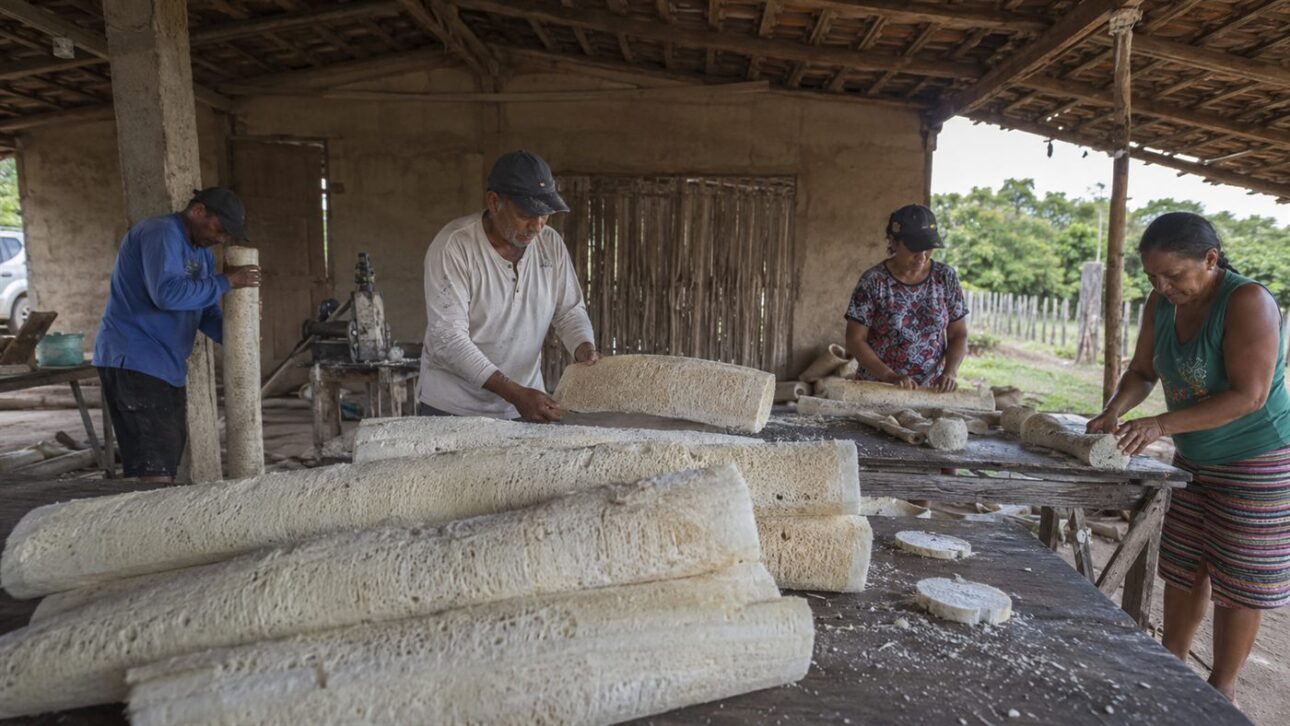
Insulators work precisely because they are light and full of trapped air, which hinders the passage of heat and sound. The natural foam of the buriti has this porous and light structure by nature, without needing fossil derivatives to achieve it. The plant already provides, for free, the architecture that the industry spends energy and chemicals to manufacture.
This equivalence is what gives technical credibility to the product. It is not a worse and cheaper substitute, but a material with performance potential comparable to the market standard, with the advantage of being renewable.
What is buriti biofoam and the Thermaa line
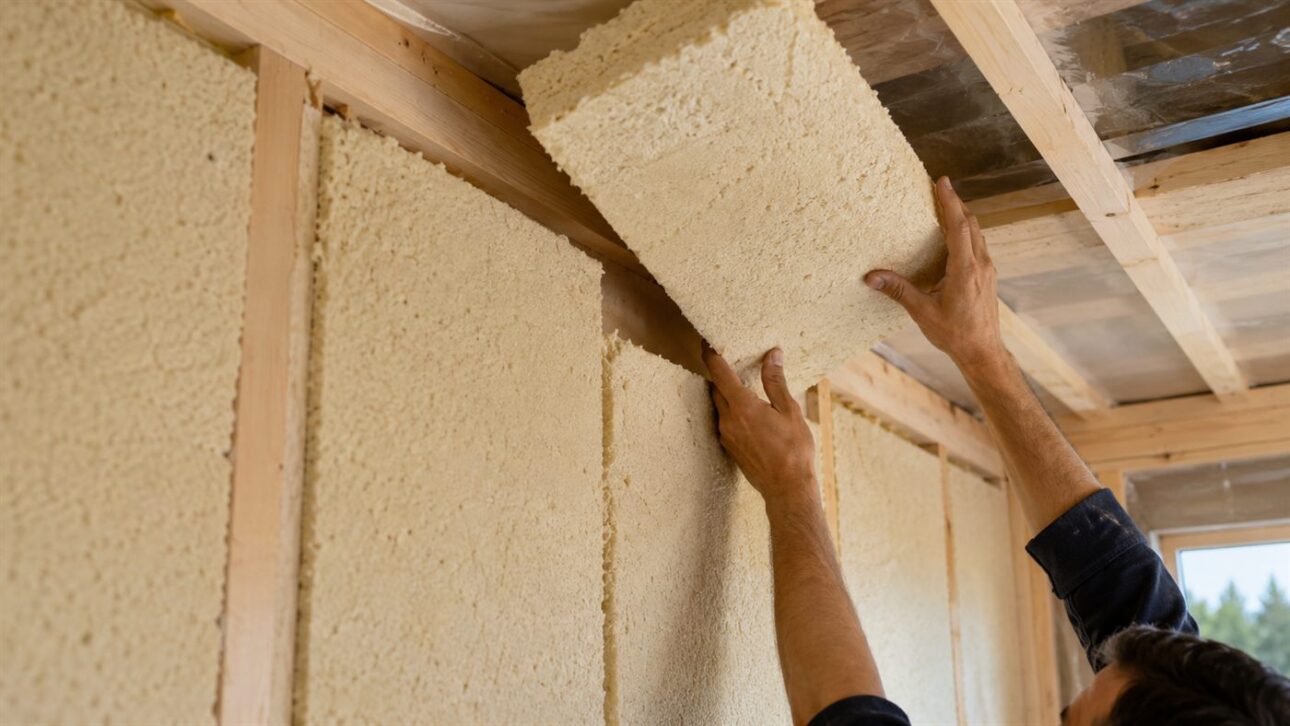
In practice, buriti biofoam is transformed into pieces of the Thermaa line, developed for construction systems focused on the thermal performance of buildings. They are boards and panels designed for three main applications: precast slabs, modular ceilings, and wall panels.
The role of these elements is known to builders: to reduce the heat exchange between inside and outside, dampen noise, and increase the thermal and acoustic comfort of the environment. The better the insulation, the less air conditioning and heating needed, and the lower the energy bill over the years.
The difference is the origin. Instead of deriving from fossil fuel, the raw material comes from a palm tree typical of Brazil, which gives the product a dual appeal: performance and sustainability in one item.
Born from a thesis at UFPI
The buriti biofoam did not emerge from a large industry but from within the public university. The technology is the result of a doctoral thesis at the Federal University of Piauí (UFPI), in the field of Materials Science and Engineering, and became a startup to bring the innovation to market.
This path, from the laboratory to the company, is exactly what is expected from impactful research. Science solved the technical problem, and entrepreneurship took care of turning the discovery into a product and income.
The regional detail matters. A university in Piauí looking at a palm tree from Piauí to solve a global building problem is the type of innovation rooted in the territory, valuing what the region already has in abundance.
The recognition: Lab Procel II and energy efficiency
The potential of the technology was endorsed by one of the main national programs in the sector. Buriti Biofoam was selected as one of the four companies in the final stage of Lab Procel II, an initiative focused on innovation in energy efficiency in civil construction, based in Teresina.
According to Agência Sebrae, the startup has been collecting awards in the innovation ecosystem. In Lab Procel II, the four selected initiatives received investments totaling over R$ 2 million to develop solutions that reduce energy consumption in buildings.
Such endorsements are what separate a good idea from a viable business. They bring resources, technical validation, and visibility, three essential things for a new material to break through the conservative barrier of the sector.
Income for Quilombola Families of the Parnaíba Valley
The most beautiful side of the story might be the social one. To produce the foam, the company started buying dried buriti stalks from communities in the Parnaíba River Valley, between Maranhão and Piauí, including rural and quilombola families.
What was once waste thrown away has become an extra source of income for those who collect and prepare the raw material. An entire production chain was born around a plant residue, linking city works to sustainable extraction in the hinterland.
This fit is rare and valuable: the same innovation that offers a better material for construction also distributes income at the base, without relying on large industries or imported raw materials. It’s development that starts with the palm tree and reaches the wall.
Why a Natural Insulator Matters
Styrofoam and mineral wool have dominated thermal insulation for decades, but they come at an environmental cost: they are fossil-derived or from energy-intensive processes, and generate waste that is difficult to recycle. Seeking renewable substitutes is a strong trend in sustainable construction.
The buriti palm enters this race with clear advantages. It is abundant in Brazil, grows naturally, and its structure already offers the necessary lightness for insulation. Replacing a fossil-derived product with a renewable plant foam is the type of substitution that construction decarbonization needs to multiply.
If it gains scale and certifications, such a material can occupy a huge space in a market that only grows as buildings are increasingly required to meet energy performance standards.
From the Piauí Hinterland to the World
The ambition doesn’t stop in the Northeast. The startup has already taken the buriti biofoam to international innovation showcases, showing that a solution born in the interior of Piauí can interest markets seeking sustainable materials worldwide.
The path to large-scale shelving still has steps: certification, scaling up production, standardizing raw materials, and gaining the trust of construction companies. These are the typical challenges of any new material that wants to challenge an established standard.
Even so, the starting point is powerful and counterintuitive: a palm stalk that was thrown away became a construction insulator, a national award, and income for quilombola communities. How many other solutions like this are hidden in what Brazil today treats as waste?