Portuguese
  Spanish


The project that unlocks the arrival of transposed water to Rio Grande do Norte was completed in 2026 and has an official inauguration in July, overcoming the most complex point of the Apodi Branch
The Major Sales Tunnel solves a problem that seemed unsolvable: how to make the transposed water from the São Francisco River cross a rocky massif and reach the west of Rio Grande do Norte. The answer was to excavate 6.5 kilometers of tunnel within the rock, a structure capable of conducting up to 20 cubic meters of water per second, equivalent to 20,000 liters every second, towards the Potiguar hinterland.
The project overcame the most complex section of the branch and was completed in 2026, with an official inauguration scheduled for July, in Luís Gomes (RN). It is heavy engineering at the service of the most basic thing there is: water for those who have always lived with drought.
The section that seemed impossible
Every major water project has a point that stalls everything, and in this branch, that point was the crossing of a rugged terrain that separated the already transposed water from its final destination. Without overcoming this obstacle, the rest of the project delivered results to no one.
-
Nearly Every Cable Car Worldwide, from Alpine Ski Lifts to South American Air Metros, Traces Back to the World’s Largest Cable Car Manufacturer, an Austrian Company Founded in 1893

-
Toxic Waste from Brazilian Cassava Processing Transformed into Patented Eco-Friendly Bricks, Passing National Standards and Promising Lower Costs
-
Brazil’s Busiest Port to Triple Soybean Loading Speed with $1.1 Billion Investment in Paraná Terminal, Reaching 8,000 Tons per Hour

-
Cost of Installing Subflooring in 2026: The Importance of Proper Slope to Prevent Water Damage and Costly Repairs


The solution was not to bypass the mountain, but to go through it. Instead of long surface detours, the engineers opted to drill through the rock and create a direct underground path for the water. It is the kind of decision that increases costs and complicates the project in the short term, but resolves the bottleneck definitively.
According to the Palácio do Planalto, the Major Sales Tunnel is part of the structure that carries the waters of the São Francisco River to the west of Rio Grande do Norte via this branch. By drilling through the critical section, the project paves the way for the water to finally advance towards Potiguar.
6.5 km of rock for the water to cross
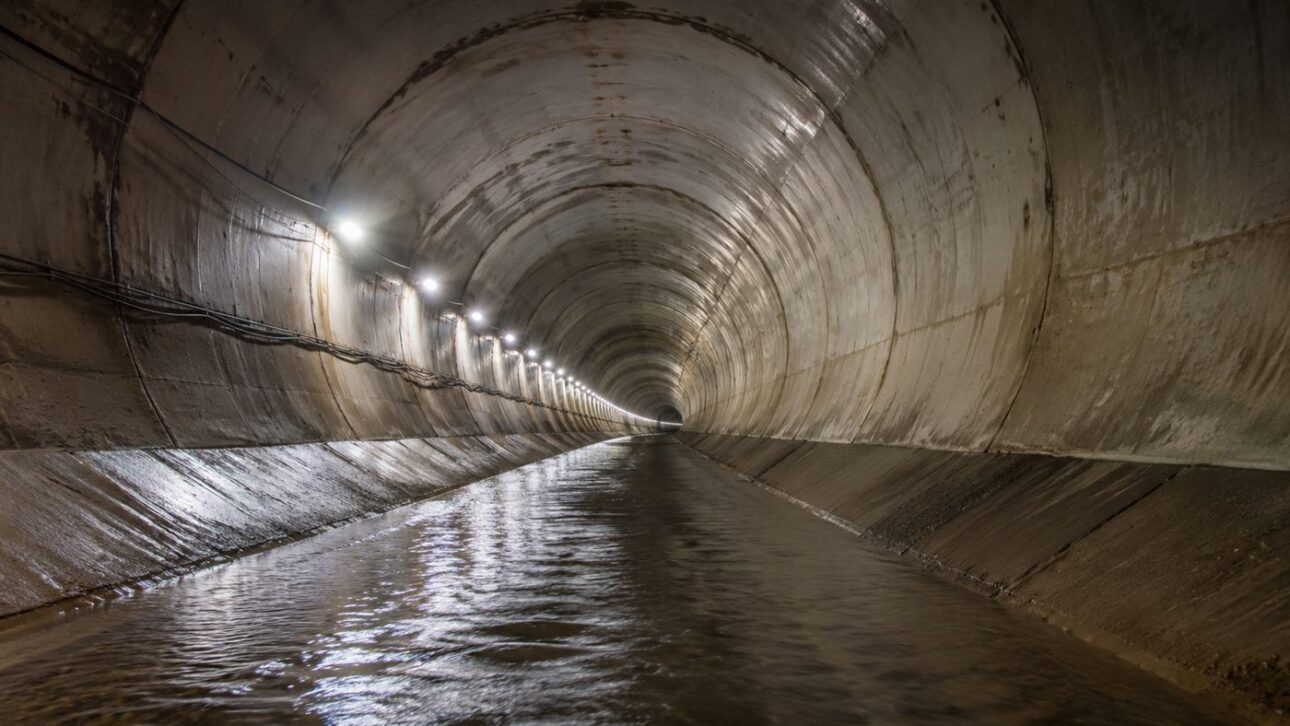
The tunnel’s numbers give the dimension of the achievement. It is 6.5 kilometers long, excavated to create an underground channel where water flows protected from evaporation and the terrain. The transport capacity reaches 20 cubic meters per second, a robust flow for a supply branch in the semi-arid region.
To get a sense of the volume, these 20,000 liters every second, dumped all at once, would fill a common household water tank almost instantly, and sustain the supply of dozens of municipalities along the route. It is river-scale water, channeled through a mountain range.
Doing this in rock requires drilling, containment, lining, and rigorous geotechnical control, all in a region of difficult access. It is not the glamorous part of the transposition, but it is the one that decides whether the water reaches the final point or not.
What is the Major Sales Tunnel and where is it located
It is part of one of the branches of the São Francisco River Integration Project, the PISF, popularly known as the transposition. The official inauguration of the structure takes place in July 2026, in Luís Gomes, in Rio Grande do Norte, on the border between Paraíba and the state of Rio Grande do Norte.
Its function is precise: to be the passage that connects what has already been built to the region not yet served. Without the tunnel, the transposed water would hit the terrain and not complete the journey to the west of Rio Grande do Norte.
This is why a relatively short work, of 6.5 km, has a disproportionate weight to its size. It is the key that opens the door to an entire stretch of regional supply.
How the São Francisco water reaches the west of Rio Grande do Norte
The logic of the transposition is to bring water from where there is plenty to where it is lacking. The São Francisco River, perennial and abundant, gives a small fraction of its flow, which is captured, pumped, and conducted through channels, stations, and now tunnels to the dry points of the northeastern interior.
The Apodi Branch is the segment that pulls this water towards Rio Grande do Norte. With 115.5 kilometers of extension, it carries the transposed water along the hinterland, and this tunnel is the missing link to overcome the toughest stretch of this path.
When the water crosses the tunnel, it ceases to be a promise and becomes real supply, reaching reservoirs and systems that distribute the resource to cities and communities that have historically depended on water trucks.
750 thousand people in 54 municipalities
The human impact is what gives meaning to all the engineering. The Apodi Branch is expected to benefit about 750 thousand people in 54 municipalities in the states of Rio Grande do Norte, Paraíba, and Ceará, enhancing the water security of one of the regions most affected by drought in the country.
For those living in the northeastern semi-arid region, piped and reliable water is not a comfort, it’s a life transformation. It means less dependence on rain, less spending on water trucks, better health, more economic activity, and more families staying on their own land.
According to Jornal Grande Bahia, the completion of the Major Sales Tunnel marks a decisive advance for water security and the development of the semi-arid region, precisely by unlocking the arrival of water to these populations.
A project that crosses three states
The water that passes through the tunnel does not respect state borders, and this is intentional. The branch’s route weaves through Rio Grande do Norte, Paraíba, and Ceará, in an arrangement where the infrastructure of one state serves the population of another.
This integration is the essence of the PISF: treating the supply of the Northeast as a single system, not as isolated works of each municipality or state. The artificial river, made of canals and tunnels, does what natural geography did not, linking the São Francisco basin to the distant hinterland.
The challenge of coordinating a project that crosses states, with shared licensing, budgeting, and management, is enormous, and that’s why each completed section has strategic value for the whole.
Why this matters in the semi-arid region
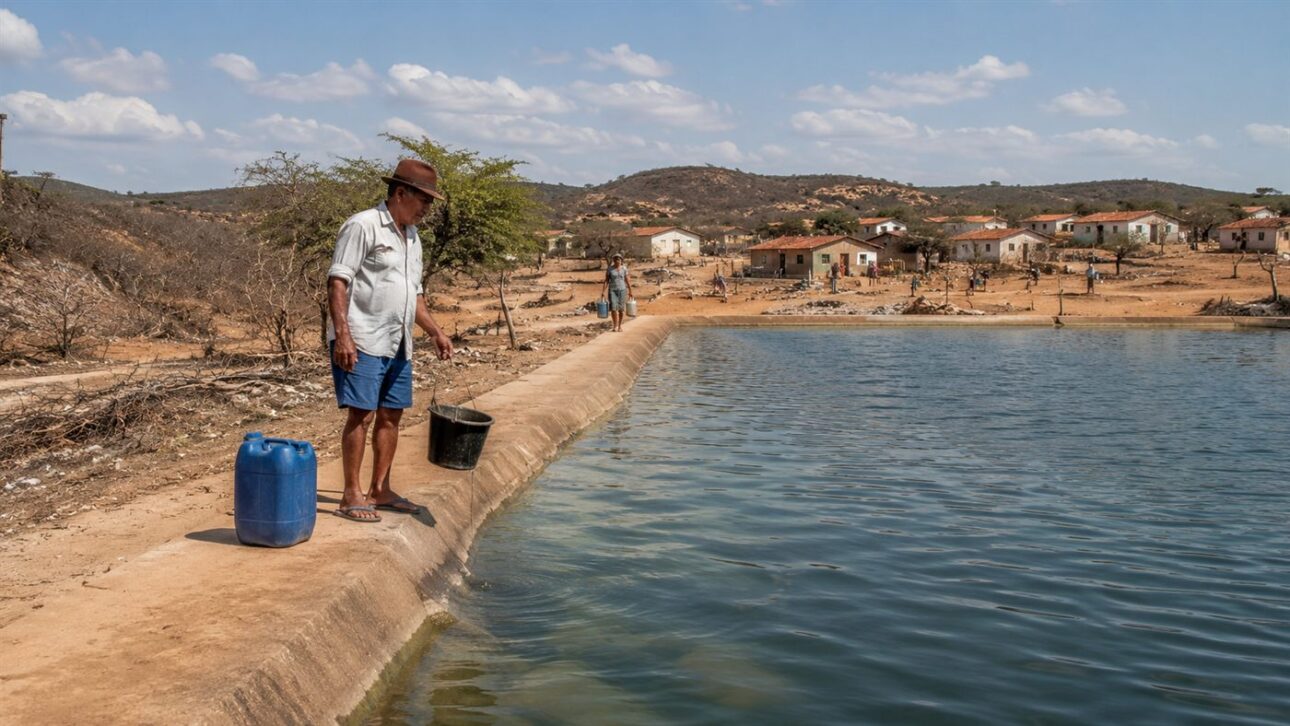
The Northeast has lived for centuries with drought as a structuring factor of life and the economy. Bringing water permanently to regions that only had rain is changing the basic equation of local development, and that’s what the transposition aims to do on a large scale.
The project enters this history as a decisive technical piece. Alone, it does not solve the water problem of the Northeast, but without this section, the entire system would be incomplete. Large water projects are like this: they depend on the most difficult link to function.
In a scenario of climate change and more intense droughts, ensuring water infrastructure ceases to be a government project and becomes a matter of regional survival. Every meter of tunnel is security against the next drought period.
What is missing and the next steps
Completing the tunnel does not end the project, but it unlocks the most difficult stage of the branch. From there, the focus shifts to completing the rest of the branch and connecting the water to local distribution systems, so that it effectively reaches the taps.
The official inauguration of the structure, in July 2026, is a political and symbolic milestone, but the work of water integration continues in the following sections. The water that crosses the mountain range still needs to travel the last kilometer to those who depend on it.
The case shows the magnitude of the engineering effort behind something as simple as turning on the tap in the hinterland. If it was necessary to drill 6.5 km of rock for the São Francisco water to overcome a single mountain range, how much invisible engineering still separates the Northeast from complete water security?