Portuguese
  Spanish


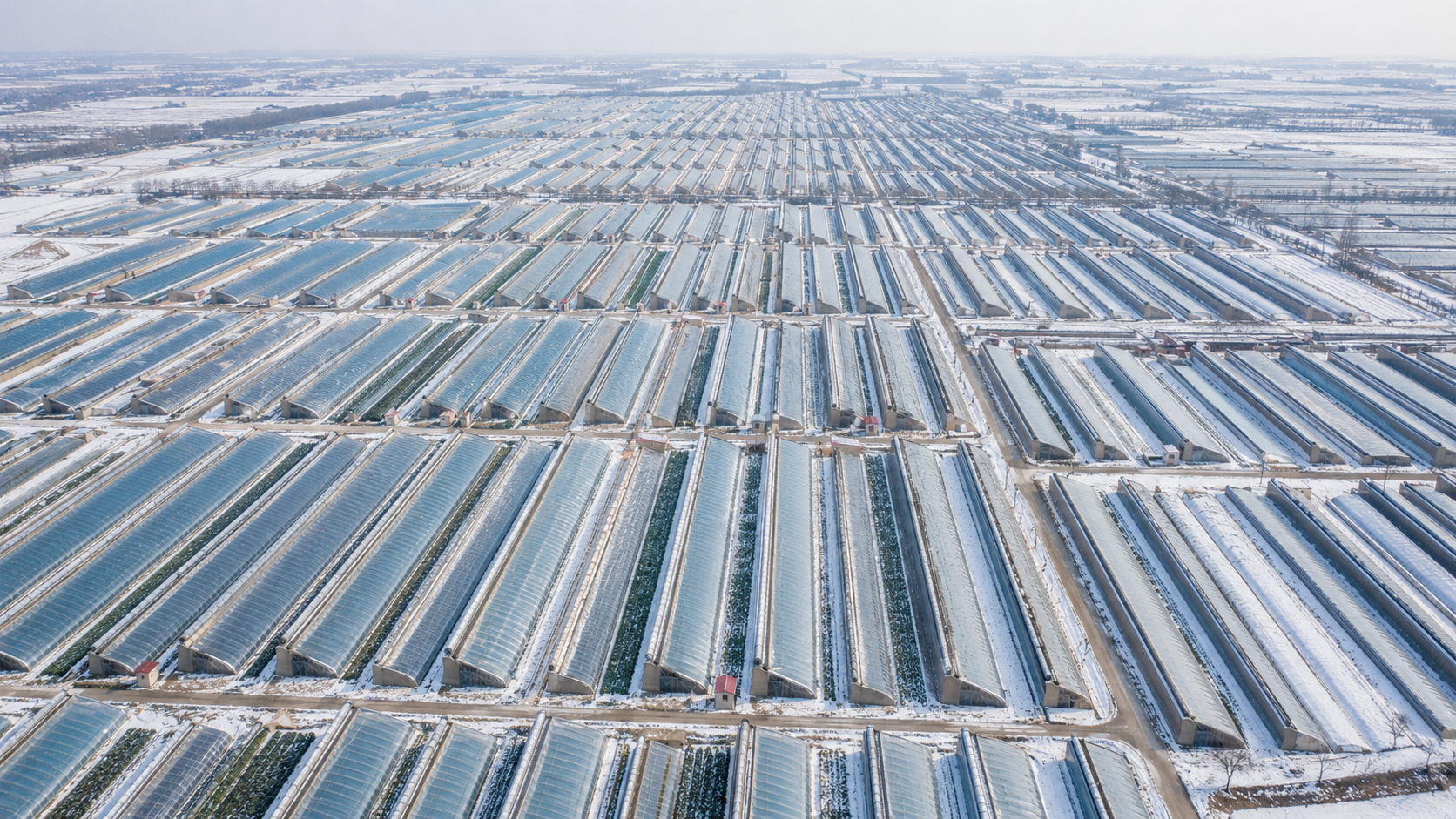

Chinese solar greenhouses use thermal walls and insulating blankets to produce food in winter without artificial heating.
In northern regions of China where winter often brings temperatures several degrees below zero, thousands of farmers grow tomatoes, cucumbers, strawberries, and other vegetables inside structures that defy conventional greenhouse logic. While many greenhouses in cold countries rely on gas, electricity, or other heating systems, many Chinese farms use a model known as the Chinese solar greenhouse, a structure that stores heat during the day and slowly releases it at night. According to the FAO, these greenhouses can maintain internal temperatures between 25°C and 30°C above the outside temperature using mainly solar energy and thermal insulation.
The secret lies in a gigantic wall that functions as a natural thermal battery
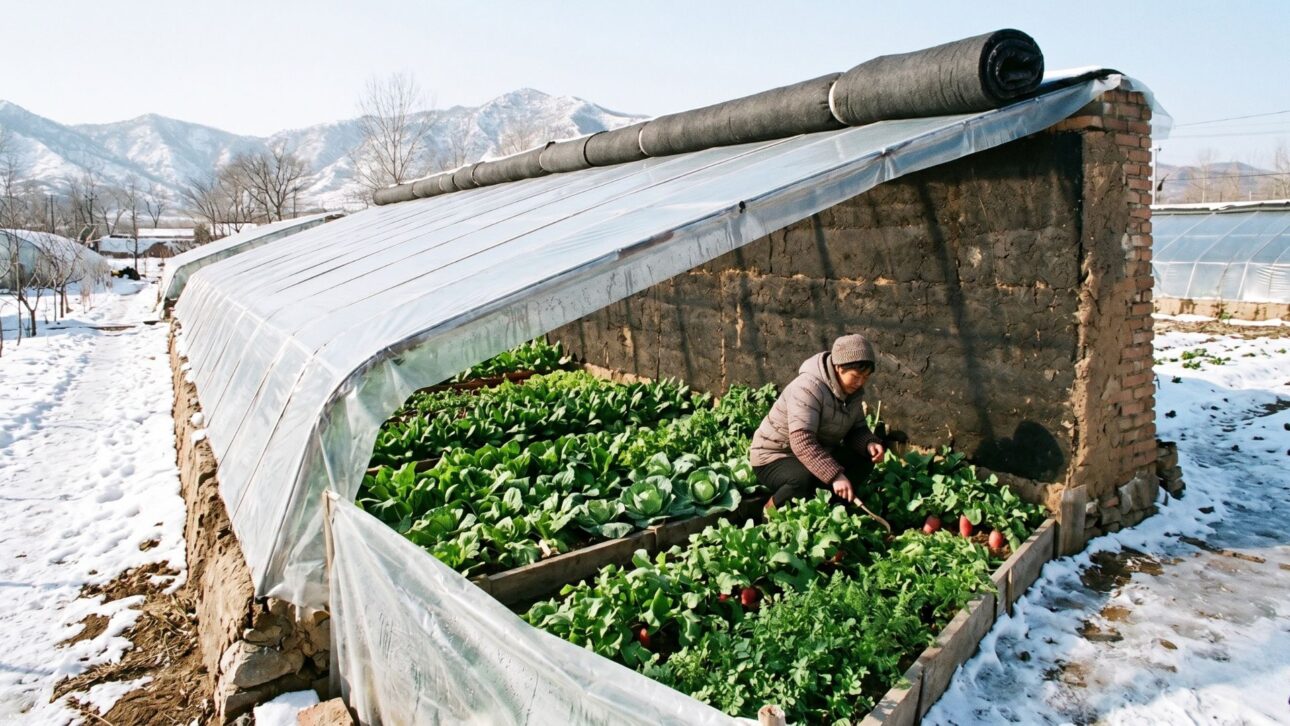
The most important element of these greenhouses is not the transparent plastic seen from the outside. According to the technical document of the IDEASS program, supported by international development organizations, Chinese solar greenhouses have a fully south-facing side covered with transparent plastic, while the north side is built with thick walls of earth, brick, or clay. These walls absorb heat during the day and release it slowly at night.


Recent research published in the journal Agriculture shows that these thermal walls can compensate for between 22% and 53% of heat losses in some agricultural regions of China, drastically reducing the need for artificial heating.
-
Centuries Before Modern Greenhouses, English Gardeners Used Horse Manure to Grow Pineapples in Cold Climates

-
Sugarcane Cultivation in India: A Symbol of Water Stress and Environmental Strain Amidst Global Demand for Sugar and Green Fuel

-
Innovative Farm in Northeastern Brazil Combats Drought with Advanced Techniques, Aiming for 10,000 Liters of Milk Daily Production

-
Australian Desert Farm Uses Solar Power and Seawater to Produce 15,000 Tons of Tomatoes Annually, Resembling a Sci-Fi Agricultural Innovation

In practice, the wall behaves like a huge heat battery powered by the Sun.
Farmers literally cover the greenhouse before going to sleep
One of the most curious images of the system appears at dusk. According to the FAO and the IDEASS program, an insulating blanket is rolled over the transparent cover at the end of the afternoon. This kind of “giant blanket” reduces the loss of heat accumulated during the day and helps keep the internal environment stable until the next morning.
In many modern properties, this process is already automated. The result is a structure that thermally closes during the night and resumes capturing solar energy right after sunrise.
The technology emerged as a response to the energy crisis of the 1980s
According to the FAO, the modern model of solar greenhouses gained momentum in China during the 1980s, when the increased demand for fresh vegetables in winter coincided with concerns related to coal consumption used in agricultural heating systems.

The solution was to develop a structure capable of maximizing the available solar energy during the day.
Over the decades, farmers, universities, and research institutes have continuously improved the design of the greenhouses, enhancing insulation, ventilation, and thermal storage capacity.
The model expanded from local experiments to occupy hundreds of thousands of hectares
The growth of the technology is impressive. According to the IDEASS report based on widely cited data on Chinese agriculture, approximately 800 thousand hectares of passive solar greenhouses have been built in the country in recent decades. The document states that they have become one of the pillars of food production in northern and central China.
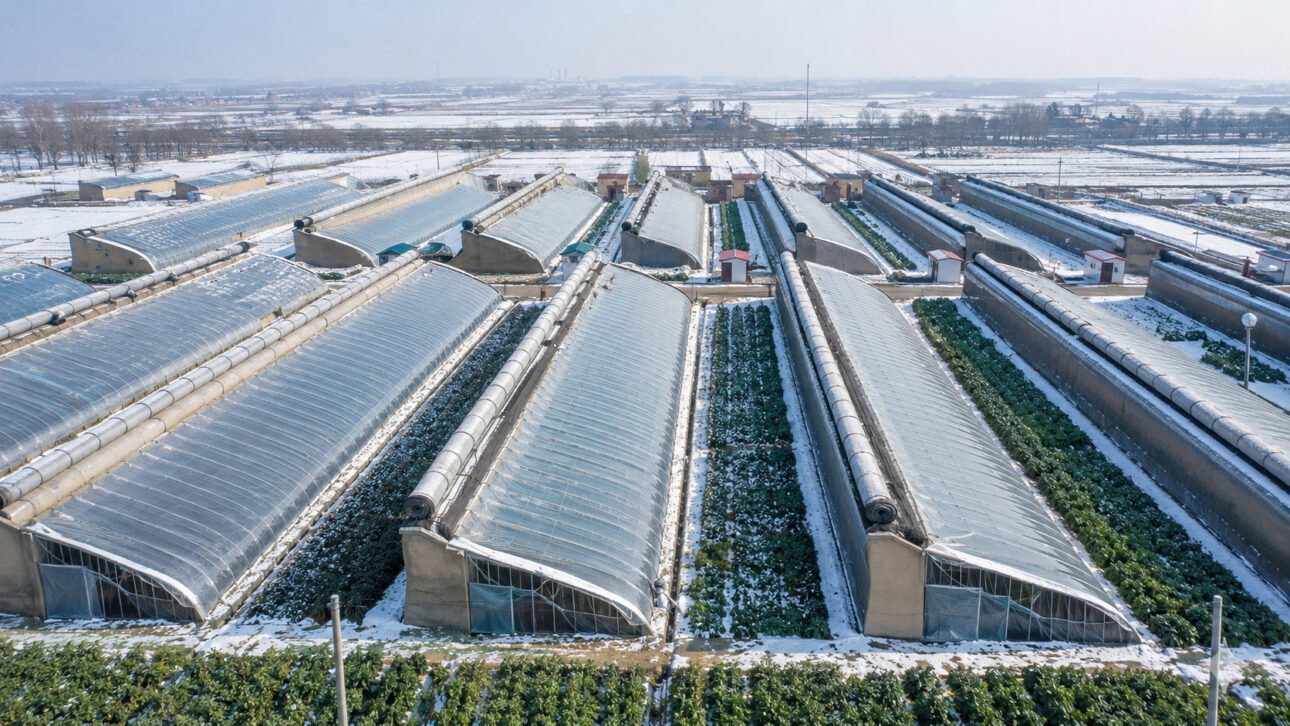
Technical reports and studies on these structures indicate that they are widely used to produce cucumbers, tomatoes, peppers, eggplants, melons, strawberries, and leafy greens during the colder months of the year.
This transformed regions previously limited by the cold season into permanent agricultural production hubs.
Some greenhouses keep vegetables alive even when the outside freezes
According to Purdue University, Chinese solar greenhouses play a central role in vegetable production during the winter in northern China, at latitudes similar to cold areas of the United States.
The university reports that the internal temperature rarely drops below 40 °F (about 4 °C) even when external temperatures reach values close to 0 °F (about -18 °C). On sunny days, the internal environment can remain above 15 °C, even under intense cold outside.
These numbers help explain how tomatoes and cucumbers manage to survive in periods that would normally require expensive heating systems.
The system became a global reference in low-energy consumption agriculture
International interest in Chinese solar greenhouses has grown because they address one of the biggest costs of horticulture in cold regions: energy.
According to the FAO, these structures can produce winter food with little or no supplementary energy, significantly reducing operational costs compared to conventionally heated greenhouses.
Studies published by Chinese researchers also highlight that the combination of solar orientation, thermal walls, and nighttime insulation allows maintaining suitable conditions for various crops without continuously relying on fossil fuels.
A simple idea that transformed winter into harvest season
At first glance, the technology seems almost rudimentary. A thick wall, a transparent cover, and a huge blanket that closes at night hardly resemble a revolutionary agricultural innovation.
But this combination allowed hundreds of thousands of hectares to produce food during China’s harsh winter, transforming the free heat from the Sun into one of the largest “passive agricultural machines” ever built to grow greens, fruits, and vegetables when the cold should make it impossible.
If a wall can function as a solar battery and a blanket helps keep crops alive in negative temperatures, perhaps some of the world’s most impressive agricultural technologies are precisely those that seem the simplest.