Portuguese
  Spanish


Pineapples grown with horse manure in the United Kingdom became a symbol of luxury and showcased British horticultural engineering of the 18th and 19th centuries.
In the United Kingdom of the 18th and 19th centuries, growing pineapples was much more than producing an exotic fruit. It was a public demonstration of wealth, prestige, and technical mastery, at a time when replicating the tropical climate on British soil required expensive infrastructure, horticultural knowledge, and ongoing labor. It was in this context that the so-called pineapple pits emerged, partially buried structures covered with glass that used the heat from organic decomposition to warm the cultivation. In Heligan, Cornwall, this historical system was restored in the 1990s, and the gardens recorded the fruiting of pineapples in 1997, when one of the fruits was sent to Queen Elizabeth II.
Pineapple in the United Kingdom was once a symbol of extreme luxury and aristocratic status
Today, the pineapple is a common item in markets and fairs. In Georgian and Victorian England and also in 18th-century Scotland, however, the fruit was among the rarest and most desired foods, precisely because it depended on a tropical climate and highly controlled cultivation.
The symbolic power of this obsession even appeared in architecture. The National Trust for Scotland records that, in 1761, the Earl of Dunmore ordered the construction of a summer house in the shape of a pineapple, known to this day as The Pineapple, at a time when the fruit was among the most exotic foods in Scotland.
-
Sugarcane Cultivation in India: A Symbol of Water Stress and Environmental Strain Amidst Global Demand for Sugar and Green Fuel

-
Innovative Farm in Northeastern Brazil Combats Drought with Advanced Techniques, Aiming for 10,000 Liters of Milk Daily Production

-
Australian Desert Farm Uses Solar Power and Seawater to Produce 15,000 Tons of Tomatoes Annually, Resembling a Sci-Fi Agricultural Innovation

-
Brazilian Child Becomes National Role Model by Turning Financial Education Lesson into Thriving Poultry Business with 25 Hens and 150 Eggs Weekly


The reason was straightforward. The pineapple could not withstand the British cold without intensive protection, and cultivating it locally meant mastering an expensive, delicate, and impressive system for the time. Therefore, the fruit became a botanical trophy associated with the elite and social prestige.
Pineapple pits used horse manure and glass to create heat underground
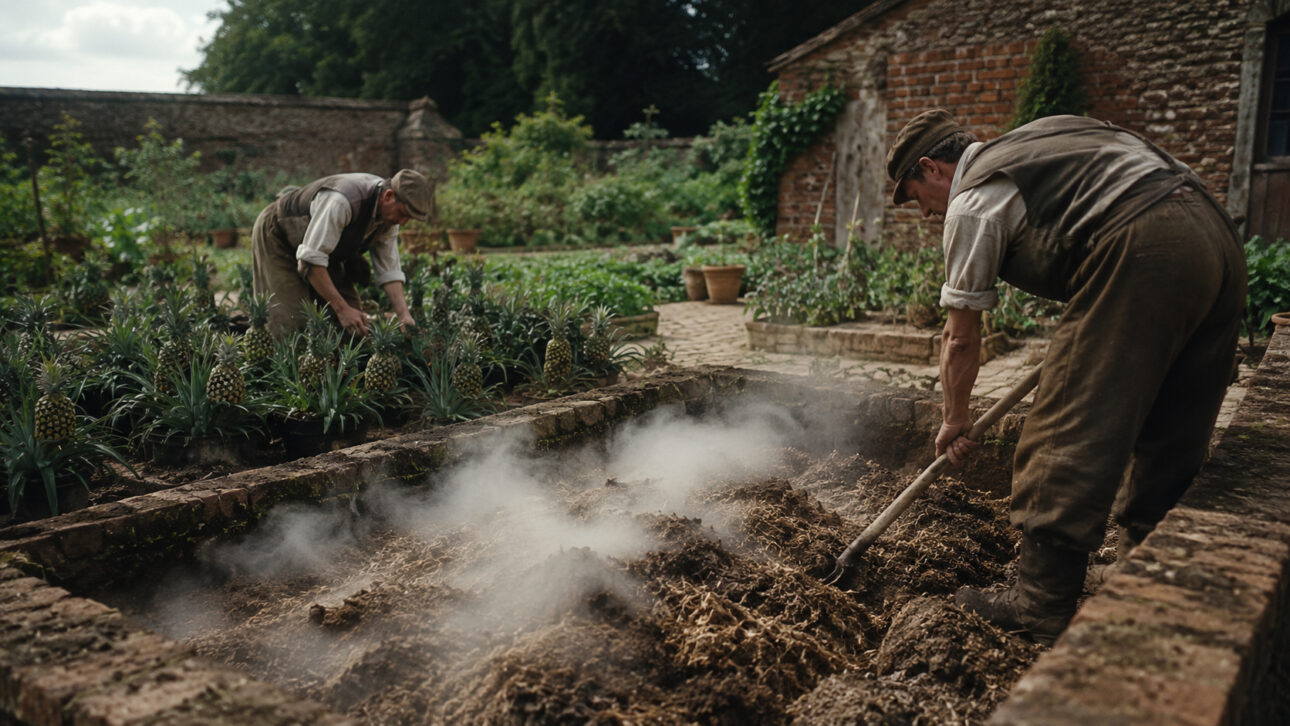
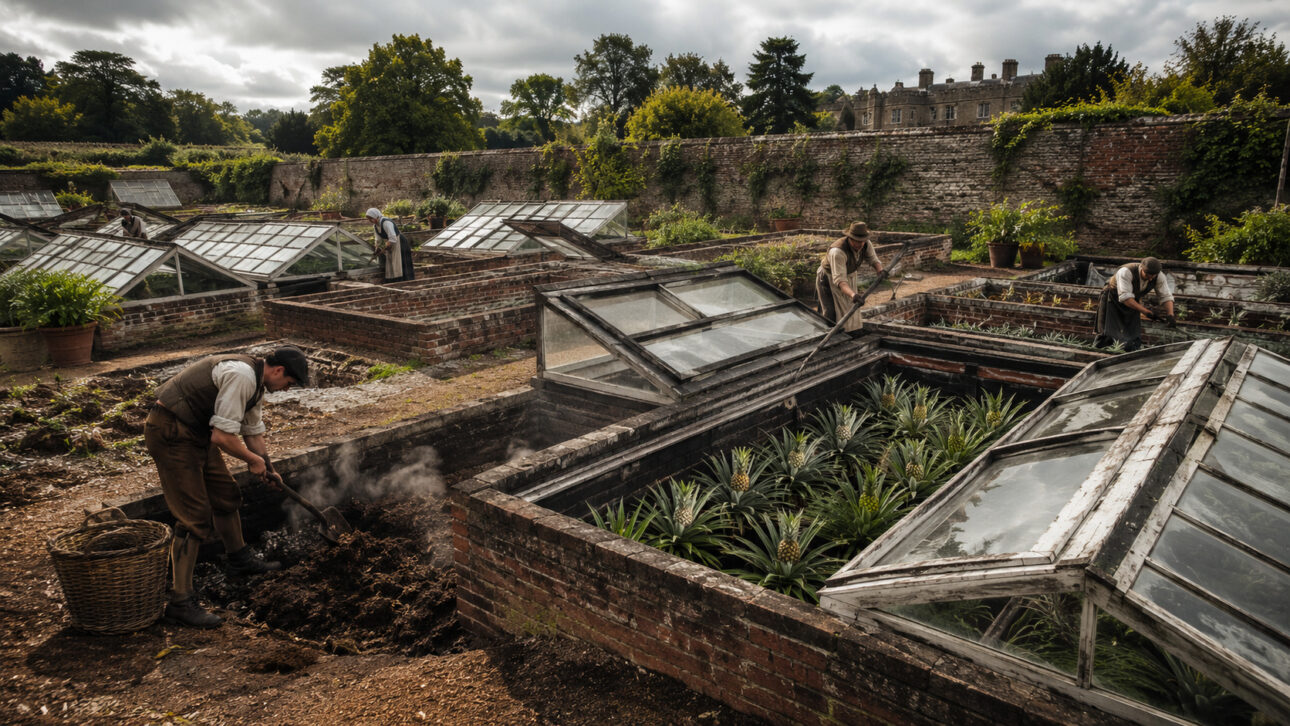
The heart of the technique was in harnessing the heat generated by decomposition. Instead of relying solely on conventional greenhouses, British gardeners built buried structures with side compartments heated by fresh manure, while the central area housed the pineapple plants protected by a glass cover.
This arrangement functioned as a subterranean biological heater. The organic material fermented, released heat, and helped raise the temperature of the growing space, creating a microclimate capable of sustaining a tropical plant in the cold environment of the United Kingdom.
In practice, it was a horticultural engineering solution based on glass, brick, fermentation, and thermal management, long before the existence of automated heating, digital sensors, or climate-controlled greenhouses like those of today.
Pineapple cultivation required constant maintenance and high technical expertise
Despite the ingenuity, the system was far from simple. The heat produced by decomposition did not remain stable indefinitely, requiring material replenishment, frequent monitoring, and careful management of the environment to prevent thermal loss or failure in plant development.
This level of demand helps explain why the British pineapple became such a prestigious fruit. More than the value of the fruit itself, what impressed was the ability to maintain a functional tropical cultivation in naturally unfavorable climatic conditions.
Heligan restored the pineapple pit and resumed fruit production in the United Kingdom
The Lost Gardens of Heligan record that the property already had a fully functional pineapple pit in the 19th century, when it competed with other large local estates in producing impressive fruits. Decades later, the historical technique came back to life with the system’s recovery in the 1990s.
The article from Sibbaldia, a journal linked to the Royal Botanic Garden Edinburgh, points out that Heligan’s Victorian pit was restored in 1994. Heligan’s official timeline records the first fruiting in 1997, when one of the pineapples was presented to Queen Elizabeth II on the occasion of her wedding jubilee.
The restoration transformed the old technique into a living case of horticultural history. Instead of remaining just an archival curiosity, the pineapple pit began to practically demonstrate how British gardeners solved a complex climate problem with simple physical resources and great empirical knowledge.
The history of the pineapple shows how the climate was tackled with horticultural engineering
The most fascinating aspect of this story is that the pineapple pits anticipated a very current logic. The central idea was to create a productive microclimate from an available heat source, using thermal mass, protected structure, and controlled heat circulation.


The difference is that, instead of a heat pump, automation, or electric energy, the gardeners worked with fermenting manure, glass, and buried construction. It was an artisanal technology, but extremely sophisticated for its time.
Therefore, the pineapple cultivated in the British cold was not just a rare fruit. It became a showcase of power, patience, technical knowledge, and aristocratic ambition, at a time when bending the climate was part of the social spectacle of the European elite.