






 Portuguese
  Spanish


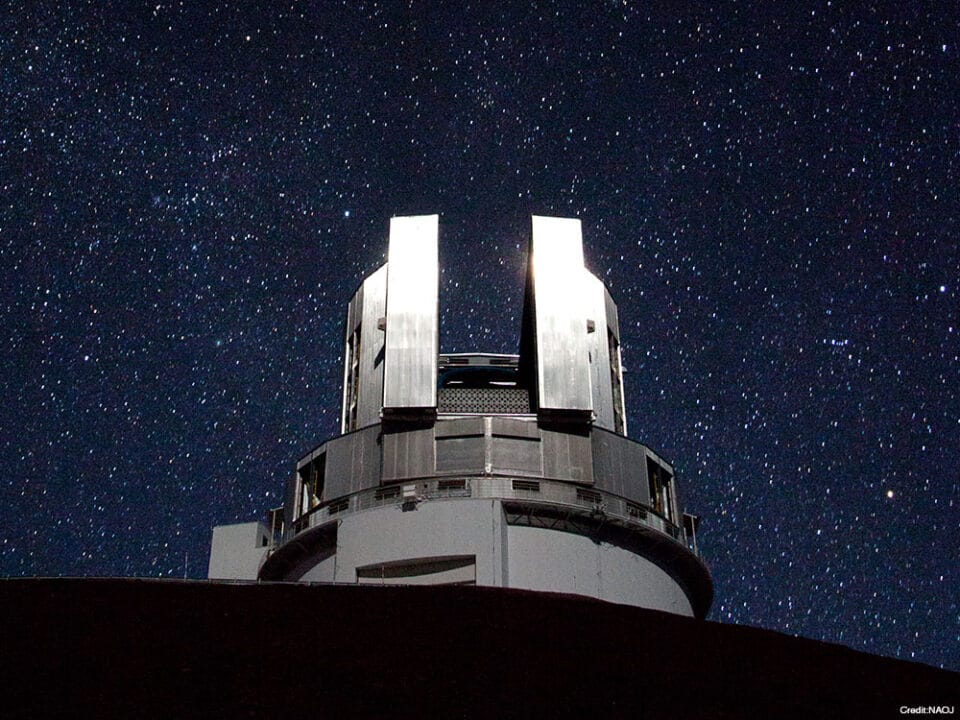

New Mysterious Objects Have Been Found Beyond the Edge of the Solar System, Leaving Scientists Intrigued About What May Exist Beyond the Known. See the Details of This Fascinating Discovery!
Recently, a team of astronomers using the Subaru Telescope made an unexpected discovery by identifying new objects at the edge of the Solar System, in regions beyond the known Kuiper Belt.
These enigmatic objects suggest a more complex structure and even a second “ring” of celestial bodies, challenging old assumptions about the formation and extent of our solar system. The discovery may bring revolutionary implications for the search for life beyond the Earth and for understanding the origin of planets.
Innovative Observations Beyond the Kuiper Belt
The Kuiper Belt, a region filled with icy bodies and debris orbiting beyond Neptune, is considered the last frontier of the Solar System. However, the Subaru Telescope, located on Mauna Kea, Hawaii, revealed the presence of 11 objects situated beyond this edge.
-
Clean Energy Now Cheaper Than Coal as Battery Costs Drop 45% in a Year

-
Google’s Biotechnology Project Seeks EPA Approval to Release 64 Million Bacteria-Infected Male Mosquitoes to Curb Disease Transmission

-
China Tests New Urban Mobility in Hefei with Electric Aircraft and Drones, Eyeing a Trillion-Dollar Market to Transform Transportation

-
Xiaomi Unveils Smart Technology to Replace Air Conditioners: Promises 45% Less Energy Use, 1,760 m³/h Airflow, APF 5.31 Efficiency, and Annual Savings of 884 kWh.


What makes this discovery surprising is the fact that these objects appear to follow a regular orbit, suggesting the existence of an additional “ring” beyond the known belt.
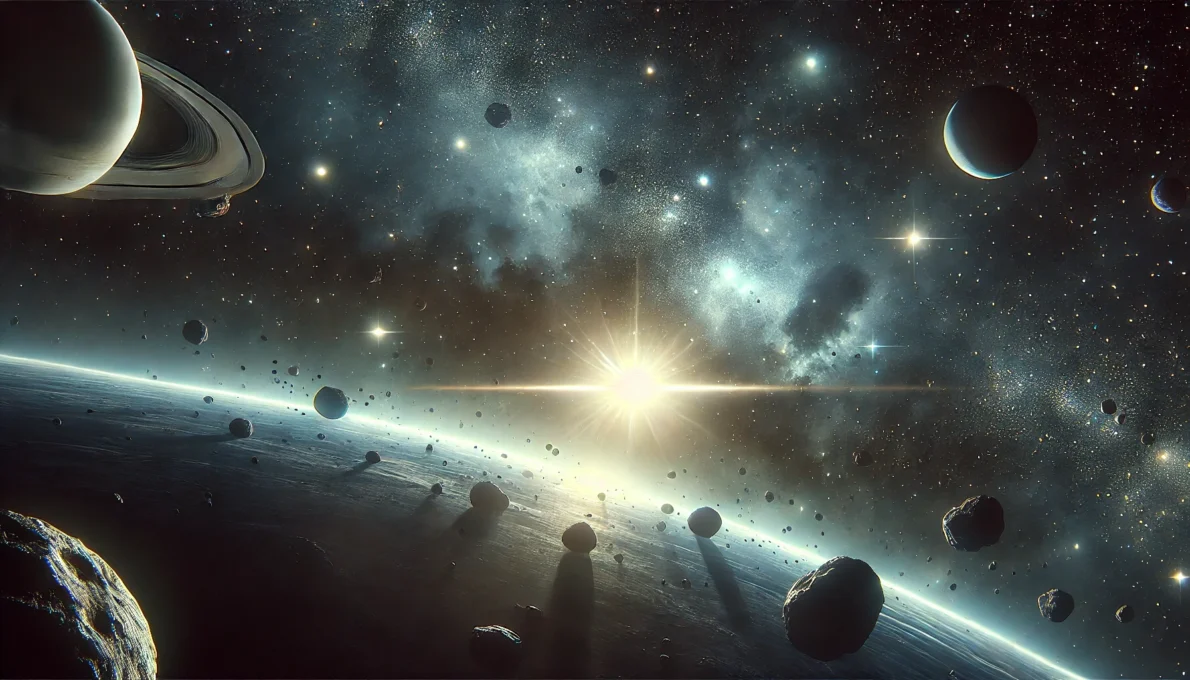
These new celestial bodies are part of a potentially much larger population of objects that had not been identified until now. Scientists believe that these bodies may belong to a new class of objects, orbiting in a belt that has a gap between it and the traditional Kuiper Belt.
Dr. Fumi Yoshida from the Chiba Institute of Technology explains: “If confirmed, this would be a major discovery. The primordial solar nebula was much larger than previously thought, impacting our understanding of the planet formation process.”
Possible New Class of Objects
The observation of these 11 new bodies, made through data collected by Subaru, coincides with recent theories proposing the existence of more rings and gaps in interplanetary space, similar to those observed around young planetary systems in other parts of the galaxy. This type of structure is documented in observations by the Atacama Large Millimeter/submillimeter Array (ALMA) in Chile, which creates an interesting analogy with our own Solar System.
According to Dr. Wes Fraser from the National Research Council of Canada, “the Kuiper Belt has long seemed small compared to other planetary systems, but our results suggest this impression may have been the result of observational bias. These new objects may indicate that the Solar System’s belt is more extensive and complex than we thought.”
The observed structure – a ring separated by a gap from the known belt – raises the hypothesis that this division may have been caused by gravitational interactions with massive bodies or even by an unknown planet. However, confirmation of this structure will depend on future studies and observations, as well as deeper analysis of the data already collected.
Implications for the Search for Life in the Universe
The discovery that the Solar System has a greater extent and a more complex structure may directly impact the search for life beyond Earth. When investigating how and where life can arise, one of the main difficulties is the limitation of our sample: Earth is the only planet where life has been confirmed.
Thus, understanding the conditions of our Solar System is crucial to assessing which requirements may be fundamental for life and which are merely peculiarities.
If the Solar System is confirmed to be a common system, formed by a vast solar nebula, it would increase the chances of finding life in other similar systems.
The absence of a “small parent nebula” as a prerequisite for planetary formation would imply that systems with characteristics similar to ours may be more common, increasing the probability of habitable planets in other parts of the universe.
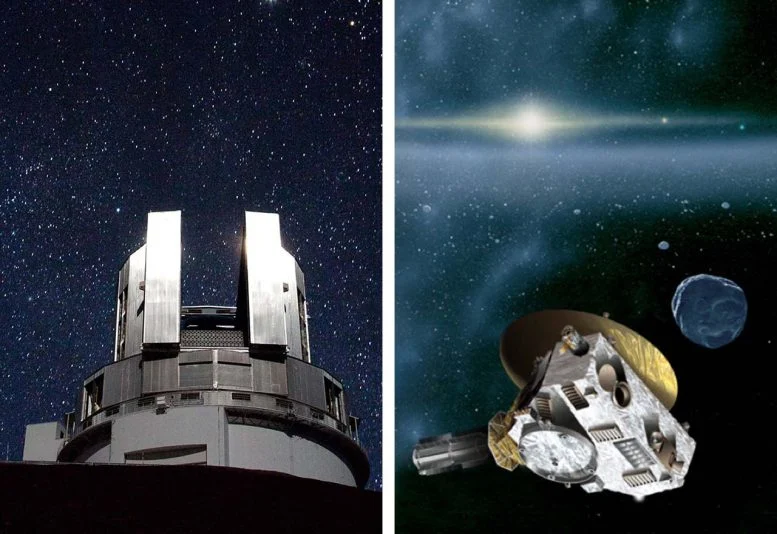
Dr. Alan Stern, a researcher for the New Horizons mission, stated: “This is an innovative discovery that reveals something new and unexpected. It is an exciting step toward understanding the limits of the Solar System, a field we have always believed to be static.”
The future of research on the edge of the Solar System will certainly include the investigation of these new objects.


SERIA EMOCIONANTE DESCOBRIR VIDAS EM OUTROS PLANETAS, EM OUTRAS GALÁXIAS..
Nós próximos 200 anos anos o a raça humana já estará espalhado nas colônias do sistema solar além do cinturão kuiper,mas não se preocupem com os extraterrestre eles já estavam aqui bem antes do humanos a andar erecto.
Não demora muito a NASA, vem a público e diz que foi um engano que não existe nada, é sempre assim