






 Portuguese
  Spanish


Found In Roraima Reveals Rocks And Clays With High Concentration Of Strategic Minerals, Sparking Scientific And Political Attention To The Economic Potential Of The Region And Possible Role Of Brazil In The Global Rare Earth Market.
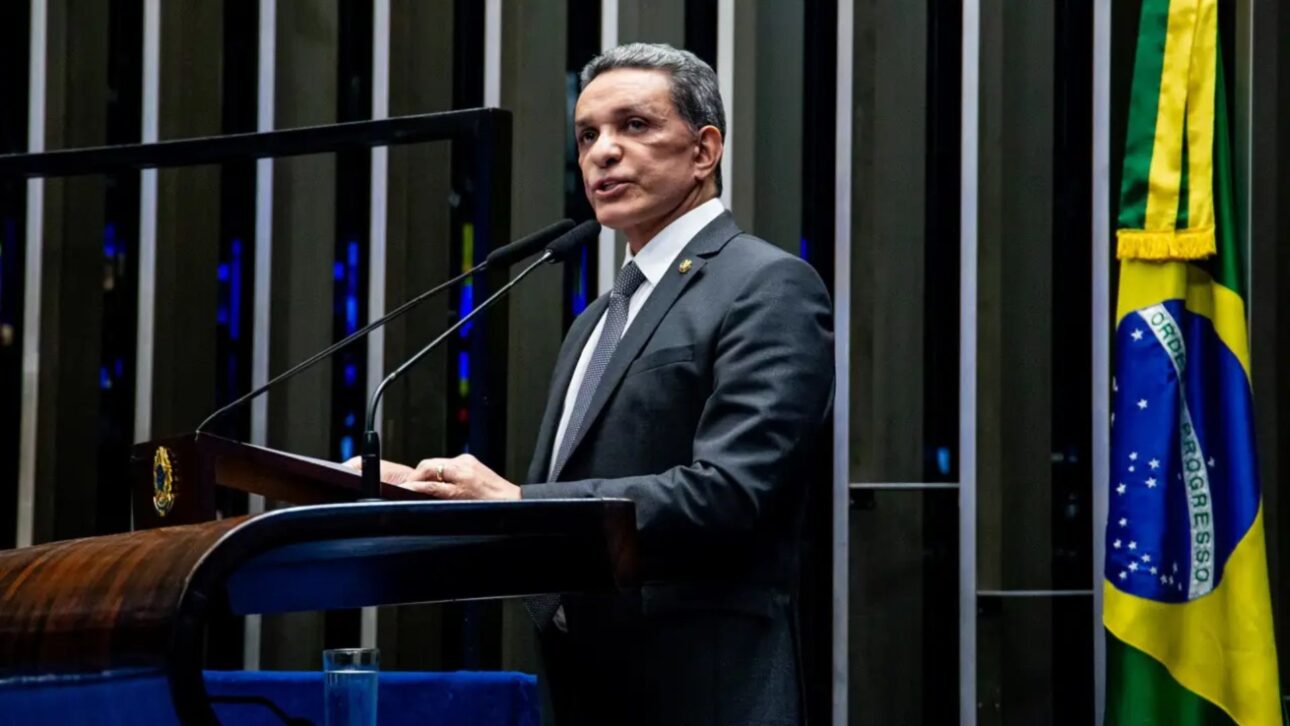
The identification of rocks and clays with very high concentration of rare earth elements in a private area of Caracaraí (RR) led Senator Mecias de Jesus (Republicanos-RR) to argue that Brazil can gain prominence in the competition for strategic minerals.
In a speech on September 3, he stated that the researched area covers over 100 thousand hectares and concentration levels up to 50 times higher than those found in conventional deposits, a situation that, if confirmed, would place the country at the center of the global supply chain.
The geological investigation is conducted by researchers from the Geology course at the Federal University of Roraima (UFRR), who are responsible for identifying the material and are now focused on verifying whether there is an economically viable deposit within the rural property.
-
Major Brazilian Supermarkets, Including Carrefour and Assaí, May Close Earlier to Prevent Price Increases

-
Coca-Cola Shuts Down 100-Year-Old Factory in the U.S., Impacting 85 Workers and Shaking Local Community with Historic Consequences
-
Bianca Andrade Invests $30 Million of Her Own Money in Boca Rosa, Launches Over 100 Products in a Year, Aiming for $400 Million by 2026
-
Belo Horizonte Becomes First Brazilian City to Fund Housing, Utilities for 100 Homeless Families with $900,000 Initiative


What Was Found And Why It Matters
According to the senator, the so-called Minera Barreira Complex brings together three areas of interest for the contemporary industry: rare earths, platinum group metals, and critical minerals.
These inputs are used in cell phones, wind turbines, solar panels, electric vehicles, and defense equipment, forming the basis of technologies considered strategic for energy transition and national security.
According to the information disclosed, the unusual concentration of rare earth elements identified in the samples collected in Caracaraí, if confirmed on a deposit scale, would alter the map of supply for these materials, which is currently concentrated in Asia.
Researchers mentioned in local publications also point to the presence of PGMs and other economically interesting minerals, which would enhance the potential of the complex.
Where It Is And Who Researches
The analyzed point is in Caracaraí, a municipality located about 140 kilometers from Boa Vista by road. UFRR leads the stage of characterization of the material and initial geological study.
This phase is crucial to confirming whether the occurrence has continuity, volume, and grade sufficient to be classified as a deposit, and thus advance to licensing and eventual extraction.
In a speech on the Floor, Mecias de Jesus argued that the federal government should treat the topic as a “state priority”, with appropriate legislation, rigorous oversight, and long-term planning.
He also stated that the site would be located more than 60 kilometers from indigenous lands and more than 50 kilometers from conservation units, an argument used to minimize socio-environmental risks during a potential mining project.
What Is Needed To Become A Deposit
The discovery of high grades in samples does not, by itself, equate to the confirmation of a deposit.
The technical path requires detailed geological mapping, drilling, metallurgical tests to define beneficiation processes, and economic feasibility studies.
Only afterwards, with environmental licensing and authorization from the National Agency of Mining (ANM), a project can evolve to production.
Until then, grades and extent numbers are preliminary estimates and need independent validation.
In the chamber, the senator emphasized the transformative potential by stating: “Rare earths are known as the gold of the 21st century (…). Brazil joins the select group capable of independently managing a policy of extraction and management of its resources aimed at consolidating technological development.”
In another instance, he drew a historical parallel: “If the Northeast had the cycle of Brazil wood and sugarcane, the Southeast of mining and industrialization, and the Midwest of agriculture, now it is the turn of the North Region. It is the turn of Roraima and Brazil.”
Strategic Impact And Industrial Uses
The rare earths encompass 17 essential chemical elements for high-performance permanent magnets found in electric car motors and wind turbines.
They are also used in displays, lasers, catalysts, and defense systems.
The associated presence of platinum group metals and critical minerals increases the relevance of the find because it diversifies possible revenue streams and reduces dependence on a single product, should the project advance.
Regional publications report concentration numbers and list specific elements, reinforcing the interest of the technical community and the market.
Environmental And Social Safeguards
The eventual mining of rare earths involves processing routes that may use reagents and require waste management with stringent standards.
Therefore, regulatory agencies and Congress tend to demand robust impact studies, mitigation plans, and long-term monitoring.
By mentioning distances from indigenous lands and conservation units, the senator anticipates one of the main vectors of public scrutiny.
However, complete socio-environmental analysis only occurs with project data and public hearings mandated by law.
Next Steps And Attention To Governance
Beyond the technical stage, a project of this nature depends on governance to ensure transparency, traceability, and localism of benefits.
The senator advocates that the Union adopt an integrated planning for forming value chains, from inputs to manufacturing, in order to avoid mere export of raw minerals.
In his words: “It will be necessary for the federal government to understand that the rare earths issue needs to be treated as a strategic priority (…), and it cannot be negotiated as a mere primary commodity.”

What Is Confirmed So Far
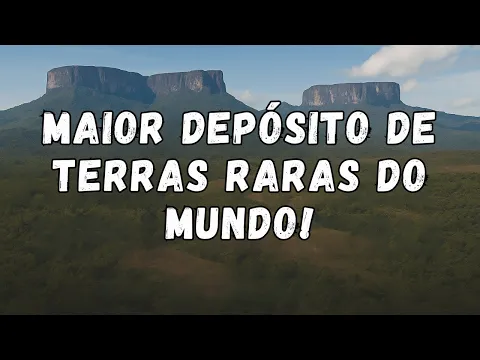
Objectively, there are three consensus points at this moment: the identification of material with high grade in a private area of Caracaraí; the leadership of UFRR in analyzing the samples and studying the possible deposit; and the preliminary dimension of the area, indicated as about 100 thousand hectares, with reported grades significantly above the average.
These elements explain the national repercussion and political mobilization, but do not replace the technical-regulatory confirmation that defines volume, viability, and timeline of a mining venture.
While studies continue, the expectation turns to the country’s ability to structure policies to transform natural resources into industrial value, with innovation, workforce qualification, and environmental protection.
Amid this scenario, one question remains: how do Brazil and Roraima plan to transform geological discovery into responsible development with long-term added value?





-

-

2 people reacted to this.