Portuguese
  Spanish




Understand How Job Market Tips Shape Professional Behavior and Transform the Sector, from Its Historical Roots to Modern Demands. Learn to Adapt and Influence the Future of Your Career.
The job market plays a crucial role in the economic, social, and cultural development of a nation.
Throughout history, it has undergone various transformations, and the guidance provided in this context has helped shape what we know today.
In each period, job market tips emerged that went beyond mere advice, directly influencing people’s behavior and the practices of the market itself.
-
Dismissing a retired worker or one eligible for retirement constitutes ageism and creates a duty to compensate: a unanimous decision by the TRT mandates reinstatement to employment, payment of back wages, and upholds compensation of R$ 15,000 for discrimination.

-
Work less and produce more? Nobel Prize in Economics explains why shorter workdays can increase productivity

-
Unions are growing again in Brazil after more than a decade, but they face an urgent challenge to win back digital workers and maintain relevance.
-
From the typewriter to the home office: how work has changed and why new generations think differently




During the Industrial Revolution, which began in the late 18th century, the job market experienced profound transformations.
According to the Institute of Labor History and Economics (IHET), this period was characterized by mechanization and the replacement of part of the human workforce.
This required workers to adapt quickly to new routines, focusing on specialization and productivity.
Then, the first tips on how to behave in the new work environment emerged, emphasizing efficiency, discipline, and appropriate attire.
These tips helped form the foundations of what would become the modern job market. The introduction of the assembly line, particularly in the automotive industry, was a clear example of this change.
Companies began to seek more specific skills, and work became more segmented, with each worker responsible for a part of the process.
Thus, guidance on developing specialized skills and continuous improvement became fundamental.
The Evolution of Professional Tips in the 20th Century
As the years went by in the 20th century, the job market underwent a significant change.
The expansion of companies and the rise of administrative professions required new skills from workers, especially in management and communication.
Tips on professional posture and the importance of presenting oneself adequately for interviews began to gain prominence.
As observed by the Institute of Market Research and Careers (IPMC), in the 1960s, there was a great appreciation for academic qualifications, with the pursuit of university degrees becoming a requirement for many positions.
This directly influenced workers’ behavior, who began seeking more qualifications to stand out in the market.
Additionally, during this period, the use of formal communication and leadership skills began to be valued. With the rise of corporations, new tips emerged on how to manage teams and how to behave in larger corporate environments.
The way companies recruited talent also underwent a transformation, with more structured interviews focused on candidates’ competencies.
The Digital Revolution and Its New Demands
With the advent of the internet and new technologies in the late 20th century, the job market became even more dynamic.
According to Gartner Research, in the early 2000s, the demand for professionals specialized in technology intensified as companies began adopting digital solutions to optimize their processes.
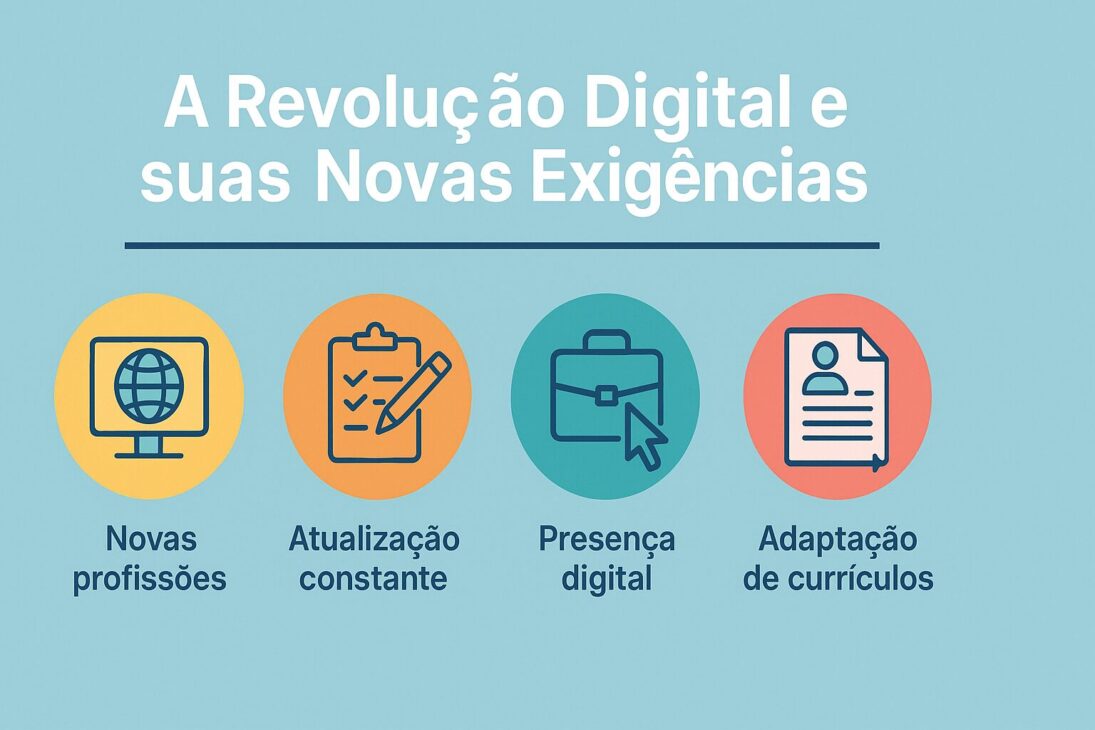
The emergence of new professions, such as software developer and systems analyst, transformed the market, creating a new demand for skills.
In this context, new job market tips emerged on how to constantly update oneself and the importance of keeping up with technological trends.
One of the most valuable tips during this period was the necessity to stay updated about new digital tools, which became essential for survival in the job market.
With the popularization of internet usage, new guidelines emerged about the importance of digital presence, focusing on building an online portfolio and using professional social networks, such as LinkedIn.
In 2010, the Technology and Employment Observatory indicated that 75% of companies had begun using online platforms to recruit professionals, making tips about digital presence an essential part of career strategy.
The digitalization of companies also impacted how people were hired. New tips on how to adapt resumes to digital formats and on how to improve chances of being seen by online recruiters emerged.
The mobility of the job market also increased, with professionals seeking international opportunities, which required a new way to adapt to global demands.
The Impact of Freelance Careers and Remote Work
In recent years, freelance careers and entrepreneurship have grown considerably. Many people have begun to choose their own paths, either as freelancers or small business owners.
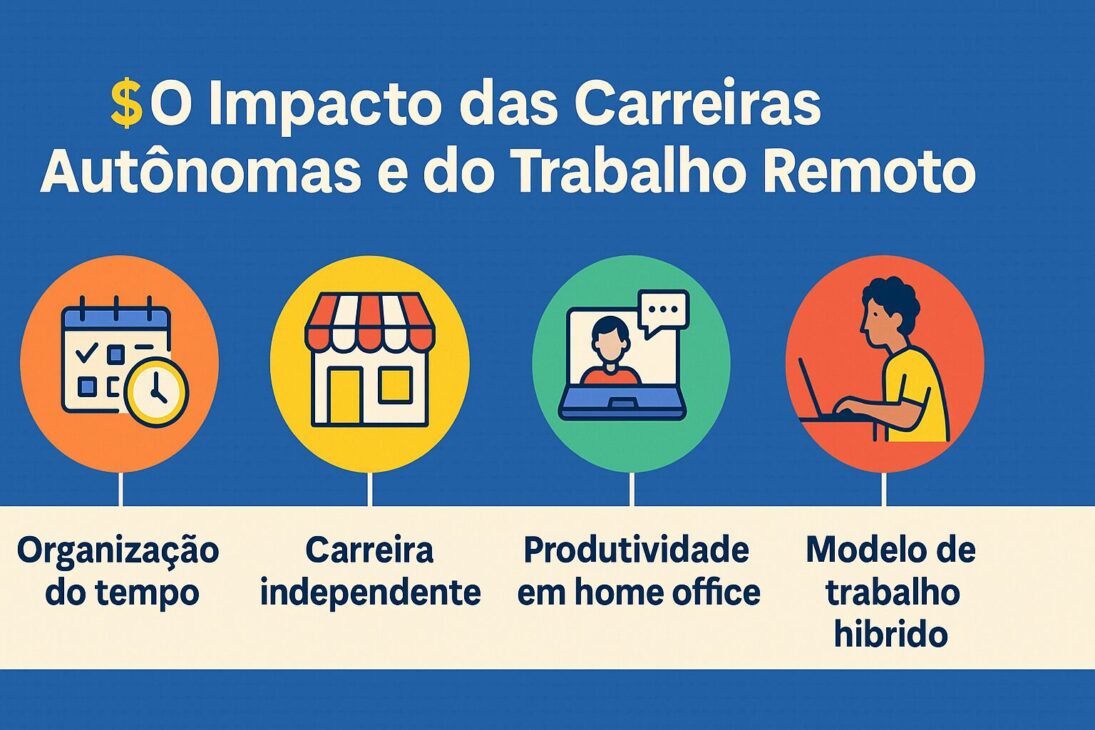
This movement has generated new tips on how to organize time, manage a business, and develop multiple skills.
Advice on how to work independently and manage a freelance career has become highly valued.
The McKinsey Global Institute reported in 2020 that freelance work increased by 30% over the past 10 years, reflecting the growing appreciation for autonomy at work.
In addition, the COVID-19 pandemic further accelerated these changes, making home office a reality for millions of workers worldwide.
The International Labour Organization (ILO) reported in 2021 that home office, adopted by many companies during the pandemic, consolidated as a permanent trend, with many professionals choosing to maintain this work model.
Thus, new tips on how to maintain productivity in a home environment emerged, such as establishing an efficient routine and how to keep focus amidst distractions.
Companies began adopting a hybrid model, which combines remote work with office presence.
According to the Harvard Business Review, in 2020, about 60% of companies were planning to adopt a hybrid work model, highlighting how remote work impacted the way companies and workers viewed issues of flexibility and productivity.
The Importance of Understanding Tips to Shape the Future
These tips often originate from observations made by companies regarding changes in workers’ behavior, technological innovations, and economic needs.
When adopted on a large scale, they shape corporate culture and redefine the job market.
In this sense, job market tips should not be seen solely as individual guidance but as tools that contribute to collective transformations.
According to the World Economic Forum (WEF), in its 2021 report, digital skills, such as programming and data analysis, are essential for the future of professions.
Guidance on developing these competencies is essential to help professionals adapt to market changes.
The future of work will undoubtedly be shaped by artificial intelligence, automation, and new forms of social and professional organization.
The McKinsey & Company also pointed out in 2020 that the job market will further diversify, with a growing demand for creative and technological skills, in addition to a greater appreciation for work-life balance.
Therefore, understanding these tips and how they influence the job market can help professionals quickly adapt to changes, prepare better, and even contribute to a positive transformation in the sector they operate in.
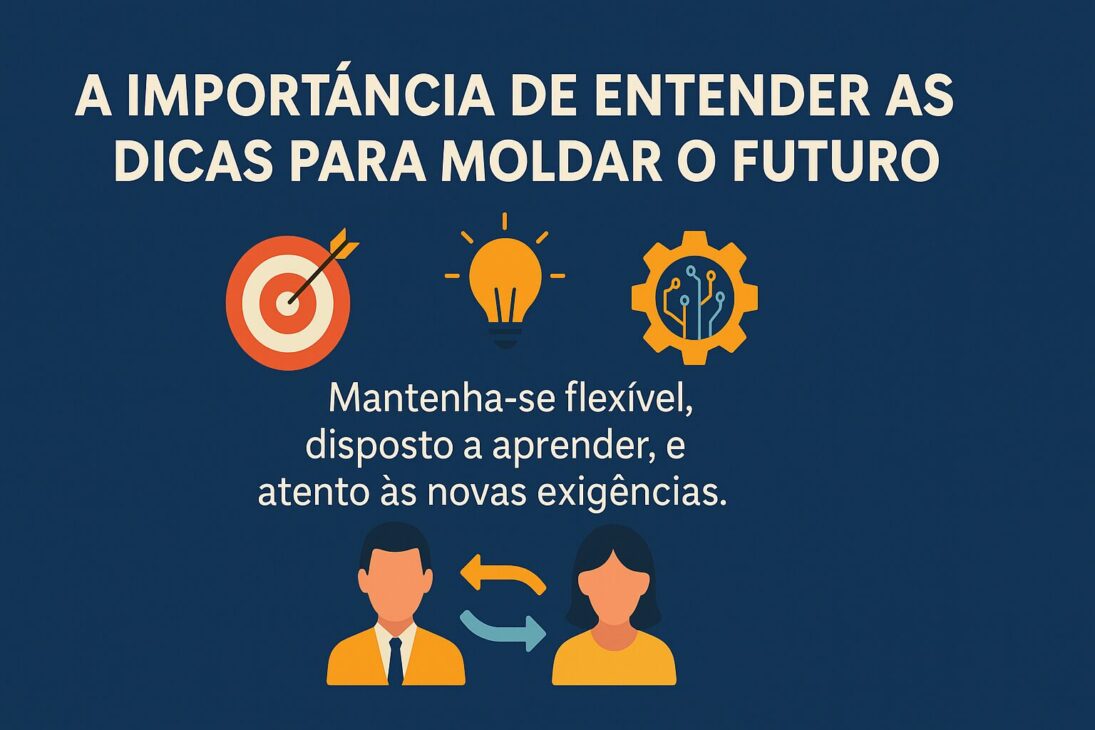
The key to success lies in being flexible and willing to learn, and thus always being attentive to new demands that arise.