Portuguese
  Spanish


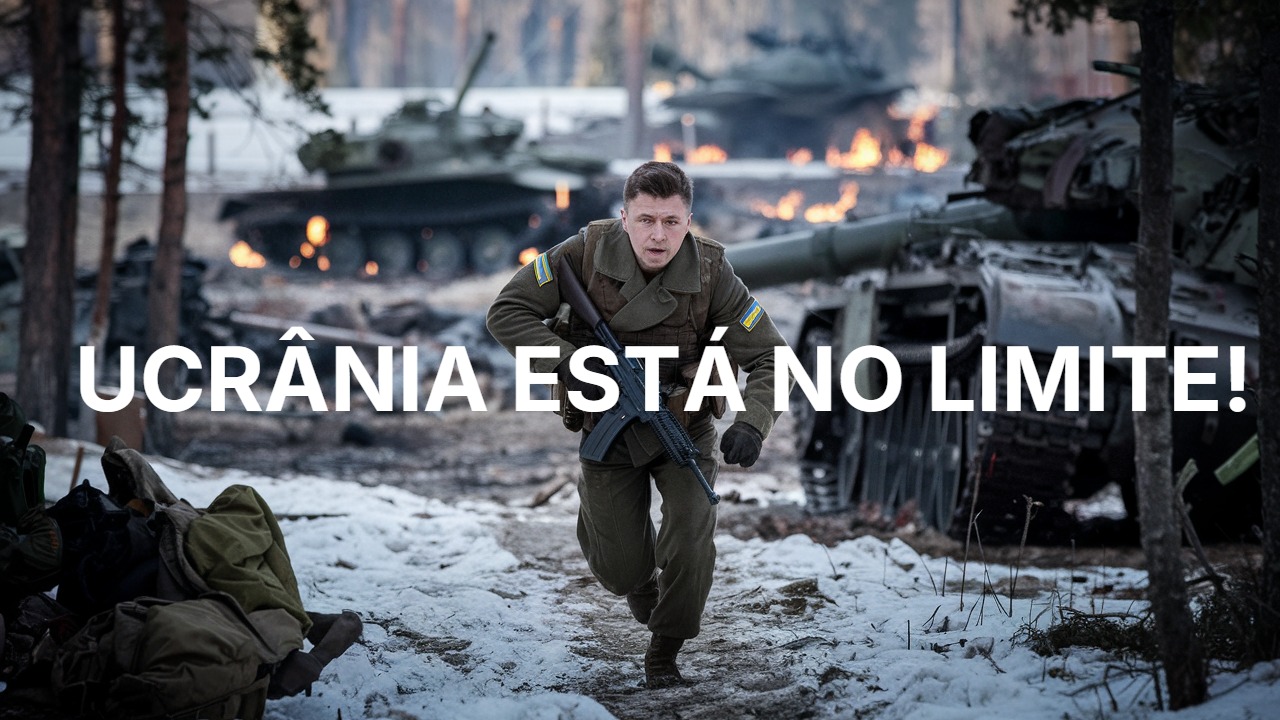

An Unprecedented Military Crisis Threatens the Balance of Power in the War Between Ukraine and Russia
Mass Desertions are shaking the Ukrainian army and putting its ability to resist into question. The West, in turn, is watching the situation with great concern. The lack of trained soldiers threatens to undermine the country’s strategy in the conflict.
According to a report from The Guardian, published on January 31, 2025, the morale of Ukrainian troops has drastically declined in recent months. This phenomenon is driving an unprecedented military crisis.
Reports indicate that desertions reached alarming levels by the end of 2024. This coincides with the intensification of Russian attacks in the Donetsk and Luhansk regions.
-
European Parliament Approves Digital Euro, Aiming to Challenge Visa and Mastercard’s Dominance and Transform Payments Across Europe by 2029

-
Israel finds Hezbollah militarized tunnel over 200 meters long under village, with 4 missile launch shafts, 12 chambers, anti-tank missiles, drones, and weapons depots at a depth of 25 meters.

-
Ukraine launches largest drone attack on Moscow since 2022, Russia claims to have intercepted nearly 200 aircraft near the capital, Kapotnya refinery targeted again, and offensive reignites alert about war reaching the Russian energy heart just a few kilometers from the Kremlin.

-
Truck drivers, freight, and fines from 2022 take center stage in politics: Chamber approves MP with amnesty, mandatory tracking by CIOT, million-dollar penalties, and new minimum wage for those who spend more than 24 hours on the road.



What Is Behind the Desertions?
Since the onset of hostilities on February 24, 2022, Ukraine has faced significant challenges in maintaining cohesion and morale within its armed forces. Extreme fatigue and lack of adequate preparation are causing a substantial increase in desertions.
Moreover, the psychological pressure on soldiers continues to rise, making the situation even more critical.
The rapid mobilization of reservists without profound military training compromises the country’s combat capability. For this reason, the disorganization in recruitment directly contributes to the weakening of the troops.
Additionally, political instability and constant shifts in defense strategy create insecurity among soldiers, further exacerbating the crisis.
With increasingly intense battles and an exhausted military contingent, Ukraine is facing growing difficulties in maintaining its defensive lines. Therefore, without efficient reinforcements and a consolidated military structure, the number of deserters continues to rise.
In December 2024, the Commander-in-Chief of the Ukrainian Armed Forces, Oleksandr Syrskyi, acknowledged that the recruitment model inherited from the Soviet Union was outdated and compromising Ukrainian resistance.
In early January 2025, the government approved new directives for military conscription. The minimum recruitment age was reduced from 27 to 25 years. In addition, young people aged 18 to 25 were permitted to join the front.
The Fragility of Ukrainian Forces on the Battlefield
The reduction of Ukraine’s military personnel threatens to drastically alter the balance of power in the conflict. With the growing disorganization of the troops, adversarial forces find it easier to advance.
Thus, the concerns of allied countries are increasing, as Ukrainian resistance may quickly lose strength.
Russia, on the other hand, maintains a structured offensive. Despite facing logistical and political challenges, its army preserves a large and well-prepared contingent, further increasing Ukraine’s disadvantage.
Since October 2024, Russian troops have advanced on key strategic points in Avdiivka and Kupiansk. This has consolidated their presence in the region.
With fewer soldiers and evident operational difficulties, Ukraine is attempting to compensate for losses with armaments and foreign support. However, without a sufficient contingent to operate these weapons strategically, the effectiveness of these measures becomes limited.
Therefore, the decisions made in the coming months will be crucial for the outcome of the conflict.
The ineffective recruitment and the population’s reluctance to enlist voluntarily highlight a crisis that could worsen even further.
For this reason, Ukrainian authorities need to act quickly to contain this trend.
Western Reactions to the Ukrainian Crisis
Ukrainian authorities need, above all, to act urgently to contain the wave of desertions and strengthen their ranks.
To that end, they must reform the recruitment model, ensure adequate training, and provide efficient logistical support to soldiers. Otherwise, the weakening of the army may become irreversible.
The strengthening of military leadership also proves essential to restore the trust of the troops.
Emergency measures are already under discussion, but their effectiveness will depend on the speed of implementation and popular support.
Thus, the Ukrainian government needs to act strategically to avoid worsening the situation.
The West, in turn, faces a dilemma.
Intensify support for Ukraine, providing military and financial assistance, or seek diplomatic paths that lead to a negotiated ceasefire?
Any decision will directly impact the conduct of the conflict and the future of global geopolitics.
In this way, the hesitation of allies may compromise Ukrainian military operations.
The United States and the European Union have already expressed concern over the stability of the Ukrainian army.
However, the provision of aid may face political and economic resistance. This issue becomes even more relevant in light of the U.S. presidential elections, scheduled for November 2024.
Donald Trump, one of the main candidates, advocates for a more isolationist foreign policy. This may directly affect the sending of resources to Ukraine.
The lack of consensus among Western countries on the best strategy to address the Ukrainian crisis may directly impact the future of the war.
Furthermore, the increase in desertions may influence how allied nations address the conflict.
Thus, the response from the West needs to be swift and effective to prevent a military collapse of Ukraine.
The desertion crisis in the Ukrainian army, as reported by The Guardian, raises a red flag for Kyiv and its allies.
The weakening of the troops compromises Ukrainian resistance and opens the door for enemy advances.
Therefore, the lack of control over desertions may jeopardize the entire military structure of the country.
In light of this scenario, authorities and the international community will need to act decisively to define the course of the conflict.
The response from allied countries will determine not only the future of Ukraine but also the balance of power in global geopolitics.
What comes next? Will the West double down on its support or begin to reevaluate its backing for Ukraine?