






 Portuguese
  Spanish
  3 min of reading
  1 comment



Designer Transforms Old Pickup Into Functional Micro Home With Bed, Kitchen, Bathroom And Solar Energy
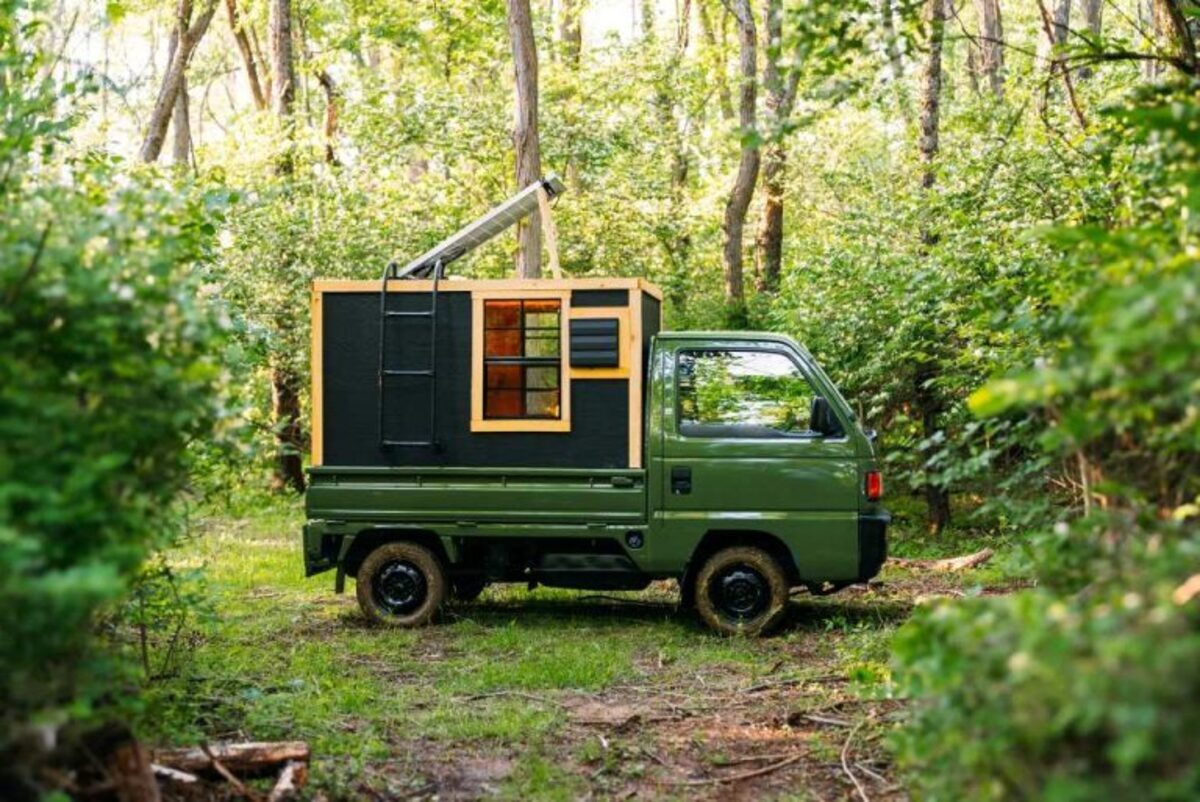
An audacious and unconventional project caught attention on social media and in the sustainable design community. Content creator and tiny house designer Levi Kelly presented his latest invention: a micro home mounted on a 1998 Honda Acty 4×4 pickup.
The vehicle, though old, now houses what he calls the “smallest mobile home in the world,” with only 1.95 square meters of internal area.
The concept takes downsizing to the limit. The reduced space has been maximized with creative and functional solutions. The micro home is equipped with a bed, kitchen, portable bathroom, and even an outdoor shower. All of this was assembled while respecting the vehicle’s payload limit: 362 kilograms.
-
Small pygmy hippopotamus is born in Germany, surprises veterinarians with healthy growth and steals the show at the Berlin Zoo

-
Brazilian mechanic invented a lamp made from a PET bottle during the 2001 blackout, the idea turned into an NGO present in 30 countries and has already illuminated 40,000 people in 200 communities without electricity in Brazil.

-
Centuries-old mystery gains new chapters in Greece after excavations reveal a possible lost temple of Poseidon, hidden among ancient lagoons, monumental remains, ritual objects, and an architectural plan that surprised even the experts.
-
2-month-old baby says “I love you” to parents and the video froze the internet: doctors say most babies only speak after the first year of life



Optimized Structure
The structure was made with lightweight wood, insulation foam, and exterior panels that do not compromise the vehicle’s capacity. The construction stayed within the allowed weight, requiring meticulous planning.
The roof received an adjustable solar panel, which provides basic energy to the interior. Access is through a ladder fixed to the side of the vehicle.
The model of the pickup, imported from Japan, underwent no major mechanical changes. The main alteration is the adapted body with a wooden cabin painted in military green.
The wheels were also updated, but the highlight is the functional and sustainable design of the tiny house on wheels.
Multifunctional Interior
Inside the cabin, there is a small kitchen with a functional sink. Clean water comes from one bottle, and used water is collected in another.
An alcohol stove heats the space and can be used to prepare meals. A small fan ensures adequate ventilation.
The bed is hidden under part of the kitchen and stove. To sleep, it is necessary to move these items and lift the cabinet. The bed is suitable for people up to 1.78 meters tall.
The portable bathroom was installed strategically. It is located in front of a bubble window, which allows natural light in and provides enough space for a person to sit comfortably.
This window is a simple but essential solution considering the extremely compact size of the micro home.
External Shower And Solar Energy
The shower was also creatively designed. It uses the same faucet as the sink and transforms into an external shower when fixed to the outside wall of the cabin. This system avoids the use of complex plumbing and saves internal space.
Solar energy is used to power LED lights and charge a small battery. This battery supports the essential equipment of the vehicle. The entire system is focused on energy autonomy and simplicity.
Sustainability As Focus
The project avoids the use of toxic materials, such as asbestos, still present in many old vehicles. The choice of lightweight wood and foam also helps improve thermal efficiency and safety. The solar panel represents a sustainable alternative, allowing the micro home to be used even away from the power grid.
In addition, repurposing an old vehicle contributes to waste reduction and extends the lifespan of an existing asset. This decreases the need for new productions and promotes conscious consumption.
Functional Housing Model
The project is more than just an internet curiosity. It can serve as a model for temporary housing, especially in emergency situations or in areas with space scarcity.
The combination of mobility, self-sufficiency, and low environmental impact shows that it is possible to live with the essentials, in a functional and responsible way.
In the end, Levi Kelly demonstrates that minimal space can be sufficient when the design is well thought out. His tiny house on wheels is not just an experiment — it is a realistic and functional proposal for the future of housing.
With information from EcoInventos.





O menor motor home, está sendo construído num gol bolinha. Tem vários vídeos do rapaz construindo. Muito interessante as alternativas de transformar o gol em uma casa, sem mudar a parte externa do carro.