Portuguese
  Spanish




During COP30, Experts Warn of the Expansion of Fake News That Discredit Renewable Energies, Especially Wind Energy, and Distort the Goals of the Paris Agreement. The Conference Tries to React to a New Type of Climate Denialism More Sophisticated and Dangerous.
On the eve of COP30, which will be held in Belém, there is growing concern among scientists and global leaders about the dissemination of misinformation regarding global warming and renewable energies.
What was once explicit denialism now takes a more subtle form, based on distortions and misleading interpretations. The focus of fake news has shifted from doubts about the existence of climate change to attacks on sustainable solutions, such as solar and wind energy, which are pillars of the global energy transition.
According to experts, this new strategy aims to delay concrete decarbonization actions and undermine trust in international climate policies.
-
Billion-Dollar Winds Propel Wind Energy Growth in Brazil, Boosting Unprecedented Technical Workforce Development

-
Brazil filled the Northeast with wind turbines but now faces the side effect of 705 giant blades reaching the end of their lifespan by 2032 just in Rio Grande do Norte, while the world projects 43 million tons of waste by 2050.
-
Brazil has filled the Northeast with wind turbines, but now it faces the side effect of 705 giant blades reaching the end of their useful life by 2032 just in Rio Grande do Norte, while the world projects 43 million tons of waste by 2050.
-
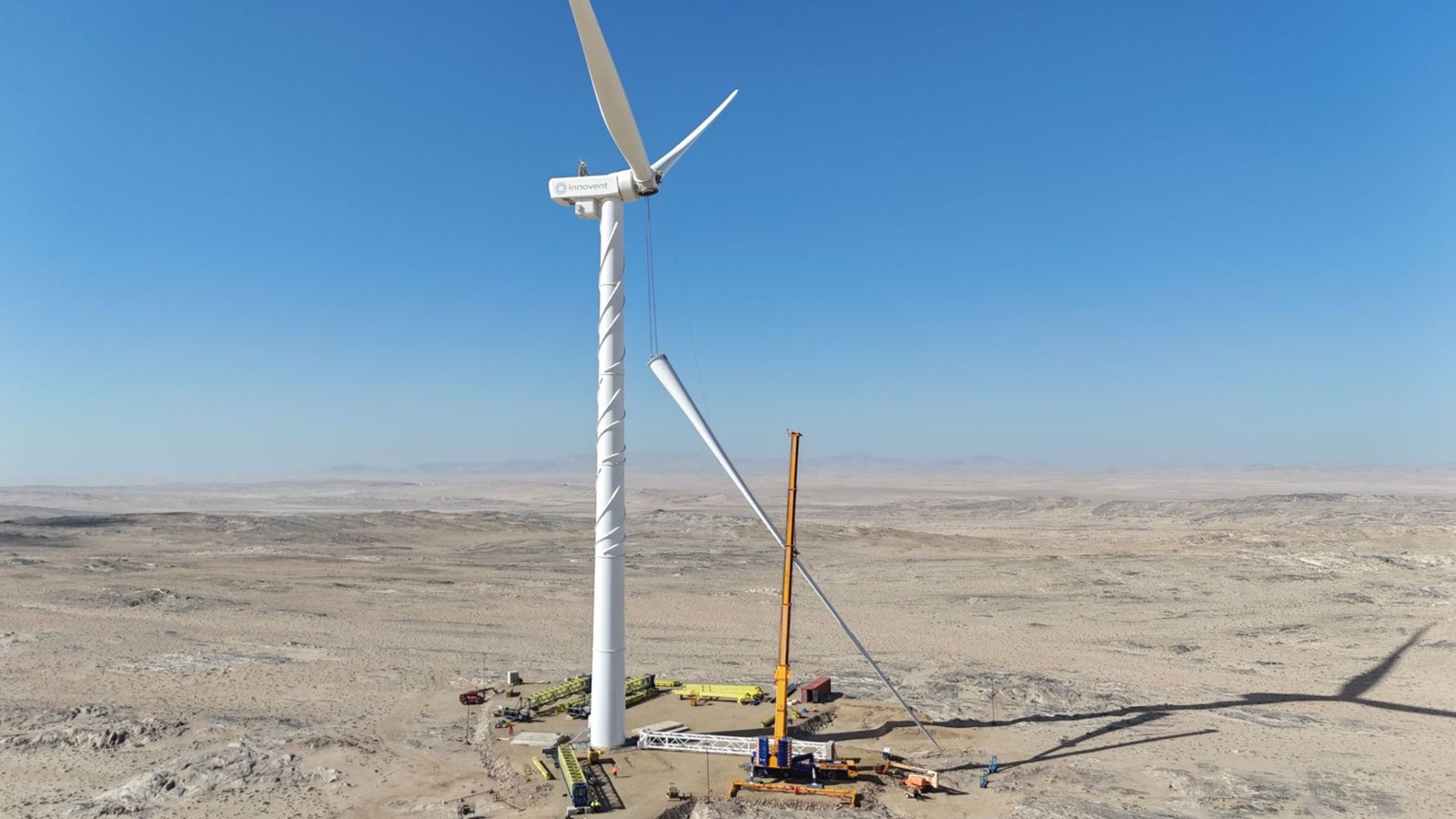
Wind farm in Namibia will have wind turbines assembled without giant cranes and is expected to avoid 200,000 tons of carbon dioxide per year when it becomes operational.


Climate Goals Under Attack: Manipulation and Misinformation About the Paris Agreement
One of the preferred targets of fake news is the Paris Agreement goal, which aims to limit the increase in the average global temperature to 1.5°C.
According to physicist Paulo Artaxo from the University of São Paulo (USP), there is an incorrect interpretation circulating on social media and even in political speeches: the fact that the Earth momentarily exceeded this limit in 2024 does not mean the treaty has failed.
“Momentarily exceeding the threshold means nothing for the Paris Agreement, because the temperature that matters is the climatological average over a decade and not that of a single year,” explains Artaxo.
He emphasizes that the 1.5°C target is a reference built by consensus and is not an absolute limit. The important thing is to reduce emissions as quickly as possible, since every fraction of a degree has a direct impact on people’s lives and the frequency of natural disasters.
Even if global warming temporarily exceeds the 1.5°C mark, limiting the increase to around 2°C still represents a huge advance compared to a scenario of 2.5°C or more.
Wind and Solar Energy in the Sights of Fake News: The New Targets of Misinformation
Disinformation campaigns also target renewable energies, especially solar and wind sources, which are now leading electricity generation worldwide.
Among the most disseminated false arguments are the alleged “inefficiency” of solar panels and the “high cost” of wind turbines — narratives that contradict scientific and economic evidence.
In practice, the reality is the opposite: solar and wind energy are now the cheapest sources of electricity on the planet.
According to recent data, 2025 marked a historic milestone, when the sum of wind and solar production surpassed coal generation for the first time, consolidating renewables as the leading global sources of electric energy.
The growth is driven by technological advancements and cost reductions. Over the past 15 years, solar installation prices have dropped by 90%, while wind turbines have become more efficient and accessible.
One of the most recurring myths in social networks is that wind turbines would be responsible for major impacts on wildlife, especially birds and bats.
The narrative, reinforced even by public figures like Donald Trump, ignores widely documented scientific data.
In the United States, studies show that the main factors for bird mortality are domestic cats (2.4 billion deaths per year), collisions with buildings (600 million), and vehicle collisions (200 million).
Pesticides are responsible for 67 million deaths, while wind turbines cause approximately 1.2 million.
Although this number is not insignificant, it is much lower than that of other human threats. Additionally, the wind sector has adopted effective solutions to reduce environmental impact, such as detecting sensors, operational pauses, and strategic site selection.
Misinformation also tries to downplay the transformative role of solar energy, claiming that its adoption would be expensive or inefficient. However, solar was responsible for 83% of the global increase in electricity demand in 2025, becoming the main source of new electric energy on the planet.
Today, solar energy is the cheapest electricity in the world, with projections of increasingly greater efficiency. Traditional silicon photovoltaic panels have already reached 25% efficiency, but new generations promise to achieve 37% in a decade.
The spatial impact is also minimal: to meet the entire world demand with solar energy, only 0.3% of the planet’s land area would be needed. Most countries have available space for large-scale deployments, including combined with pastures and agriculture.
COP30: Science and Transparency at the Center of the Global Debate
The COP30 emerges as a crucial moment in battling climate misinformation. The conference presidency and various experts warn that environmental fake news has become a concrete threat to international negotiations and progress in energy transition policies.
The lies and distortions about global warming and renewable sources — such as wind energy — hinder the implementation of sustainable solutions and delay consensus among countries. Therefore, COP30’s bet is to reinforce scientific communication, promote awareness campaigns, and give visibility to the real achievements of the energy transition.
The battle against denialism and misinformation, according to organizers, will be as important as emission commitments — because, without correct information, the planet’s climate future becomes even more uncertain.