Portuguese
  Spanish


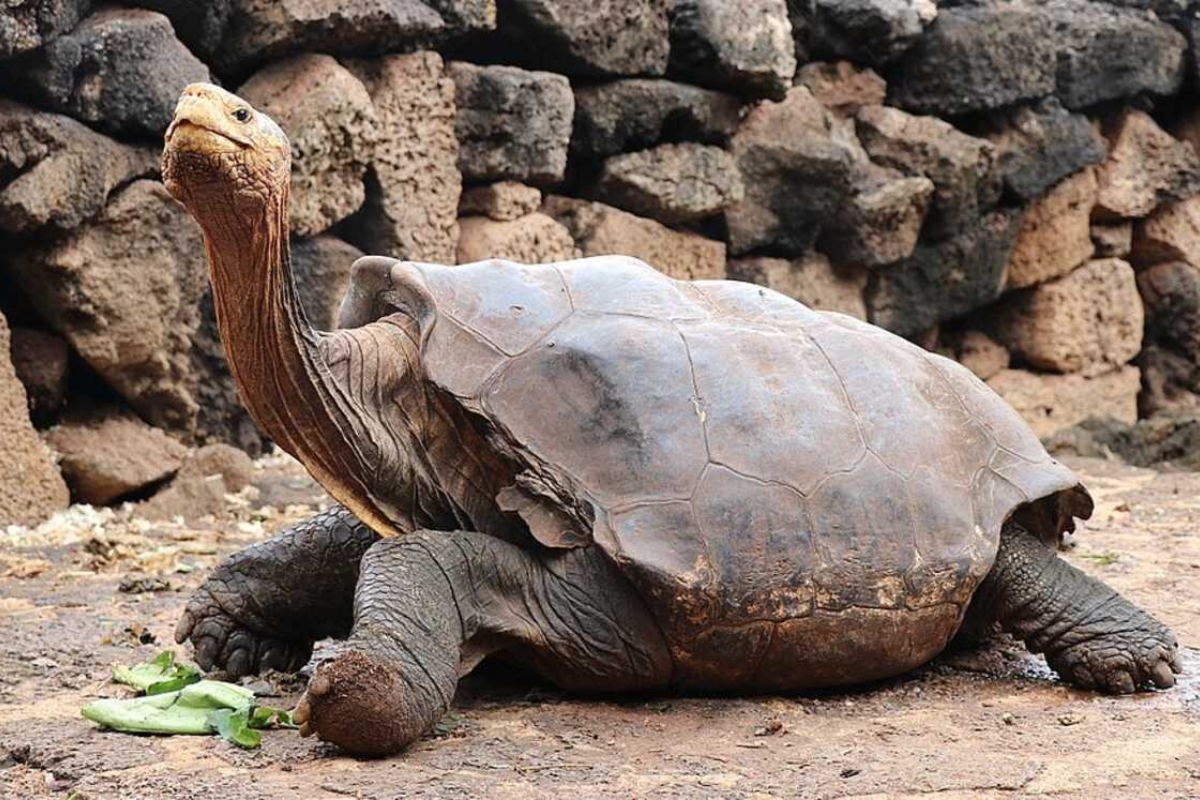

The Species Was on the Brink of Extinction, But Diego, Over a Century Old, Sired 800 Offspring and Became a Conservation Legend
During the 1970s, in the heart of the Galápagos Islands, scientists believed they were facing an inevitable end. The giant tortoise of Española Island, a species that had roamed the planet for over a million years, was reduced to a handful of survivors.
There were so few that specialists were able to count them in a single afternoon: around 15 individuals, among them only three males. Extinction seemed a matter of time.
The Discovery of a Forgotten Giant
It was then that fate introduced an unlikely character. Diego, a centenarian tortoise living at the San Diego Zoo in the United States, was identified through genetic testing as belonging to the nearly extinct subspecies. Silently, he carried in his genes the key to reversing an ecological crisis, and no one knew.
-
Bulk Carrier Docks at Brazil’s Coast, Marking First-Ever Cargo Unloading at Porto Piauí and Opening New Iron Ore Route to China After Over a Century of Logistical Challenges

-
Labor Shortage: Despite More Doctors Graduating in Brazil, Lack of Anesthesiologists Leads to Surgery Cancellations and Exposes Hidden Bottleneck in Hospitals
-
China’s Railway Marvel: A 1,956-Kilometer Journey Through Mountains, Frozen Lands, and High-Altitude Regions

-
Boeing Buys Back Spirit AeroSystems for $8.3 Billion After 737 Mid-Flight Door Incident


After decades away from home, Diego was taken to the breeding center on Santa Cruz Island. There, he began to play a role that would change the course of global conservation history.

The Unwavering Breeder
While other males followed more subdued rhythms, Diego seemed to be working on another level. Each season, new hatchlings appeared in unexpected numbers: one, five, fifteen, twenty. The conservation team watched, surprised, by the energy of an animal that had already surpassed a century of life.
When the counts were finally made, the number seemed impossible: about 800 descendants. This means that nearly 40% of the current population of the species carries Diego’s DNA. He alone helped rescue an entire lineage from the brink of disappearance.
The Return of Life to Española Island
But the rebirth of the species didn’t happen solely because of reproduction. The island needed to be restored. Invasive species were removed, native areas were regenerated, and the habitat was rebuilt. Only then were the young reintroduced, slowly navigating the volcanic terrain to reclaim a place that had nearly vanished for them.
Each year, the tortoises showed signs of adaptation and growth. What seemed impossible became real: the population began to recover naturally.
The Retirement of the Hero
In 2020, after decades of work and hundreds of descendants, Diego was “retired.” Now over 100 years old, he returned to Española Island to live out his days in peace, walking on the same soil where he was born at the beginning of the last century.
No monuments, no plaques, just the silence of the Galápagos and the wind passing through the black stones. There, Diego became a living symbol of the power of science and human persistence.
A Legacy That Crosses Centuries
Diego’s story spread across the world as a reminder that, even when everything seems lost, nature can find a way back. He became the father of a new generation of giant tortoises and one of the greatest success stories of modern conservation.