






 Portuguese
  Spanish


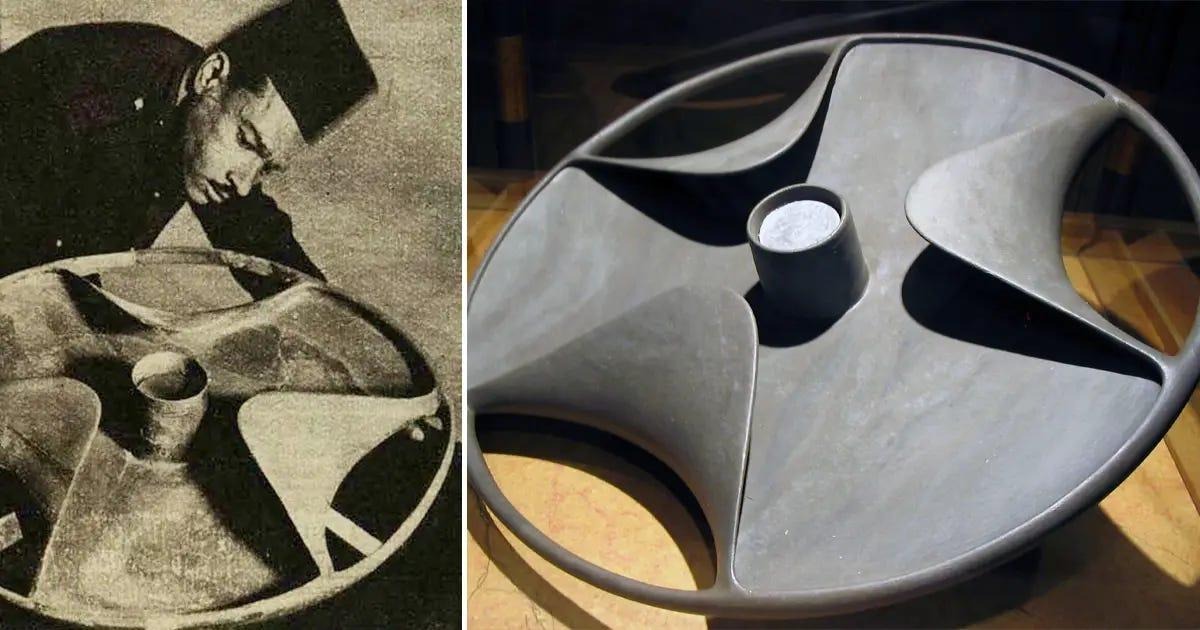

Among The Mysteries Of Ancient Egypt, Few Artifacts Arouse As Much Curiosity As The Sabu Disk. Carved 5,000 Years Ago, It Combines Delicacy And Unusual Shape, Challenging Simple Explanations And Intriguing Archaeologists Since Its Discovery.
The Sabu Disk Is A 5,000-Year-Old Stone Piece That Attracts Attention For Its Unusual Shape. It Was Found In 1936 In The Tomb Of Sabu, An Egyptian Official From The First Dynasty, Buried In The Necropolis Of Saqqara. The Excavation Was Conducted By The British Egyptologist Walter Emery.
When Discovered, The Artifact Was In Pieces. After Reconstruction, It Became Part Of The Collection Of The Egyptian Museum In Cairo.
The Mastaba Where It Was Located, A Rectangular Structure With Sloping Walls And A Flat Roof, Had Been Looted Of Jewelry And Precious Metals. Even So, The Skeleton Of Sabu Remained Intact Inside A Wooden Coffin.
-
Entrepreneur Turns Rio Cemetery Canteen into a Successful Snack Chain Generating $4.9 Million Annually and Expanding to Metro Stations

-
Rare fox feared “extinct” found alive on Caribbean island after over two decades without official sightings

-
21-Year-Old Brazilian Student Turns Homemade Popsicle Hobby into $100,000-a-Month Business

-
Australia Dumps Hundreds of Thousands of Tons of Gravel into Rivers to Restore Natural Barriers and Reverse 150 Years of Erosion




Artifacts Found In The Tomb
Besides The Disk, The Tomb Contained Dozens Of Stone And Ceramic Vases, Flint And Copper Tools, The Remains Of Two Cattle, And A Unique Bowl.
Emery Described The Object As An Ornamental Trilobed Bowl, With A Diameter Of 61 Centimeters And A Height Of 10. The Piece Was Carved From Metasiltstone, A Sedimentary Rock Subjected To Metamorphism.
According To Egyptian Archaeologist Ali El-Khouli, Wide Stone Bowls Were Common Between The First And Third Dynasties.
However, The One Found With Sabu Stands Out For Its Three Finely Carved Curved Wings That Rise From Its Edge. Viewed From Above, They Resemble A Steering Wheel, A Helix, Or Even A Modern Dome.
Theories About The Function
The Peculiar Design Has Fueled Various Hypotheses.
Some Even Suggest That It Could Be Part Of A Hydraulic Turbine Or Even A Component Of An Alien Spaceship.
More Recently, The Idea Emerged That It Would Function As A “Mashing Tank,” Used In Beer Production.
Despite The Speculations, The Most Accepted Interpretation Is That The Disk Had The Same Use As Other Flat Bowls In Ancient Egypt: To Hold Food Or Oil. The Fragility Of The Material And The Delicacy Of The Sculpture Indicate That It Was Not Used In Daily Life.
Status Symbol In Life And Death
Probably, The Sabu Disk Was Placed In The Tomb As An Offering For The Afterlife.
Like Other Funerary Objects, It Would Represent Status And Wealth, Preserving Forever The Memory Of Its Owner.




