Portuguese
  Spanish


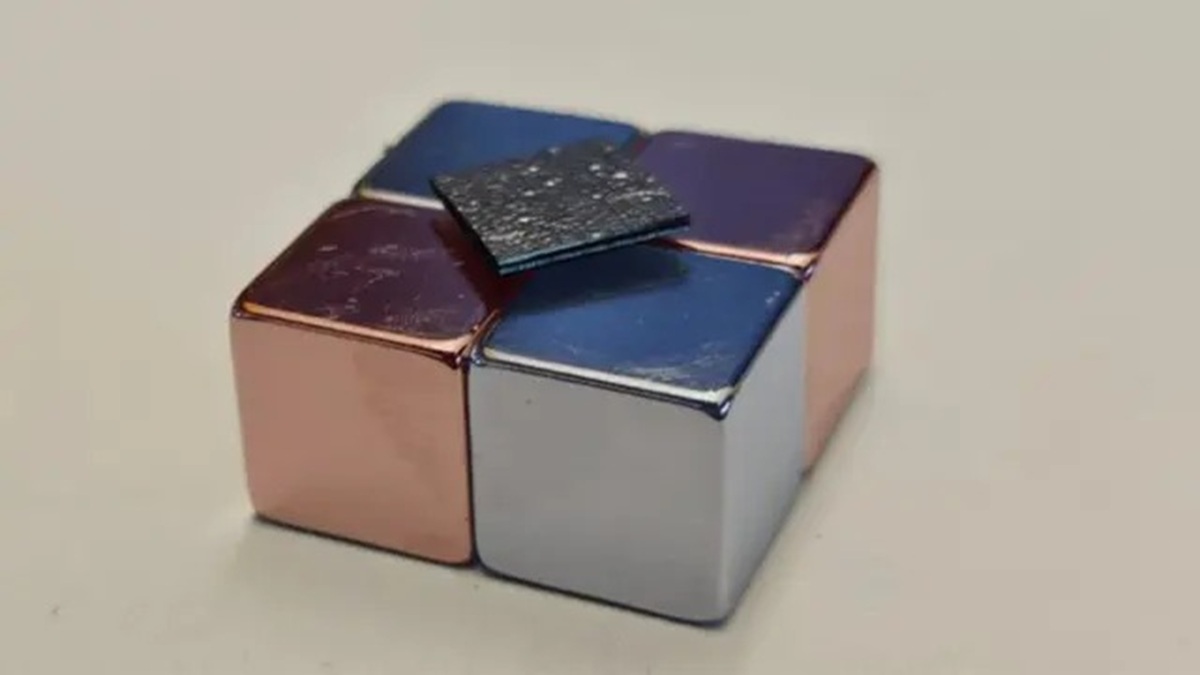

Researchers of the National University of Yokohama Develop Wireless Acoustic Levitation Device Capable of Moving Delicate Parts with Speed and Precision.
Transporting miniaturized components quickly and precisely is still a challenge for industries working at microscopic scales.
The friction from conveyors and other mechanisms limits speed and accuracy, as well as causing damage to fragile parts.
This problem is even more critical in mechanical, chemical, and biomedical applications, where small vibrations can compromise results.
-
The Trap of Modern Technology: How Screen Overload and Digital Connections Can Impact Your Mental Health and Well-being

-
Wyoming Couple Grows Tropical Fruits Year-Round in -40°C Using Geothermal Greenhouse, Demonstrating Earth’s Heat Can Produce Oranges and Lemons in Snow Without Traditional Heating

-
Ship Returns from Brazilian Coast with Thirty Newly Discovered Life Forms
-
Nigerian Professor Invents Electricity-Free Refrigerator Using Clay Pots and Wet Sand, Extending Shelf Life of Vegetables to 27 Days; 7,000 Units Distributed in Energy-Deprived Villages



Researchers from the National University of Yokohama developed a solution to eliminate these obstacles: a tetherless levitation device capable of moving in any direction without touching the surface.
Wireless Acoustic Levitation
The system uses acoustic levitation, a technology that employs sound waves to suspend objects in the air. This approach eliminates the large magnets typical of magnetic levitation and does not rely on pressurized gas, as seen in pneumatic setups.
Thus, it avoids weight, high cost, and limitations for use in compact devices.
However, traditional acoustic levitation platforms use cables for power and control, which complicates positioning in high-precision processes.
According to Associate Professor Ohmi Fuchiwaki, the team eliminated this barrier by creating a wireless drive circuit. This ensures stable levitation height and rapid transport, with complete freedom of movement.
Performance in Tests
The tests showed that the device can achieve speeds of over three meters per second on inclined surfaces.
In a test with a 10° incline, it slid freely when levitation was active but stopped when it was turned off, proving that friction was overcome.
The equipment also maintained stability while transporting up to 150 grams in total, with about 43 grams designated for payload.
Above this weight, levitation ceased to function, interrupting movement.
Compact Design and Movement in Any Direction
The operation is ensured by a piezoelectric actuator that creates a compression film between two surfaces. This thin layer of fluid allows the platform to move in any direction without physical contact.
With a size on a centimeter scale, the design is ideal for confined spaces.
Among the possible applications are assembling electronic components, transporting chemical samples in sterile environments, and moving biomedical cells without direct contact.
The lack of contact reduces contamination risks, an important factor for sensitive operations.
Potential for Future Application
The experimental results confirmed the theoretical predictions and reinforced the viability of the technology. The team believes that speed, maneuverability, and the absence of wires make the system suitable for environments that require precision and cleanliness.
The researchers plan to connect multiple units with a propulsion mechanism, creating mobile robots for contactless delivery.
These robots could circulate in factories, laboratories, and hospitals without touching surfaces.
Additionally, the team aims to increase levitation efficiency, improve stability when carrying objects, and adapt the system for uneven terrains.
Achieving these goals would enable the technology to be used in conventional industrial applications, expanding its reach beyond controlled laboratory conditions.
The findings were published in the journal Advanced Intelligent Systems.