






 Portuguese
  Spanish




After 50% Tariff From The U.S., Coffee Producers And Exporters From Brazil Articulate Diplomatic And Commercial Actions To Attempt To Secure Exemption
A week after the 50% tariffs from the United States on Brazilian products went into effect, the coffee sector is still trying to ensure the inclusion of the bean on the list of exceptions. With no progress in bilateral negotiations, the production chain is mobilizing through industry actions.
The Brazilian Coffee Exporters Council (Cecafé) has initiated direct dialogue with diplomatic representations.
Shortly after the tariff began, the entity coordinated the sending of communications from the Brazilian Embassy in Washington to U.S. Secretaries, reinforcing the economic, social, and environmental impact of the measure.
-
Brazil’s 2026 Tax Refund: Record 9.58 Million Filers in Largest Payout Ever, But a Key Detail on Priority Recipients Draws Nationwide Attention

-
Itaú Alters Hybrid Work Model, Increasing Office Days from 2028, Prompting Employees to Adjust to New Routine
-
Facing Labor Shortage, Japan Plans to Invest $34 Million to Attract Foreign Workers in Construction, Healthcare, Industry, and Commerce

-
Brazilian City Makes Remarkable Leap, Becomes 4th Wealthiest in the Country with GDP of R$ 134.1 Billion




Asian Competition And Future Risk
The Executive Director of Cecafé, Marcos Matos, cited an alert from the National Coffee Association (NCA) regarding negotiations between Vietnam, Indonesia, and Washington.
These countries, competitors in robusta coffee, may have their tariffs reduced, currently at 20% and 19%, still this week.
In the short term, according to Matos, any eventual exemption for Vietnam and Indonesia does not threaten Brazil’s market space.
This is because 80% of Brazil’s exports are arabica, while the two Asian countries primarily produce robusta. Additionally, global arabica stocks are low, following recent production difficulties.
The risk, he explained, may arise in the future if tariffs on Brazilian coffee remain and there is a recovery in arabica production in countries such as Central America and Colombia.
“Today that is not the case, but later on, if Central America and Colombia have good harvests, the impact could be greater,” he stated.
Official Responses And Market Impact
Cecafé received formal feedback from U.S. authorities, acknowledging the request and thanking for the contact. Matos stated that, at the sectoral level, actions continue to take place.
Brazil is the world’s largest coffee producer and exporter and the main supplier to the United States, which leads global consumption.
Between January and July, the country shipped 3.713 million bags to the North American market, accounting for 16.8% of total exports.
So far, cases of contract renegotiation are sporadic. “What we have is discussion and postponement of contracts as the scenario is better understood. The market is stalled because of this,” noted the leader.
Dialogue With The NCA And Possibility Of Advancement
Cecafé will meet with the NCA, the representative entity of the sector in the U.S., for potential realignment of strategies.
The American association maintains the perception that there are good chances of exemption for Brazilian coffee, provided there is negotiation between governments.
“In the meetings they [NCA] have there with the secretaries of commerce, treasury, agriculture, they bring the perception that for the exemption of coffee, a bilateral negotiation is necessary,” Matos explained.
If coffee is placed on the list of exceptions, temporary mitigation measures may become unnecessary, allowing for a quick adjustment in shipments.
China Expands Approvals, But Effect Is Limited
China has authorized 183 Brazilian companies to export coffee, a measure that Cecafé considers more administrative than commercial.
There was validation of existing registrations and new inclusions, but the Chinese market is still five times smaller than the North American market.
Matos emphasized that there is no expectation of substitution. “We need to create a pro-negotiation movement. We are talking about a market five times larger than China in coffee consumption,” he said.
From January to July, China imported 571,866 bags, ranking 11th among Brazil’s partners. The expectation is for gradual growth, following increased local consumption, a trend already seen in other countries in Asia.
Instant Coffee And Commercial Alternatives
While awaiting progress in negotiations, Cecafé is maintaining discussions with federal and state governments to seek compensatory measures. The goal is to reduce immediate losses for exporters and producers in light of the U.S. tariffs.
In partnership with the Brazilian Association of Instant Coffee Industry (Abics), the entity requests the government to intensify actions with other buying countries.
The objective is to close bilateral agreements that guarantee Brazilian instant coffees the same exemption offered to international competitors.
With information from Agro.Estadão.
More About The Tariff: In This Game Between Brazil And The U.S., China Benefits The Most
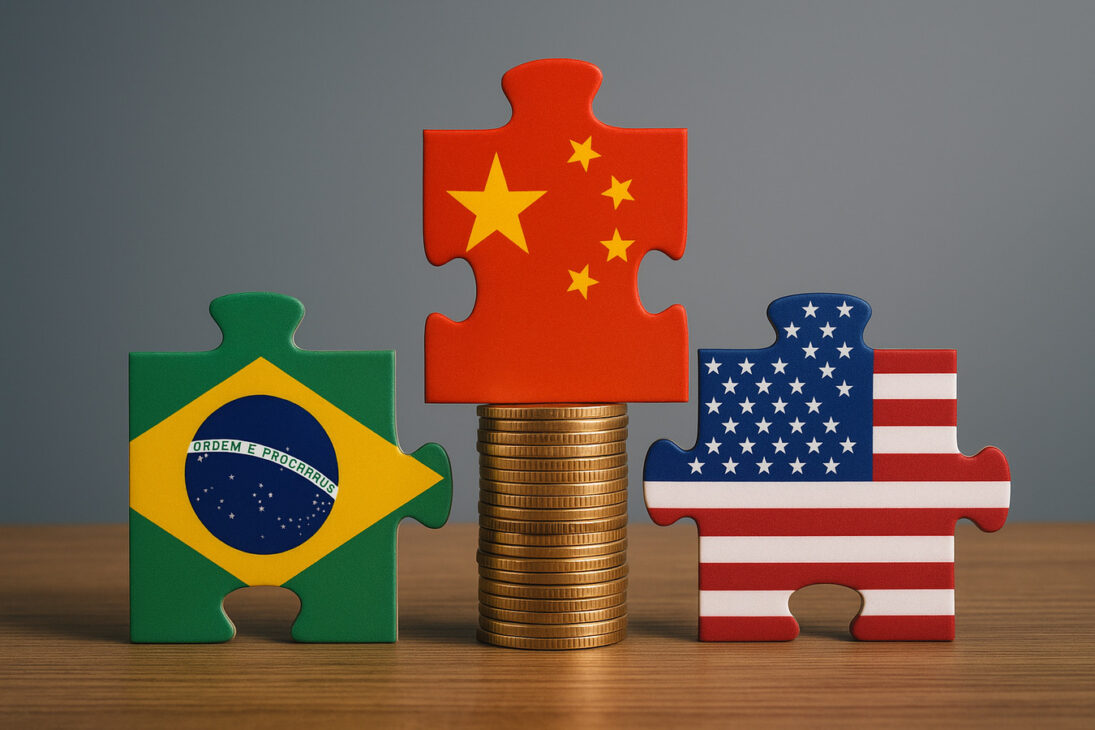
The commercial relationship between Brazil and the United States entered turmoil starting in April 2025. On the 2nd, the U.S. imposed tariffs of 10% on Brazilian products. A little more than two months later, on July 9th, the percentage rose to 50%, a measure that took effect on August 6, 2025.
The change was significant. The high taxation affected strategic sectors of the Brazilian economy, such as coffee, meat, textiles, footwear, fruits, and electronics.
Estimates from J.P. Morgan and research centers indicate that each 10 percentage point increase in tariffs can reduce Brazil’s GDP by between 0.2% and 0.3%. With the tariff at 50%, the forecast for contraction reaches 1.2% of economic activity.
Brazilian Reaction
To contain the damage, the government announced, on August 13th, the “Sovereignty-Brazil” package. The program provides R$ 30 billion in credit lines through the Export Guarantee Fund, as well as R$ 4.5 billion in support for small businesses.
There are also tax exemptions and strategic public purchases to absorb part of the affected production.
The goal is to give breathing room to exporters, especially those who were heavily dependent on the U.S. market.
The Brazilian government hopes that credit and tax incentives can prevent a sharp drop in production and employment.
Impacts In The U.S.
If the measure aims to protect the U.S. internal industry, it also has domestic effects. Products like coffee, which already occupy an important space in consumers’ daily lives, become more expensive. This pressures inflation and increases the cost of living.
Additionally, sectors such as the food industry and coffee chains assert that they cannot absorb a 50% increase without passing part of that cost on to customers. The expectation is of visible price adjustments.
The Chinese Opportunity
In the midst of this dispute, China emerges as a major beneficiary. In 2024, the country already led the purchase of Brazilian agricultural products, accounting for 73% of exported soybeans, 49% of pulp, 46% of beef, 33% of cotton, 29% of sugar, 19% of pork, and 11% of chicken.
With the tariffs imposed by the U.S., Brazilian exporters redirected shipments that were previously destined for the American market to the Chinese market. This applies to items like coffee and meat, which find a growing demand in China.
In the case of coffee, the U.S. purchases about 8 million bags of Brazilian coffee per year. Now, a significant portion of that amount is expected to go to the Chinese market, where consumption is growing at around 20% per year.
In soybeans, the change is even more significant. Chinese buyers have closed contracts with Brazil for about 8 million tons in September and 4 million in October.
This volume represents nearly half of the expected demand and weakens the position of American producers in the traditional sales season.
Who Loses, Who Wins
Brazil feels the direct impact of the decline in exports to its second-largest trading partner. The U.S., in turn, faces increased costs, loss of competitiveness, and higher inflation.
Meanwhile, China takes advantage of the situation to increase its participation in Brazilian product imports, further consolidating its dependence on this supply.
In the end, the American tariff, intended to protect its economy, weakens both Brazil and the U.S. themselves, but strengthens China’s position in global trade.
The main sources consulted for the preparation of this article were:
Agência Brasil, CBCde.org, and AG Feed.







