Portuguese
  Spanish


Equipment developed at Uesc automates the mixing of the beans, monitors temperature, humidity, and pH, and can help farmers produce more uniform and valued cocoa
A technology created in southern Bahia aims to tackle one of the most delicate points in the chocolate chain. The State University of Santa Cruz, Uesc, has obtained the patent for an automated cocoa fermenter capable of mixing the beans, monitoring process variables, and allowing remote control of operations.
The grant was published by the National Institute of Industrial Property on May 19, 2026. Registered under the number BR 10 2020 021546-9, the equipment uses a central shaft with blades to replace the manual turning performed during fermentation.
The system also includes 12 sensors designed to monitor temperature, humidity, and pH, three factors that directly influence the development of the sensory characteristics of the beans. The data can guide the operation of the blades and help maintain the fermentative mass in more uniform conditions.
-
3D-Printed Micro Homes Offer Innovative Solution to California’s Housing Crisis: Village with 40 Permanent and 14 Temporary Units Built in 10 Months Provides Facilities and Social Services to Help Residents Transition from Camps

-
Flushing Toilet Paper in Brazil Could Gradually Damage Home Plumbing, Experts Warn

-
Meet the Fascinating Cassowary: The Bird That Resembles a Dinosaur, Runs Like an Athlete, Crosses Rivers with Ease, and Plays a Crucial Role in Tropical Forests
-
Brazil Deploys Water-Landing Ambulance Planes in the Amazon, Cutting Travel Time from 3 Hours to 12 Minutes to Reach Isolated Communities




The proposal is to reduce failures in a stage that can determine whether the cocoa will be marketed as a common product or will have the conditions to compete in higher value markets. However, the patent does not mean that the machine is already available for large-scale purchase, as commercial price, manufacturer, and implementation schedule have not yet been disclosed.
Patent recognizes work developed by a team at Uesc
The Industrial Property Journal No. 2,889 confirms that the application was filed on October 21, 2020, and published in May 2022, before the final grant in 2026. The document establishes a validity period of 20 years counted from the filing, provided that the conditions set forth in the legislation are observed.
The patent holder is the State University of Santa Cruz, located between the Bahian municipalities of Ilhéus and Itabuna. The official record identifies Jorge Henrique de Oliveira Sales, Artur Vieira dos Santos, Marcelo Bruno Chaves Franco, and Rodrigo Gaigher Cezana as inventors.
The development, therefore, did not start recently. In 2018, the Technological Innovation Center of Uesc already mentioned a project for the automation of a cylindrical cocoa fermenter among the research selected by the Institutional Program of Scholarships for Initiation in Technological Development and Innovation.
Twelve sensors monitor what happens inside the fermenter
The fermenter consists of a cylindrical stainless steel container and a central shaft equipped with rotating blades. Instead of the worker manually transferring or stirring large volumes of beans, the system itself performs the movement at pre-programmed intervals.
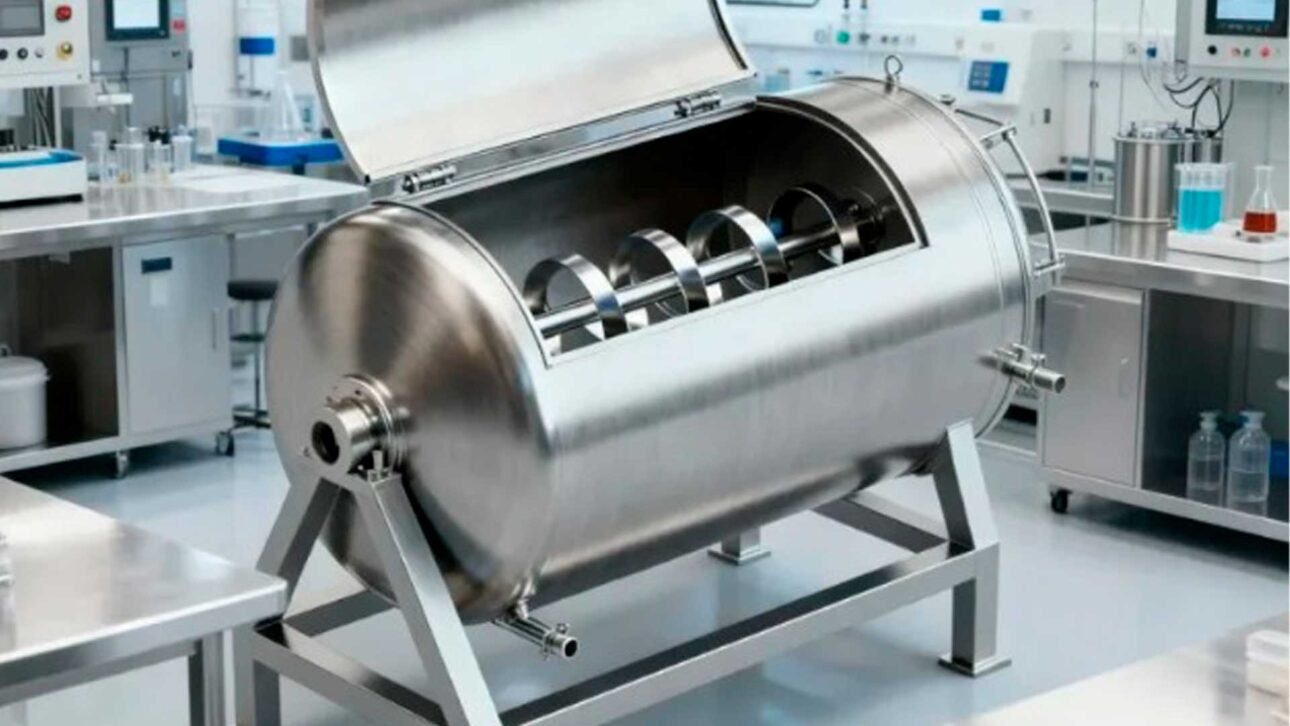
According to information published by the Mercado do Cacau portal, eight sensors are positioned on the sides and another four are installed at the bottom of the equipment. They continuously monitor temperature, humidity, and pH of the fermenting mass.
The measurements feed a control system that can adjust the rotation speed of the blades. The goal is to promote oxygenation and maintain the cocoa temperature in the indicated range of 45 °C to 50 °C, preventing parts of the mass from fermenting in very different ways.
Connectivity is achieved through an ESP8266 module, a component used in Wi-Fi communication projects. This allows producers or technicians to monitor data and command certain operations without having to stay next to the equipment all the time.
The operational load disclosed is approximately 666 kilograms of beans, corresponding to one-third of the internal space intended to allow air circulation. The structure also has a lower opening for draining the released liquids, including cocoa honey and other fluids formed during the process.
Fermentation helps build the aroma and flavor of chocolate
After the fruits are harvested and broken, the beans are still covered by a pulp rich in sugars. Over several days, yeasts and bacteria transform these compounds, causing changes in temperature, acidity, and chemical structure.
This sequence prepares the beans for drying and roasting. When fermentation is insufficient or irregular, the product may retain bitterness, astringency, and excessive acidity, as well as exhibit color and characteristics incompatible with more demanding standards.
A study published by the scientific journal PLOS One in October 2024 monitored fermentation processes in production units in the Colombian Amazon. Researchers found that the time and management of fermentation had a significant impact on physical, biochemical, and sensory characteristics, reinforcing the need to standardize the process.
The turning has an important function because it redistributes heat, moisture, and microorganisms and allows oxygen to enter the mass. Automation can make this work more regular, but it does not eliminate the influence of factors such as cocoa variety, fruit ripening, climatic conditions, hygiene, drying, and storage.
Technology targets small producers and more demanding markets
The main argument presented by researchers is that the fermenter could facilitate small farmers’ access to quality control equipment. For this audience, manually moving hundreds of kilos of cocoa requires physical effort, labor, and constant monitoring.
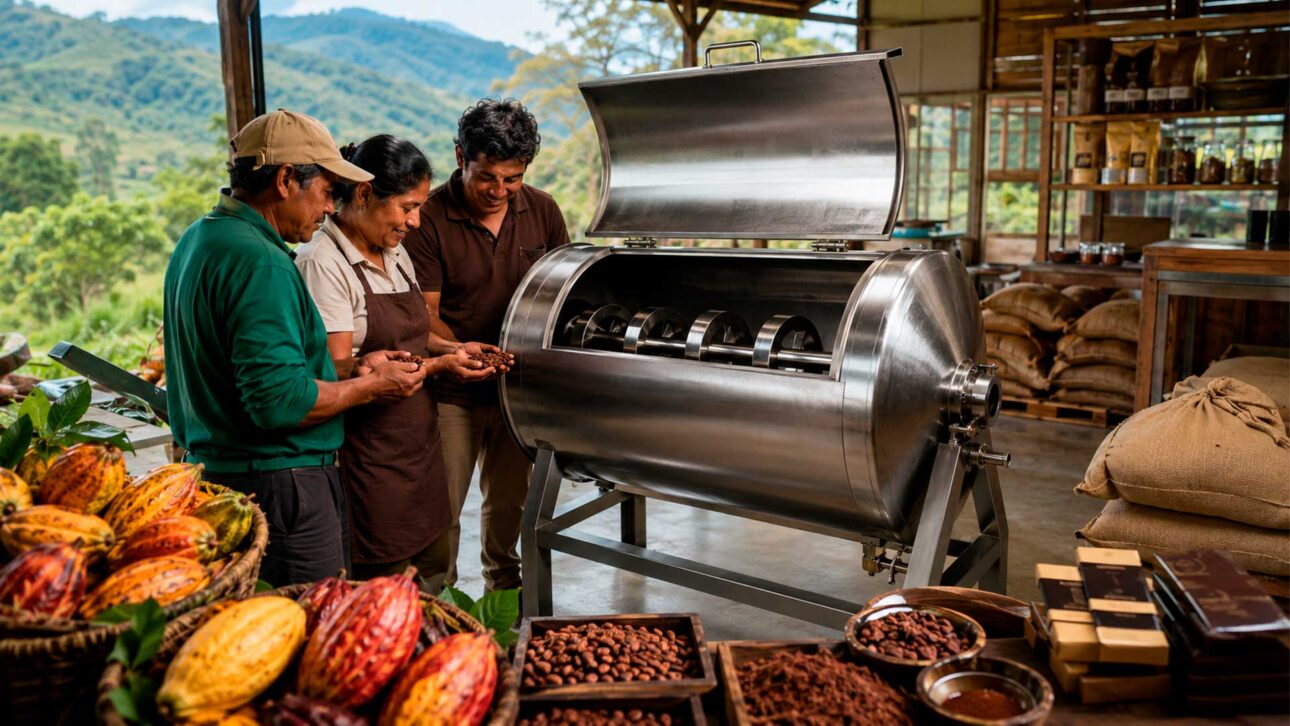
A sectoral analysis published by Banco do Nordeste in 2025 pointed out that the south of Bahia has a strong presence of small producers, many of whom have a low level of technology and little ability to influence the prices paid for production. This scenario helps explain why post-harvest automation can have economic relevance.
More homogeneous batches tend to facilitate quality assessments and negotiations with special chocolate manufacturers. However, the result will depend on the final cost of the machine, financing methods, technical assistance, and maintenance capacity on the properties.
Patent does not guarantee immediate adoption on farms
The granting of a patent recognizes that an invention meets the legal requirements of novelty, inventive activity, and industrial application. It protects the technology, but does not represent, by itself, a certification of commercial performance or viability for all properties.
As of June 12, 2026, the public information consulted did not present a sale price, a company licensed to manufacture the fermenter, or a forecast for the start of commercialization. Although the responsible researcher describes the solution as accessible and low-cost, no value was provided.
Before widespread adoption, it will be important to compare the machine with traditional vats under different conditions. Tests should consider cocoa varieties, batch sizes, energy consumption, maintenance frequency, sensory quality, and financial return for each producer profile.
The development received support from the Bahia State Research Support Foundation, the National Council for Scientific and Technological Development, and the university itself. The next step may involve licensing, technology transfer, and partnership with manufacturers capable of producing the equipment on a scale.
Innovation arrives at a strategic moment for Brazilian cocoa farming
The pursuit of productivity and quality gained momentum in 2026. In May, the Ministry of Agriculture and Livestock announced a project of US$ 30.9 million to expand agroforestry systems for cocoa in Bahia and Pará, the main producing regions of the country.
The Uesc initiative also aligns with the objectives of the National Policy for Encouraging the Production of Quality Cocoa, accompanied by Ceplac. The policy seeks to raise the standard of the Brazilian product and stimulate the industrialization and commercialization of cocoa in higher categories.
Quality will depend on bringing research to the producer
The automated fermenter shows how universities located in agricultural regions can transform everyday problems into technological solutions. By combining mechanics, sensors, and connectivity, the project seeks to make a traditionally experience-dependent and manual labor stage more predictable.
The potential is significant, but the transformation will only occur if the technology leaves the academic environment and reaches the field with affordable pricing, training, and technical assistance. The patent opens an opportunity, but the real impact will be measured by the quality of the beans and the income obtained by the farmers.