






 Portuguese
  Spanish


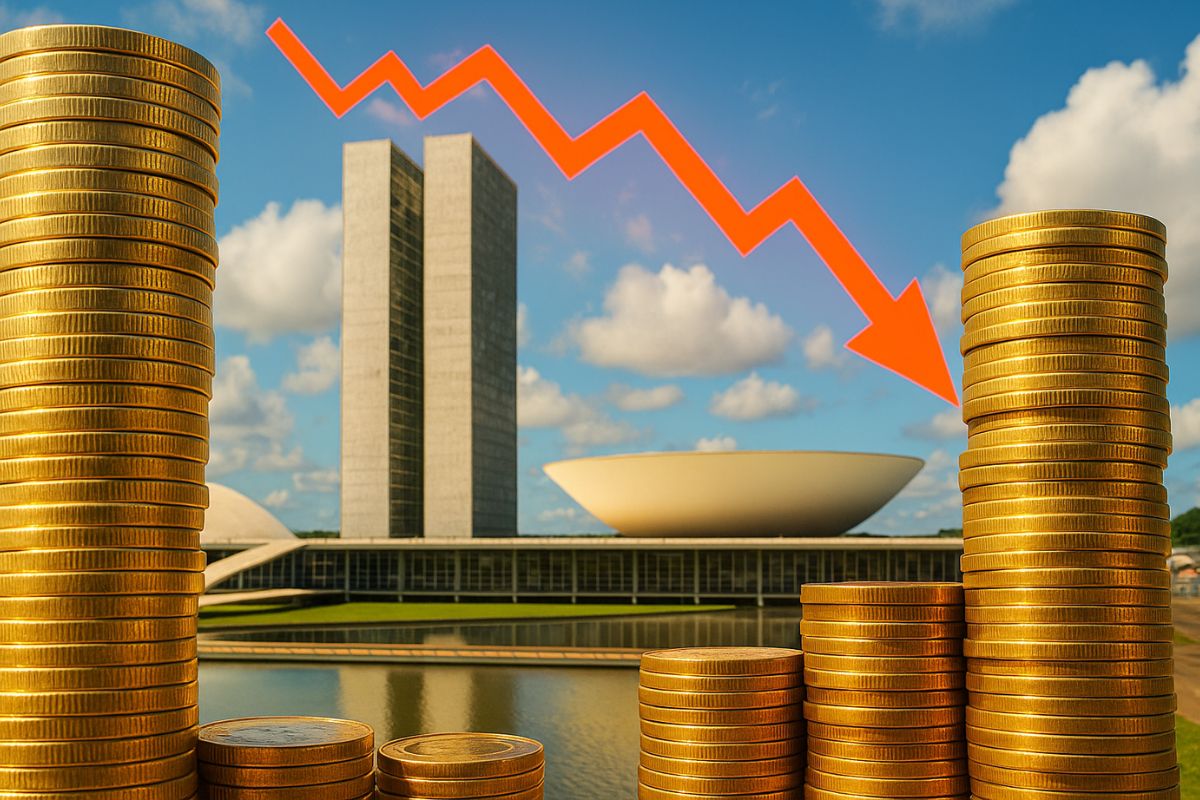


Public Debt Is Higher Than They Are Saying. New Calculation, Presented by Economist Fernando Ulrich, Shows That the Real Value of Brazil’s Debt May Be Near 100% of GDP, Above the Number Officially Disclosed
The public debt in Brazil already concerns economists, but more complete data indicates that the situation may be even more serious than officially reported. According to market analyses, when including the bonds issued and today held in the Central Bank’s portfolio, the total debt approaches 99% of GDP — nearly 22 percentage points above the number used by the government.
This data reveals that the debt trajectory continues to worsen, with growth outpacing that of the economy and a high cost to the National Treasury. Economic expert Fernando Ulrich warns that, without fiscal adjustment, the debt is likely to become unsustainable in the coming years.
What Official Numbers Do Not Show
The traditional calculation of public debt considers only the bonds in circulation outside the Central Bank. As a result, the percentage reported at the end of 2024 was 76.5% of GDP. However, when including the bonds that are on the balance sheet of the monetary authority — issued to cover deficits and used in monetary policy operations — the index jumps to nearly 100%.
-
Coca-Cola Shuts Down 100-Year-Old Factory in the U.S., Impacting 85 Workers and Shaking Local Community with Historic Consequences

-
Bianca Andrade Invests $30 Million of Her Own Money in Boca Rosa, Launches Over 100 Products in a Year, Aiming for $400 Million by 2026
-
Belo Horizonte Becomes First Brazilian City to Fund Housing, Utilities for 100 Homeless Families with $900,000 Initiative
-
Brazilian Joins Homeownership Consortium, Faces Decade of Dual Payments Totaling $141,000, Surpassing Traditional Mortgage


This methodological difference makes Brazil appear less indebted than it actually is. For comparison, the U.S. has debt equivalent to 124% of GDP, but using the same methodology applied internationally, Brazil’s would be much closer to that level.
Why Debt Grows Faster Than the Economy
Between 2015 and 2024, the debt/GDP ratio rose from 65.5% to 76.5%. There was a peak of nearly 87% during the pandemic, a decline until 2022, and since then, a new rise. In recent years, debt grew by up to 15% per year, while GDP advanced by an average of 8%.
The growth is exacerbated by the nominal deficit, which is already over R$ 900 billion, considering interest payments. Even with occasional primary surpluses, they are not sustainable and tend to disappear with delayed expenses, such as court orders.
Debt Structure Favors High Cost
Another issue is the profile of the issued bonds. According to economist Fernando Ulrich, nearly half of the debt is tied to the Selic rate, which automatically increases the cost of servicing the debt when interest rates rise. Only 21.6% is fixed-rate — the most stable format used by advanced economies, which often have more than 85% of their debt in this type.
Furthermore, the average maturity of Brazilian bonds is only 4 years in the domestic debt, compared to more than 10 years in countries like Japan and the United Kingdom. This forces the Treasury to frequently refinance the debt, increasing pressure on public accounts.
The Role of the Central Bank in Financing
Although little discussed, the Central Bank has been absorbing an increasing share of public debt. Today, more than 20% of the issued bonds are on its balance sheet — a proportion greater than in the U.S. This means that, indirectly, the monetary authority helps finance the government, increasing the risk of inflationary pressures and reducing fiscal credibility.
This accumulation has increased especially since 2014 and accelerated again in the last two years, reinforcing the perception that the debt is already at a critical level.
Fiscal Adjustment as the Only Solution
Economists are unanimous: there is no sustainable solution for public debt without spending control. Cutting expenses, reviewing the fiscal framework, and responsibly increasing revenues are essential steps to regain investor confidence and allow for a consistent drop in interest rates.
If nothing is done, Brazil may face a new confidence crisis, further raising the cost of credit and limiting economic growth capacity.
And you, do you believe that the government is being transparent about the size of the public debt? Do you think that fiscal adjustment is feasible in the current scenario? Leave your opinion in the comments.





Relaxa pessoal logo o PT resolve isso logo logo e mete a mão na poupança de vcs e paga a dívida kkkkkk
Pena que a mídia militante busca ofuscar esses dados
Complicado, mas a questão que mais pega é que ela (dívida) é de curto prazo (4 anos +-). Assisti ao vídeo, não concordo 100% com as falas, mas é preocupante.
No frigir dos ovos, maioria das dívidas são impagáveis. E muita gente investe em títulos, fundos de pensão, investidores individuais.