Portuguese
  Spanish


Stellantis and Factorial Energy bring to the streets a technology that promises to change the future of electric vehicles, focusing on performance, safety, fast charging, and energy efficiency.
A new stage in the race for solid-state batteries has begun with the Dodge Charger Daytona.
Stellantis and Factorial Energy have started testing advanced cells in the electric model, bringing to the streets a technology that, until recently, still seemed distant from large-scale automotive production.
The initiative marks the first application of this type of battery in a production vehicle for public road tests in North America.
-
End of an era in Brazil: beloved sedan by Brazilians is discontinued despite having a 2.0 engine with 151 hp, CVT transmission, 466-liter trunk, and up to 650 km of range.

-
New Law Proposal in Brazil Could Heavily Penalize Drivers: Dangerous Overtaking May Become a Serious Offense with Fines Increased Tenfold and a 12-Month License Suspension; Update on 2026 Progress

-
Electric Revolution: Watts W125 Motorcycle Offers 160 km Range, 90 km/h Speed, and Affordable Price Starting at $3,000
-
General Motors Replaces Over a Thousand Workers with 50 Cobots at Electric Vehicle Plant, UAW Union Criticizes Move Amid Industry’s Automation Push


The main goal is to validate performance, safety, durability, and reliability under real-world conditions.
The demonstration also brings the technology closer to a possible future commercial application, although market arrival still depends on further validation stages.
Road test takes solid-state battery out of the laboratory
The advancement comes after a series of technical stages between Stellantis and Factorial Energy.
In October 2024, Stellantis announced it would use the Dodge Charger Daytona as the basis for a demonstration fleet with a solid-state battery.
In April 2025, the companies announced the validation of FEST cells in the laboratory.
The current phase involves calibration and road tests, focusing on proving whether the technical results can be replicated in a real car.
This process is essential because a battery may perform excellently in a controlled environment but face challenges in daily use.
The new stage will evaluate thermal behavior, acceleration response, range, recharging, and safety of the set.
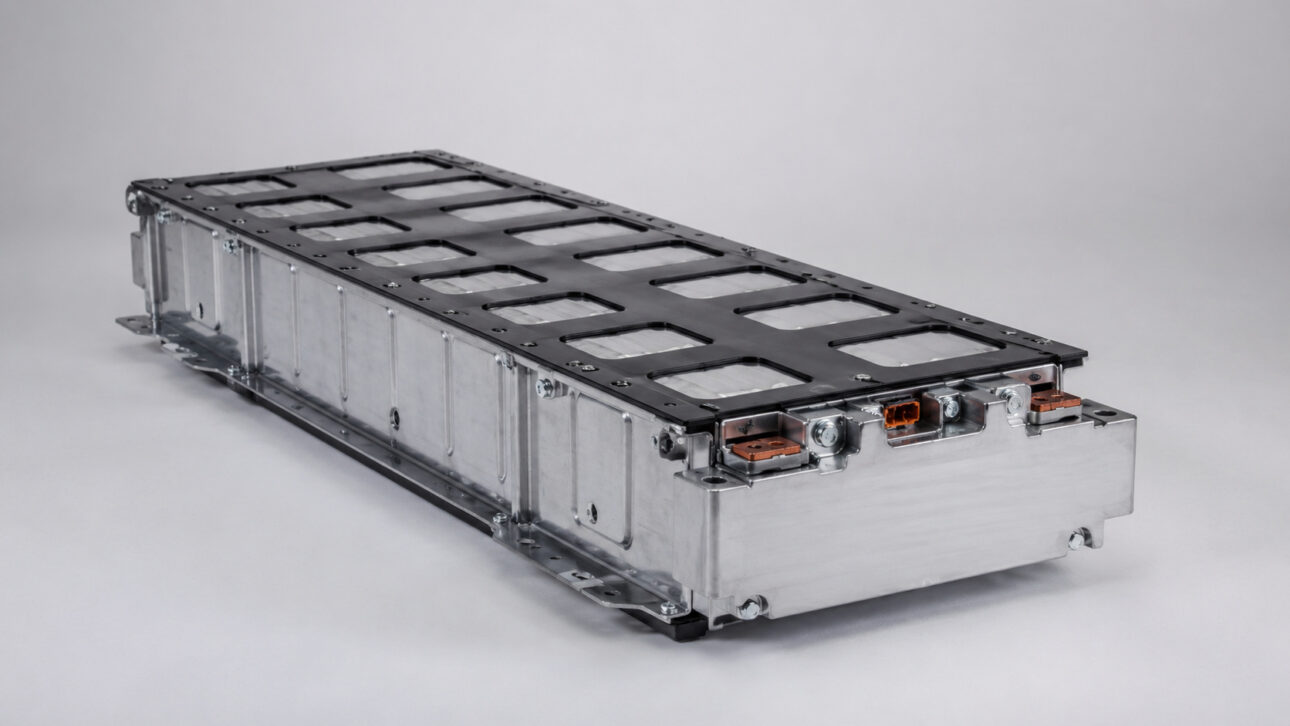
FEST Technology Uses Semi-Solid Electrolyte
The center of innovation is in the FEST technology, an acronym for Factorial Electrolyte System Technology.
Unlike traditional lithium-ion batteries, which use liquid or gel electrolytes, Factorial’s solution works with a semi-solid electrolyte.
According to the company, the system combines a solid matrix with liquid or gelatinous electrolyte.
This composition aims to offer greater thermal stability, lower flammability, and more efficient ionic conduction.
The technology also aims to deliver more energy at a lower weight, a decisive point for high-performance electric vehicles.

Technical Data Indicate Important Advancement for Electric Cars
The results released before the road phase draw attention for the combination of energy density, fast recharge, and thermal resistance.
The validated FEST cell showed 375 Wh/kg of energy density, a number higher than many batteries currently used in electric cars.
The technology also demonstrated recharging from 15% to 90% in just 18 minutes, at room temperature.
Another relevant point is the operation in extreme temperatures, functioning between -30 ºC and 45 ºC.
Main Data Released by Factorial Energy
- 375 Wh/kg of energy density
- Recharge from 15% to 90% in 18 minutes
- Operates between -30 ºC and 45 ºC
- Use of semi-solid electrolyte
- Application in the Dodge Charger Daytona
These numbers still need to be confirmed under real driving conditions.
Engineering of the Charger Daytona needed to be adapted
The transition from laboratory cells to the vehicle required complex engineering solutions.
Therefore, Stellantis developed a novel and patented mechanical architecture to accommodate the cells in the Charger Daytona‘s battery pack.
Engineers from both companies also adjusted control systems, calibration, and the design of the assembly.
The goal is to ensure that the battery delivers high performance without compromising safety, durability, and reliability.
Ned Curic, Chief Engineering and Technology Officer of Stellantis, stated that it is not enough to optimize just one metric.
According to the executive, the system needs to deliver tangible benefits in a real vehicle, with greater range, faster recharge, and potential cost reduction.
Global race for solid-state battery gains momentum
Stellantis is not alone in this technological race.
Automakers like BMW, Mercedes-Benz, Honda, and MG are also seeking to make solid-state batteries viable in their future electric vehicles.
The program with the Dodge Charger Daytona, however, places Stellantis in a prominent position in North America.
Currently, this type of technology still appears in a limited way in production vehicles.
Smaller models, such as motorcycles from the Estonian brand Verge, have already made advances in this field, but large-scale electric cars are still in development.
Weight reduction could transform EV performance
Factorial Energy also highlights the potential of solid-state batteries to reduce vehicle weight.
In a previous projection, the company suggested that such a battery could power a Tesla with only 256 kg.
In comparison, a conventional battery could reach 624.5 kg, according to the example cited by the company.
This difference would have a direct impact on efficiency, range, and even the need for structural reinforcements.
A lighter set can improve performance, energy consumption, and the dynamic behavior of the vehicle.
Technology still depends on validation in real use
Siyu Huang, CEO of Factorial Energy, classified the partnership with Stellantis as an important validation of FEST technology.
According to the executive, the project shows the type of deep collaboration required to bring solid-state batteries to automotive standards.
Mass adoption is not expected to happen immediately.
The current phase is calibration, testing, and validation, focusing on safety and reliability.
The Dodge Charger Daytona thus becomes a technical showcase to measure how far the solid-state battery can advance in the coming years.
What could this test represent for electric cars?
The start of road tests indicates that the solid-state battery is leaving the field of technical promises.
Now, the technology is going through a stage closer to the consumer, although there is still no timeline for it to reach stores.
If the results are confirmed, the advancement could pave the way for electric cars with greater range, faster charging, and lower weight.
Stellantis and Factorial still need to prove that the technology can be produced safely, at scale, and at a competitive cost.
The challenge is not only to create a more efficient battery but to make it viable for the global automotive market.
Do you believe that the solid-state battery will be the next big leap for electric cars, or is there still a long way to go for this technology to reach the consumer? Leave your opinion!