






 Portuguese
  Spanish





Drex Promises to Change the Future of the Brazilian Economy, But Is Total Control Over Money What We Want?
Few financial innovations have sparked as much debate as Drex, the new digital real that promises to completely change the way we handle money in Brazil.
Launched amid an era of accelerated digital transformations, Drex emerges at a time of consolidation of financial systems such as Pix and cryptocurrencies, which have already challenged traditional transaction models.
These innovations have generated intense discussions about privacy, state control, and accessibility, raising questions that Drex now amplifies in unprecedented ways.
-
Brazilian Startup Turns Coffee Grounds into Plant-Based Leather, Cutting Water Use by Over 50 Times for High-Impact Sustainable Fashion

-
Eco Invest Auction Aims to Unlock $10 Billion in Investments, Focusing on Green Fertilizers, Critical Minerals, Batteries, and AI for Clean Industry in Brazil

-
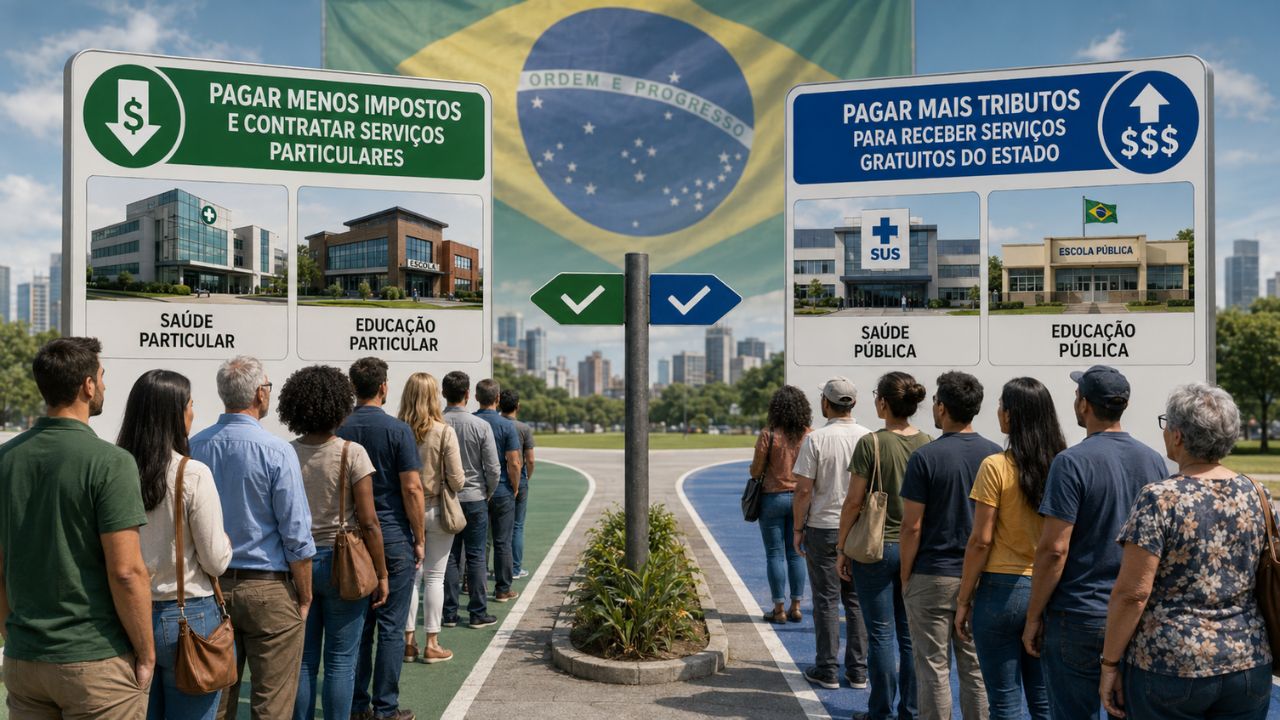
Half of Brazilians Prefer Lower Taxes with Private Health and Education, While 44% Opt for Higher Taxes for State-Provided Services, Datafolha Survey Reveals

-
Brazil’s Most Expensive Toll Rises to R$ 40.60 on Route from São Paulo to the Coast, Nearly Matching Bus Fare to Santos



While many see this initiative as a positive revolution, others warn of the risks of a system that could compromise citizens’ privacy and financial autonomy.
What Is Drex?
According to Bruno Perini, during his appearance on the Irmãos Dias podcast, Drex is the digital version of the real, developed by the Central Bank of Brazil.
The goal is to implement a 100% digital currency, gradually replacing cash.
“In large cities, we already experience something similar, as the use of physical money is minimal. In smaller locations, however, the scenario is still different,” Perini explained.
The digital currency would bring logistical advantages, such as reducing costs associated with transporting bills and increasing transaction security.
However, the impact of the transition for a continent-sized country, where access to the internet and smartphones is still limited, is a cause for concern.
Benefits and Challenges of Drex
Perini highlighted that Drex could simplify transactions and democratize access to the financial system. On the other hand, he also warned of the risks associated with total government control over the currency.
“You could end up in a dystopian scenario where the government monitors all spending and imposes restrictions based on criteria that won’t always be fair,” the expert stated.
Among the concerns is the possibility of the government programming the currency, setting expiration dates for the use of money or limiting the allocation of resources for specific purposes.
According to Perini, “this could have a positive side, such as preventing social program funds from being spent on gambling. But it could also lead to abuses, such as limiting the consumption of certain products.”
Comparing with Pix
Drex has been compared to Pix, which revolutionized instant payments in Brazil.
Perini recalled that, before the launch of Pix, many believed that the system would compromise users’ financial secrecy.
However, its adoption was massive and brought undeniable benefits. “Even those who beg now use Pix. The impact has been incredible,” he emphasized.
Despite this, Drex raises deeper questions, especially regarding state control and the lack of anonymity in financial transactions.
While Pix is a transfer system, Drex would represent the very currency of the country, expanding governmental monitoring possibilities.


An Uncertain Future
During the podcast, Perini also highlighted that Brazil is one of the pioneering countries in this type of initiative.
In other places, like the United States, the implementation of a digital currency faces resistance.
“There, one of Donald Trump’s promises was to prevent the advancement of a digital dollar,” noted the expert.
The forecast is that Drex will be operational by 2026, but the speed of the project is surprising. For Perini, the fast pace could be concerning.
“We are leading something that other countries are not in such a hurry to adopt. This should make us reflect,” he concluded.
Drex can bring convenience and modernization, but it also raises a series of ethical and political questions.
How much are we willing to give up our privacy in the name of efficiency? The financial future of Brazil is being shaped, and it is essential for the population to participate in this debate.
Do you believe that Drex will be a revolution or a risk to our financial freedom? Comment below and join this discussion!









O Brasil não tem tecnologia eficiente para trabalhar com esse sistema e principalmente que os nossos governantes são corruptos e o povo é muito covardes não tem compromisso com o futuro das novas gerações, o deu certo e não deve ser substituído por qualquer outra moeda, deveria era acabar com esse Pix pois as pessoas que não tem estudo ficam com dificuldade de fazer pagamento e recebimento , o Brasil deve se preocupar com a educação do povo brasileiro que tem uma das piores educação de ensino do mundo, só tem muito é professores do crime, começando pelos políticos!
Especialista, trabalha no banco Central?!