






 Portuguese
  Spanish
  5 min of reading
  0 comments


Emergency shelter uses 100 pallets to demonstrate how logistics, rapid construction, and wood recycling can help displaced families
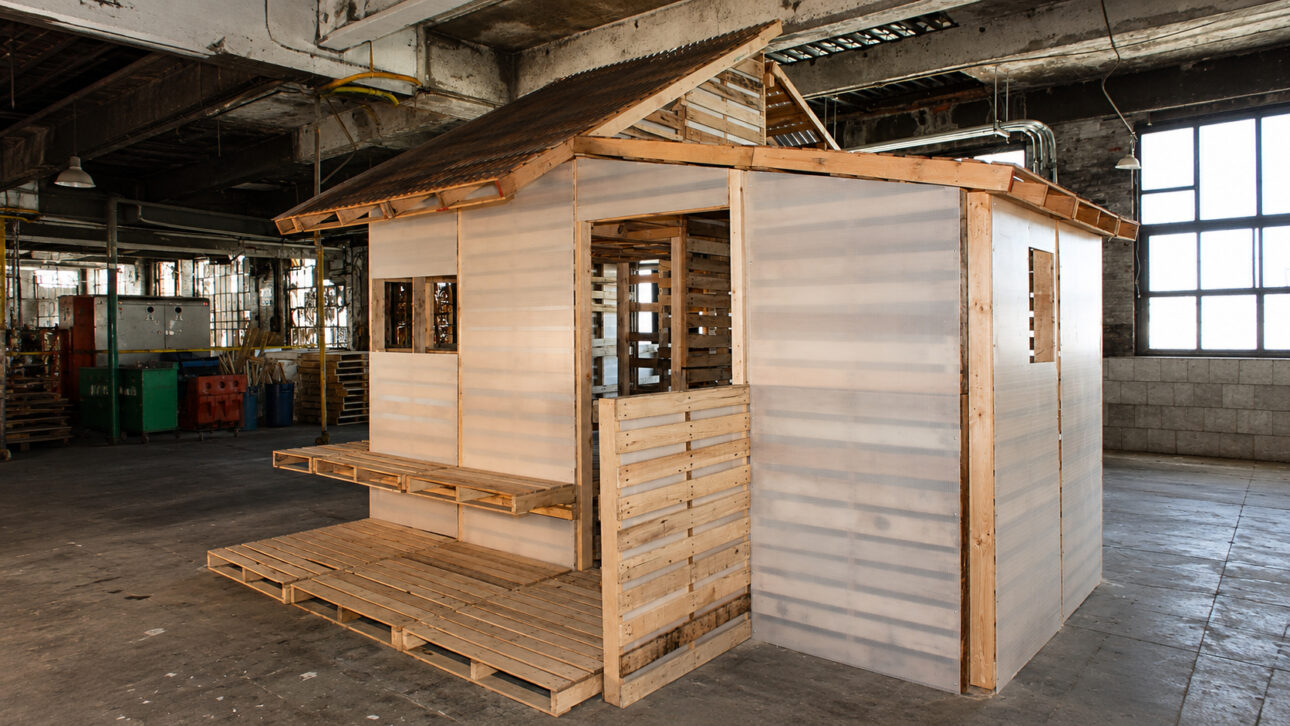
With 100 discarded pallets and simple tools, an architecture project created an emergency shelter of approximately 23 m² to show how the wood used in the transport of humanitarian aid can become temporary housing.
The information was released by I Beam Design, an architecture and design firm. The proposal was named Pallet House and was conceived as a transitional shelter for refugees, especially in situations where families return to find their homes destroyed.
The idea does not represent a ready housing policy nor a universal solution for all refugee camps. The value of the project lies in presenting a simple alternative between the common tent and permanent housing, using cheap, repeatable, and easy-to-find material.
-
Balneário Camboriú buries 3,700 segments in a mega project worth R$ 53 million to try to curb flooding at Praia Central, but the flood solution changes access to Avenida Atlântica and disrupts drivers’ routines for 30 days.

-
Without stakes, drills, or footings: a 3-story building in Taubaté draws attention for being built with styrofoam forms, a small team, six apartments, and five months of construction without a dumpster for debris.
-
Desert sand, previously discarded for being too smooth for concrete, becomes an ecological brick in the United Arab Emirates, dispensing with Portland cement, curing at room temperature, and attempting to transform dunes useless for construction into raw material for a new arid engineering.

-
An entire city in Alaska needs to be moved stone by stone due to ice sinking in a mega relocation project that will cost hundreds of millions of dollars.


The pallet stops being cargo surplus and becomes a wall piece in the emergency shelter
The pallet is a wooden base used to transport boxes, food, medicine, clothes, and other supplies. In warehouses, trucks, and ships, it serves to organize and move loads more easily.
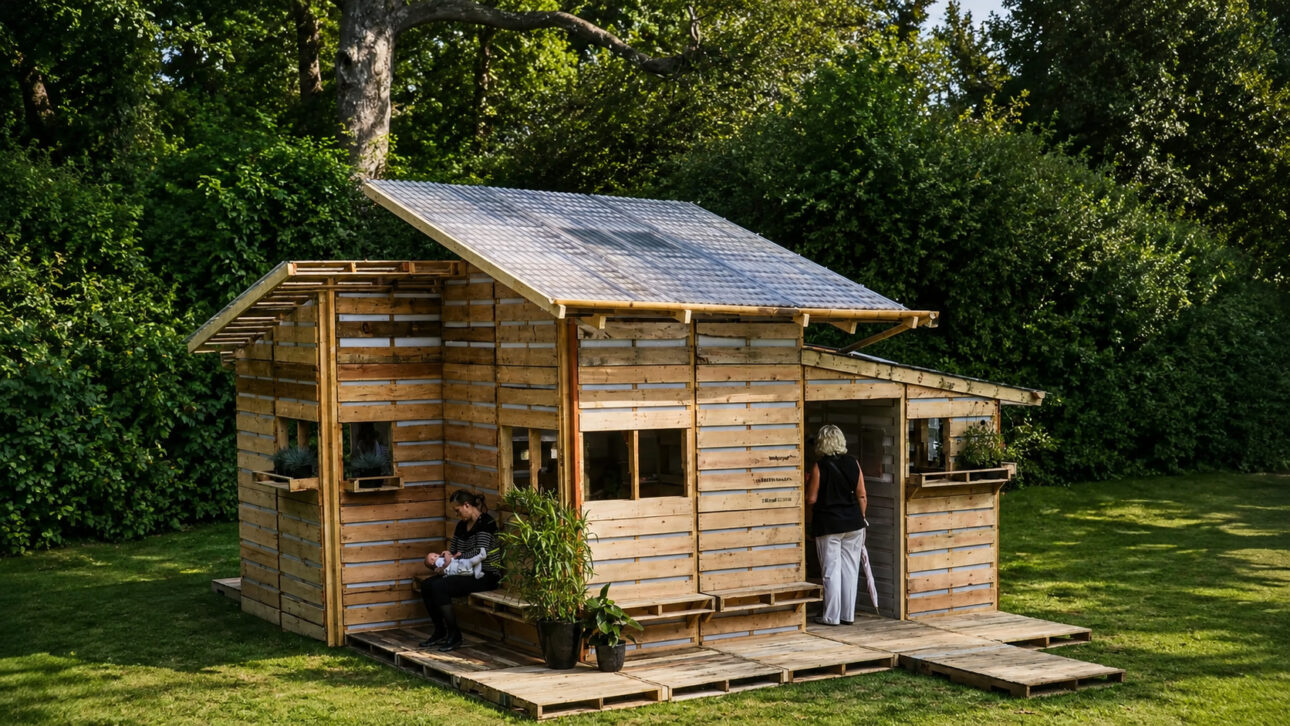
In the Pallet House, this same object stops being just a transport support and starts functioning as a construction module. The pallets can be nailed or tied, erected on site, and used to form the initial structure of the shelter.
The project works with 100 recycled pallets to form an area of 250 square feet, a measurement equivalent to approximately 23 m². This space is close to the size of a small studio apartment.
This data is the most visual point of the proposal. A common logistics item, usually discarded after use, becomes part of a rapid construction response in times of crisis.
Why the logistics of humanitarian aid matter so much in this idea
In humanitarian operations, aid does not arrive on its own. Food, medicine, clothing, and other items need to be packed, stacked, and transported. In this chain, the pallet appears as an almost invisible but necessary piece.
The Pallet House looks at this detail and changes the function of the material. Instead of becoming waste after the delivery of supplies, the wooden base can be repurposed as part of a temporary shelter.
I Beam Design, an architecture and design firm, indicated that a structure of 23 square meters requires 100 recycled pallets, erected by 4 to 5 people with hand tools in less than a week.
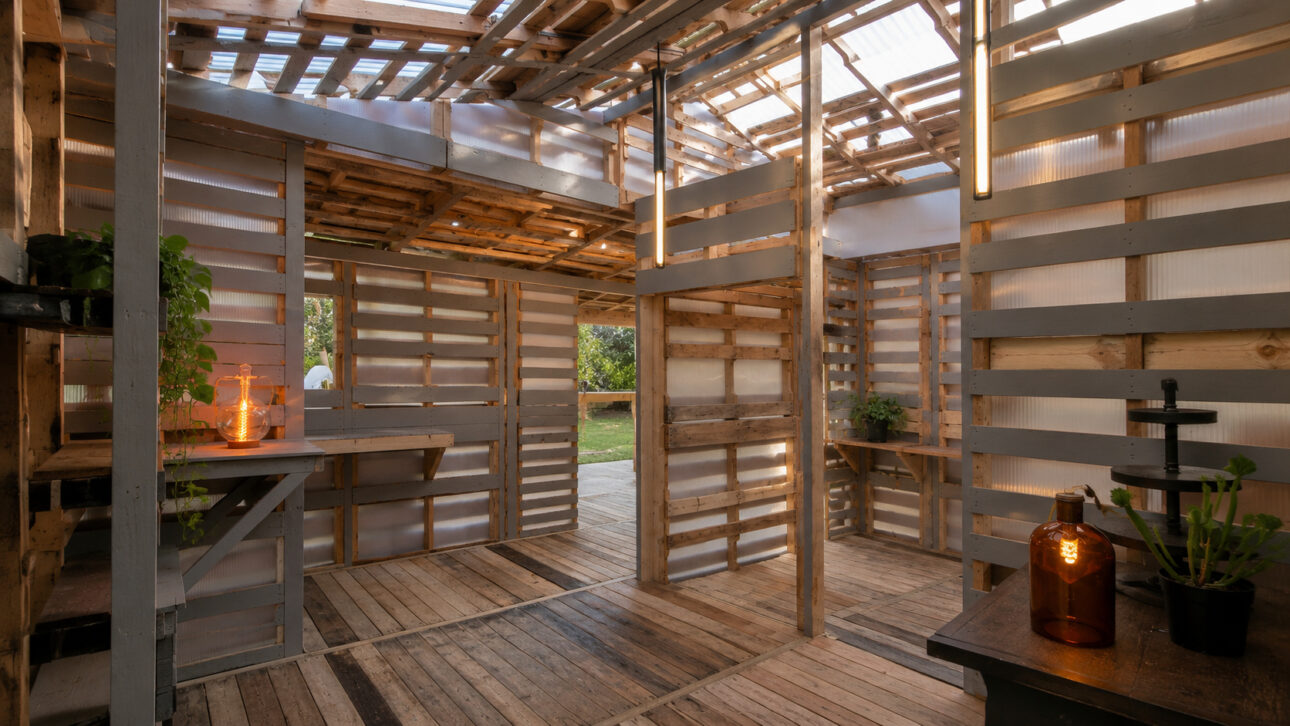
This point brings logistics and construction closer. The same object that helps deliver food, medicine, and clothing to an emergency area can remain useful afterward, aiding in the assembly of a protective space.
Simple tools make the project more accessible, but still require care
Assembly with hand tools is one of the points that make the project easy to understand. The proposal does not depend on heavy machinery or a complex construction to erect the basic structure.
This helps in regions with little access to new materials, specialized labor, or formal infrastructure. In a crisis, each day without safe shelter increases the suffering of displaced families.
Even so, simplicity does not eliminate the need for safety. Wood needs to be in good condition, without broken, fragile, or contaminated parts. It also needs protection against water, wind, and wear.
The shelter made with pallets can be an initial response, but it does not dispense with planning. To work better, it needs coverage, sealing, ventilation, and adaptation to the local climate.
The 23 m² shelter functions as temporary housing, not as a ready permanent home
The Pallet House was created as transitional housing. This means it can help between the moment of emergency and the reconstruction of a more stable house.
This difference is important. A shelter of 23 m² can offer more organization than a tent, but it does not serve the same role as a complete house with sanitation, infrastructure, and public services.
The project shows an intermediate solution. It starts with a basic structure and allows local materials to be added later, such as clay, wood, straw, tiles, or other elements available in the surroundings.
In practice, the idea tries to reduce improvisation. Instead of relying solely on tarps and tents, displaced families could count on a firmer base while seeking a permanent solution.
Climate, comfort, and durability are important limits of pallet construction
Pallet construction seems simple, but it cannot ignore the climate. In places with a lot of rain, water can damage the wood. In very hot areas, ventilation needs to be well thought out.
There is also the challenge of cold. A pallet wall without adequate filling does not guarantee thermal comfort. Therefore, the project foresees the use of local materials to fill spaces and improve protection.
Durability depends on the assembly method and external protection. Tarps, coverings, or sheets can prevent water entry while other materials are gathered.
This care avoids an exaggerated interpretation. The shelter is not a magic solution. It is an idea of emergency architecture that uses wood reuse to respond to an urgent need.
The proposal draws attention because it transforms waste into protection for displaced people
The strongest point of the Pallet House is in the change of perspective. A common object, used to carry goods, is now seen as part of a temporary housing structure.
This resonates with important themes for Brazil, such as material reuse, rapid construction, natural disasters, lack of housing, and low-cost solutions. Even so, any adaptation would need to respect local climate, soil, regulations, and safety.
The proposal also reinforces a simple idea: not all waste needs to end up as discard. In some situations, the material that arrives with aid can continue to serve after delivery.
In the case of refugees, this logic gains human weight. The wood that once supported boxes can become walls, shelter, and protection in a moment of rebuilding life.
The project with 100 discarded pallets shows that a temporary housing solution can arise from a common logistics material. The 23 m² shelter does not solve the refugee crisis on its own, but it points to a creative way to reuse already available resources.
The main lesson lies in the balance between creativity and responsibility. The idea draws attention, but it needs to be applied with care, adapted to the climate, and planned to avoid turning urgency into risk.
Do you think materials discarded in the transportation of food, medicines, and supplies could be better utilized in emergency shelters in Brazil, or would this solution still depend on many adjustments to be safe?






Be the first to react!