Portuguese
  Spanish


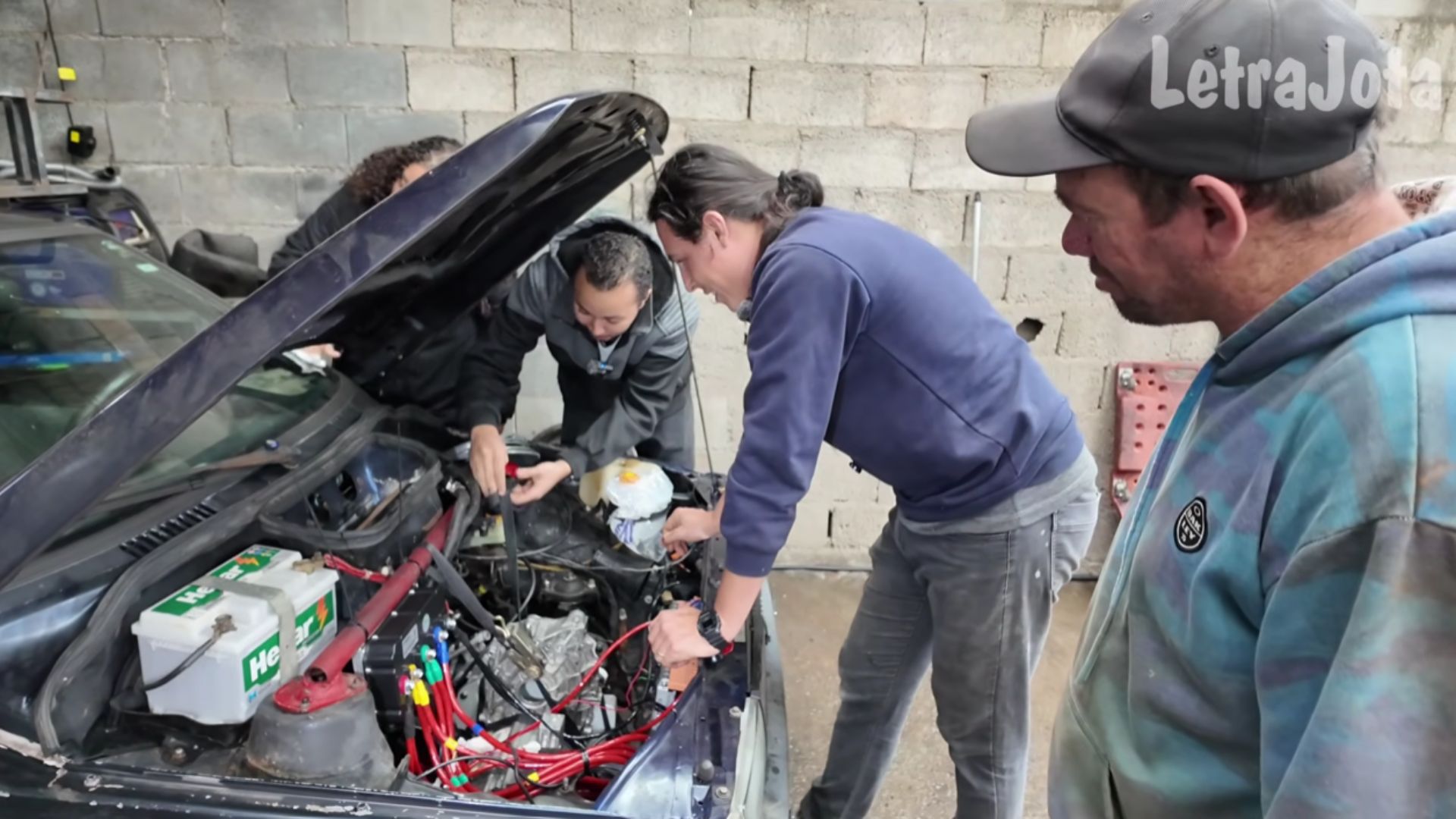

The Fiat Uno did not have a combustion engine, did not have gasoline, and did not require any of the systems that a factory electric car normally demands. The group behind the LetraJota channel rewound the original motor of a BYD to work with a low-cost controller, manufactured flanges and steel shafts, and set the assembly to run on a Uno on the street, documenting everything on video.
The original electric motor of a BYD operates at 300 V. The generic controller that the LetraJota channel group planned to use works in the range of 70 to 100 V. This mismatch was the starting point for one of the most inventive conversion projects documented on Brazilian YouTube: rewinding the BYD motor from scratch, with thicker wires and recalculated winding to operate at the available voltage while maintaining most of the original power. The result, according to the channel’s own account, was the first electric car motor rewound for voltage adaptation made in Brazil within this specific project, and all this in a Fiat Uno.
With the adapted motor, the group manufactured a steel flange to couple the motor to the gearbox and a shaft to connect the rotor to the gearbox of a Fiat Uno. The combination, assembled in Marquinho’s workshop and tested on a city street, reached 60 km/h still in first gear, with the system operating at only 15% of the maximum power available in the first test. The homemade electric Fiat Uno is not a polished project nor ready for the street definitively, but it is a project that worked, ran, and even screeched tires, as shown in the channel’s video.
Why rewind the BYD motor instead of buying another
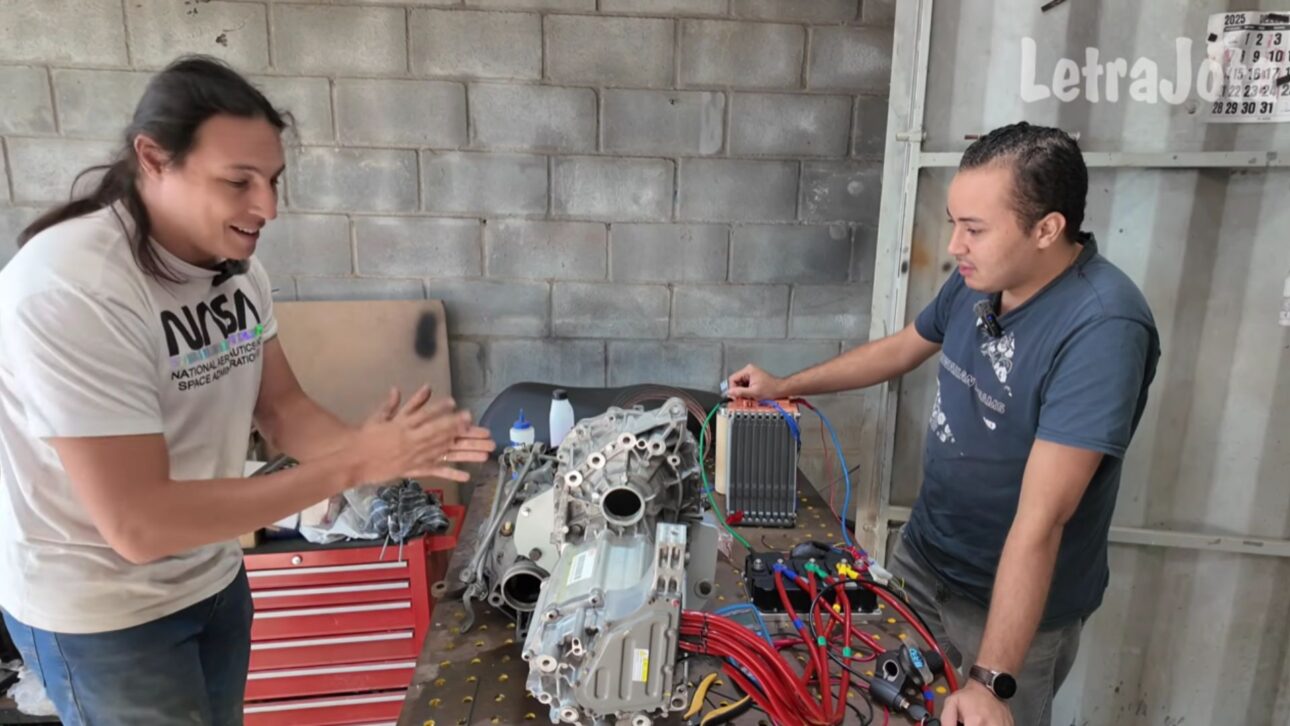
BYD, like most modern electric vehicles, operates at voltages that a generic and low-cost storage system cannot directly provide. The obvious solution would be to buy a motor that already works within the range of the available controller. The solution the group chose was more labor-intensive and more interesting: rewinding the existing motor.
-
Sales of Brazil’s Cheapest Electric Car Halted Before First Deliveries: E-Motors Suspends Emova Easy Due to Import Tax Increase and Rising Freight Costs

-
Nissan Discontinues Qashqai SUV Amid Cost-Cutting, Chinese Competition, and Product Line Review

-
BYD Patents Revolutionary System Using Computer Vision to Detect Animals Under Cars Before Starting, Preventing Tragedies

-
Study Reveals Why Cars Are More Expensive to Produce and Buy in Brazil Compared to Mexico, Highlighting Taxes, Logistics, and Industrial Costs as Key Factors.



Rewinding means removing the internal copper winding from the motor’s stator and replacing it with wires of different thickness, calculated so that the motor operates at a lower voltage without losing power proportionally. As the electric current increases when the voltage drops to maintain the same power, the new wires need to be thicker to support this higher current. In the LetraJota project, the current was about three times higher than in the original system, which required considerably thicker wires than the original BYD ones, as explained in the video.
The flange, the shaft, and the coupling with the Uno’s gearbox
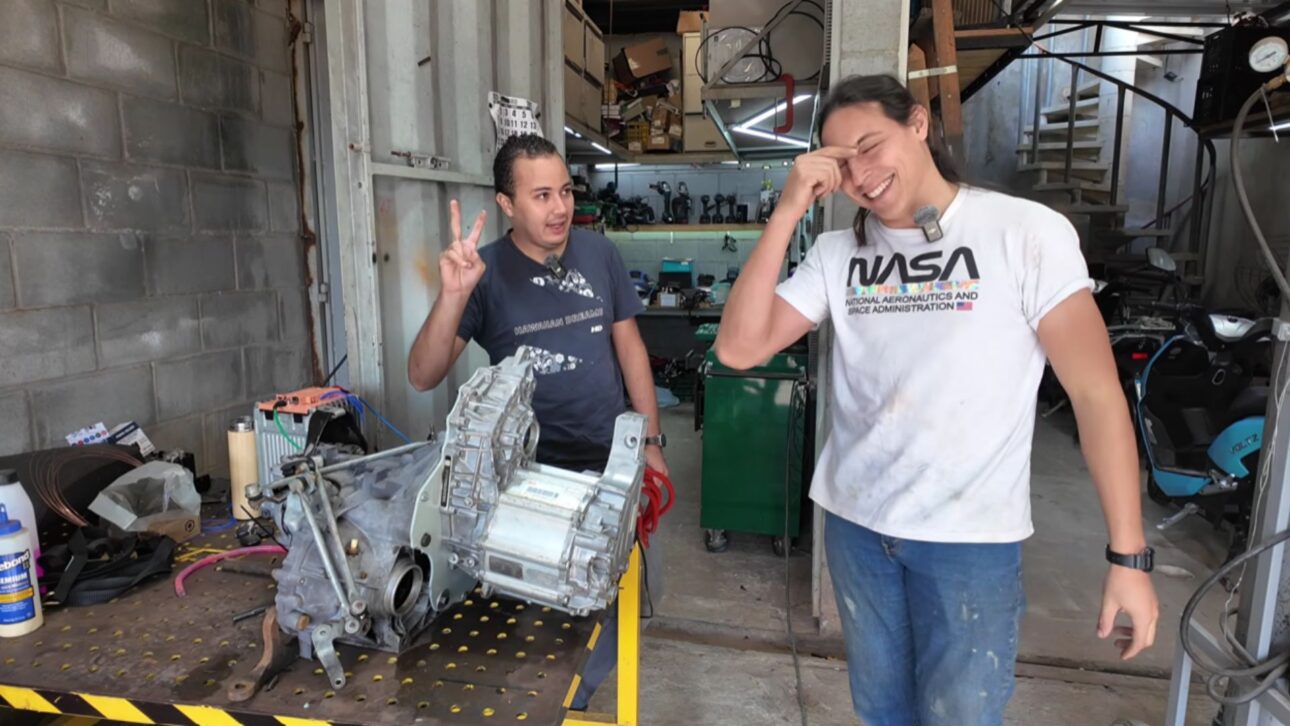
The motor needs to mechanically fit with the gearbox so that the torque is transmitted without play, excessive vibration, or risk of disassembly in motion. The group manufactured a steel flange specifically for this coupling, as well as a dedicated shaft to connect the motor’s rotor to the Uno’s gearbox. Both parts were custom-made for this specific project.
One of the advantages the group identified early in the tests is that the electric motor greatly facilitates gear shifting compared to a combustion engine. In a combustion engine, when the driver takes their foot off the accelerator, the rotation drops, creating a speed difference between the engine and the gear the driver wants to engage. In the electric motor, the rotor continues to spin along with the gearbox, without a drop in rotation, making gear synchronization much easier. In practice, the gears engage more easily and quickly than in a conventional combustion engine, according to the explanation given in the video.
The generic controller: the “brain” of the system
In a factory electric car, the controller is a sophisticated engineering component, developed specifically for the vehicle’s motor, battery, and electronics set. In the homemade electric Fiat Uno project, the equivalent is a low-cost generic controller, the type used in smaller electric vehicles. This component is responsible for converting the battery current into phase current for the motor, controlling the power delivered, and, in this specific project, also functioning as an injection and electronic management system at the same time.
The controller used in the initial tests is not the final version of the project. The group mentions that the final version should have two 2,000 A phase controllers each, and possibly four if necessary, to extract the maximum power that the rewound motor can deliver. In the tests described in the video, the system was operating with a lower capacity controller. Even so, the group’s estimate is that the set was delivering around 30 to 40 horsepower in the first street tests, enough to make the Uno climb hills, squeal tires during sudden acceleration, and reach 60 km/h in first gear.
The first street test: 15% power and 60 km/h in first gear
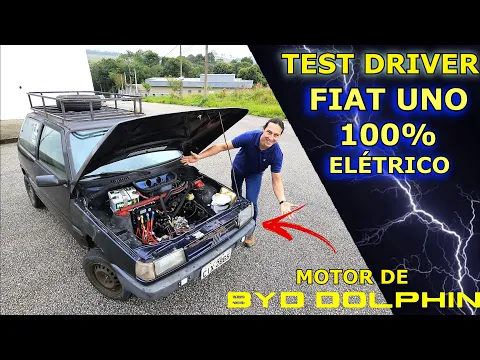

The moment when the homemade electric Fiat Uno left Marquinho’s workshop and drove on the street for the first time is the narrative center of the LetraJota video. The system was far from complete: without a pedal accelerator (acceleration was remotely controlled by a group member), without the brake servo functioning correctly, without electric windows, and with the battery not yet fully configured. Even so, the car moved. It left the workshop, drove down the street, climbed hills, and reached 60 km/h in first gear, with the system working at only 15% of the maximum available power.
The silence was the element that most caught the group’s attention during the tests. A Fiat Uno with a combustion engine makes constant noise. The same Uno with the rewound electric motor was practically silent in motion, with only the mechanical noise of the gearbox being audible. The group comments during the video that the road imperfections, previously muffled by the engine noise, became clearly perceptible. The homemade electric Uno revealed every bump and pothole in the street with a fidelity that the combustion engine never allowed to notice.
What happened when the controller was set to maximum
In the final part of the tests documented in the video, the group discovered that the controller was operating with a current parameter limited to about 200 A, well below the system’s maximum capacity. After adjusting the parameters to the maximum available, the car’s behavior changed noticeably: the acceleration response became more abrupt, the torque increased, the front of the car became lighter during acceleration, and the set began to deliver a level of force that surprised the builders themselves during the tests.
The group also tested the regenerative brake, one of the features of the electric motor system that does not exist in combustion cars: by releasing the accelerator, the controller can program the motor to function as a generator, slowing down the car and returning energy to the battery at the same time. The feature was tested and confirmed to work. In a 30-year-old Fiat Uno, having a functioning regenerative brake is something that no Fiat engineer designed for this car when it was developed, but it is there, operational, installed by a group of enthusiasts with workshop tools and a strong desire to test the limits of what is possible.
What is still missing for the electric Uno to be complete
In the state documented in the video, the homemade electric Fiat Uno has many things working and some serious pending issues. The accelerator pedal had not yet been installed, which means that during the tests, acceleration was done manually by another group member via remote control through the controller’s app. The brake booster, which uses vacuum from the combustion engine to amplify the force on the brake pedal, needed to be adapted for the electric system because the new motor does not naturally generate vacuum. The 12 V battery for auxiliary systems like headlights, horn, and windows was also pending proper integration.
The next step declared by the group is to install the accelerator pedal, resolve the brake booster, properly inflate the tires, seek more batteries to increase range, and test the system at maximum power with the battery fully charged. The estimate is that with the batteries fully charged and the parameters correctly configured, the Uno can deliver a power much higher than the initial tests. The group states that the Fiat Uno will no longer function with a combustion engine. The conversion is definitive.
A group of Brazilians rewinding the motor of an imported electric car and installing it in a Fiat Uno with parts manufactured in the workshop is pure creative engineering or a risk that should not be tested on public roads? Would you be willing to buy an electric car converted this way if the project were completed? Leave your opinion in the comments.