Portuguese
  Spanish




Falling Interest Rates and Record Stock Markets Fuel Euphoria, but Economist Sincero’s Analysis Warns of Danger Signs in the Technology Market.
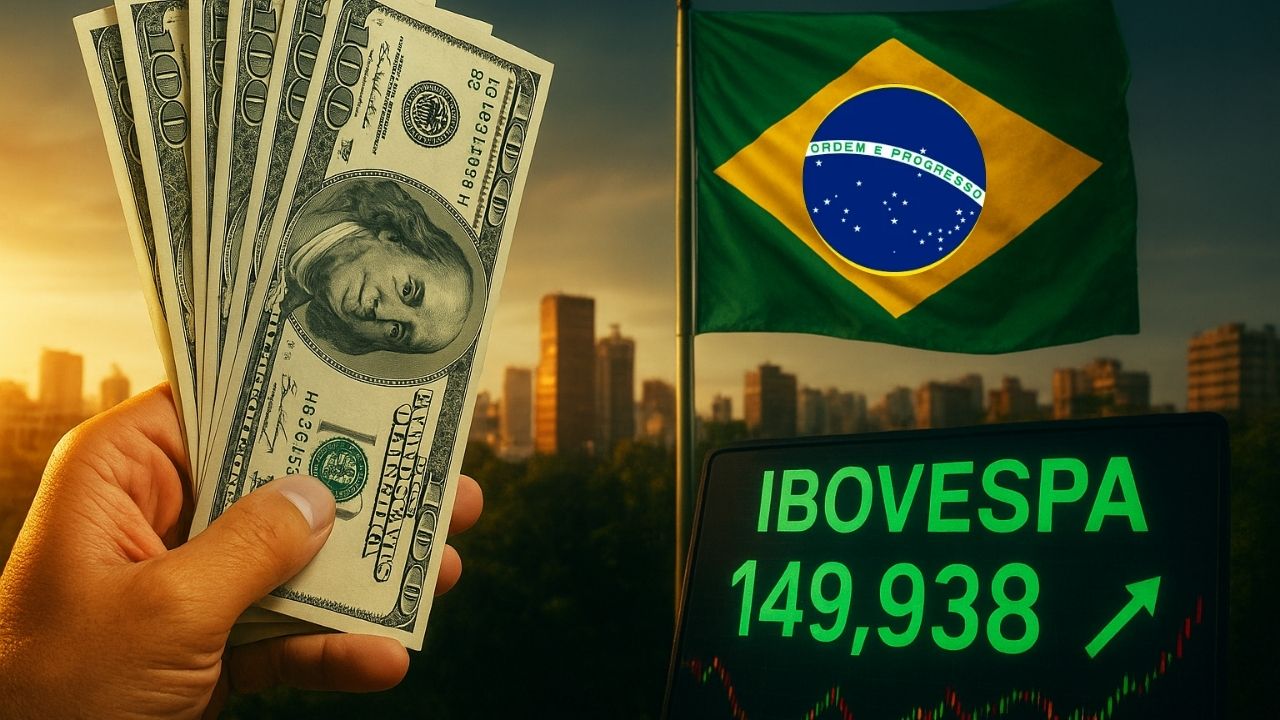
The global economy is experiencing a paradox: while the Ibovespa flirts with 150 thousand points and the Nasdaq hits record highs driven by falling interest rates in the U.S., a warning resonates in the market. In a recent analysis, Charles Mendlowicz, from the channel Economista Sincero, questions the sustainability of the euphoria, especially around the tech giant Nvidia.
The company reached a market value of 5 trillion dollars, surpassing the GDP of nations like Germany and Japan. The question raised by Mendlowicz is straightforward: “Isn’t Nvidia’s rise a bubble?”. He warns that the phrase “this time it’s different”, often used to justify substantial rises, is historically common in periods preceding financial crises.
Nvidia: Real Growth or Unchecked Euphoria?


To understand the dimension of the warning, the analysis from Economista Sincero details Nvidia’s valuation. With US$ 5 trillion in market value, the company not only became the most valuable in the world, but surpasses the combined value of giants in the American and Canadian banking sector, such as JP Morgan, Bank of America, and Goldman Sachs.
-
Brazil saved US$ 32.4 billion in 2025 by switching from fossil to renewable energy and only ranked behind China and the United States on the IRENA global podium.

-
A company from SC that moves R$ 125 billion in agribusiness is integrated into an international group, maintains its headquarters and jobs in Chapecó, and is preparing to expand software for cooperatives, grain companies, and industries while targeting new markets without leaving the western region of Santa Catarina.
-
Portugal “hides” gold reserves of 382 tons valued at 47 billion euros in an armored building, and the story involves gold from colonial Brazil, Nazi Germany, and a fortune that once amounted to 866 tons.

-
Truck drivers avoid deliveries to supermarkets due to waits that can hinder trips, increase costs, and leave vehicles idle, while the law limits loading and unloading to five hours and provides for payment for the excess time.




The engine behind this explosive growth comes from Data Centers, driven by demand for Artificial Intelligence. Mendlowicz points out that this division jumped from 4 billion dollars to 41 billion dollars in revenue in a short period, now representing 88% of the company’s total results. The question is whether this demand will continue to grow exponentially or if the market is overestimating its sustainability.
The Risk of the “Ciranda” of AI Investments
One of the biggest concerns highlighted by Charles Mendlowicz is what he refers to as “Zé com Zé”, a kind of financial circle in the technology sector. He describes an ecosystem where Nvidia invests in OpenAI, which in turn invests in Oracle, which buys chips from Nvidia, creating a cycle of cross-investments that inflates the sector.
The danger of this structure, according to the analyst, is the systemic interdependence. “This music is fun while it’s playing. When the music stops, there aren’t enough chairs for everyone to sit down”, warned Mendlowicz. If one link in this chain fails, the risk of a “deflation” (correction) is real, affecting the entire ecosystem that seems to be self-sustaining.
The Context of the Global Economy: Falling Interest Rates Fuel the Risk
The euphoria with Nvidia doesn’t occur in a vacuum. It is directly fueled by changes in the global economy, particularly the U.S. monetary policy. The Federal Reserve (Fed), the American central bank, cut interest rates for the second consecutive time, bringing the rate now in the 3.75% to 4% range.
Mendlowicz explains that, historically, when interest rates fall in the U.S., “money flows into other parts of the world”, including the Brazilian stock market. This helps justify market optimism, which sees the Ibovespa near 150 thousand points and projections like those from JP Morgan pointing to 155 thousand points. However, it is this same abundant liquidity that may be dangerously inflating risk assets.
“At the Party, Near the Door”: The Investor’s Position
The analysis from Economista Sincero compares the current moment to the Nasdaq bubble in 2000, where companies like Cisco were seen as unshakeable icons and subsequently suffered drastic falls. Although the current scenario involves companies with real profits, the speed of the rise lights up a “red flag” of 5 trillion dollars.
Charles Mendlowicz concludes that, while he doesn’t believe in a “classic bubble” that will make Nvidia disappear, a significant correction seems likely. He defines his own strategic position as being “at the party”, meaning invested to take advantage of the rally, but simultaneously &8220;near the door”, aware of the risks and ready to act if the scenario changes abruptly.
After this analysis of Nvidia and the global economy, we want to know your view. Do you think the rise of the tech giant is a bubble about to burst, or is it justified growth driven by the AI revolution?
Leave your opinion in the comments, discussion is essential to understand the current market situation.