Portuguese
  Spanish


The Trajectory of Shoichiro Irimajiri Reveals How Innovation and Boldness Behind the Scenes Transformed Honda into a Global Reference in the Motorcycle Segment, Forever Changing the Standard of Technology, Performance, and Design in the Automotive Sector.
In the world of motorcycles, few figures stand out as much as Shoichiro Irimajiri, an engineer who redefined Honda’s standards and profoundly influenced the global automotive sector.
Recognized as one of the main architects behind Honda’s technological rise, he played a fundamental role in some of the industry’s most innovative projects, directly contributing to the Japanese brand’s status as a global reference in performance, quality, and cutting-edge technology.
Shoichiro Irimajiri: From Aviation to Honda Engineering
Born in 1940 in Kobe, Japan, Shoichiro Irimajiri demonstrated an early interest in technology and aviation.
-
European Country Achieves 100% Glass Recycling and 52% Municipal Waste Recovery, Highlighting Brazil’s Challenges Despite Selective Collection in 60.5% of Cities

-
Facing extreme heat, floods, and disappearing fertile soil, Pakistan launches a “10 Billion Tree Tsunami” in three years to combat desertification, protect rivers, create green jobs, and make reforestation a national survival priority.

-
Cape Verde’s World Cup Surprise: Betting on Electric Cars, a 5 MW Solar Plant, and an Ambitious Plan to Transform Energy for 600,000 Residents

-
Man Finds 1,469 Ancient Roman Silver Coins While Metal Detecting in Romania


He graduated as an aeronautical engineer, specializing in fluid dynamics and jet engines, areas closely tied to the development of aircraft.
However, due to Japan’s post-war restrictions on the military sector, Irimajiri found a new path when he joined Honda in 1963, redirecting his career toward the world of high-performance motorcycles.

Shortly after joining the company, Irimajiri was assigned to work on Honda’s racing engine projects.
The young engineer, who once dreamed of building turbines for aircraft, soon faced the challenge of developing high-power multicylinder engines capable of competing with leading European manufacturers in the World Motorcycle Championship.
In the 1960s, many of Honda’s achievements on the tracks were the result of technical solutions created by Irimajiri, who knew how to apply aeronautical concepts to offer lightness, efficiency, and performance to Japanese engines.
Multicylinder Engines and Historic Achievements
The constant pursuit of innovation resulted in the creation of high-performance engines and, subsequently, experiences in other motorsport categories, such as Formula 1.
Few engineers have achieved feats like working on both a V12 engine for racing cars and an inline six-cylinder engine for motorcycles, both recognized for their power and precision.
Honda Gold Wing: A Landmark in the Touring Segment
The development of the Honda Gold Wing, one of the brand’s most iconic models, stands out in Irimajiri’s trajectory.
The first version, called M1, was a prototype with an opposed six-cylinder engine and liquid cooling, unusual features for motorcycles of that time.
The GL1000 model, launched in 1974, retained the innovative essence but featured a flat-four engine, consolidating the segment of Japanese touring motorcycles.
The Gold Wing became a reference in comfort, technology, and robustness, characteristics that helped strengthen Honda’s image in international markets.
CBX 1000: Power and Hunting Sound
Irimajiri’s contribution was not limited to the Gold Wing.
He was also responsible for the project of the Honda CBX 1000, launched in 1978, which surprised the market with its air-cooled inline six-cylinder engine.
The goal of the CBX 1000 was to deliver not only performance but also a unique sound experience, inspired by the noise of the Japanese Air Force’s Phantom fighter jets.
To achieve this, Irimajiri guided his team to capture the sounds of the jets and try to reproduce them in the motorcycle.
The result impressed even Honda executives, who considered the sound too loud for urban use, so similar was it to the environment of a military base.
Limitless Innovation: NR500 and Honda Racing Corporation
Irimajiri also led the bold NR500 project, a competition motorcycle equipped with oval pistons, a technology that allowed simulating the behavior of a V8 engine using only four cylinders.
Although the performance on the track did not meet expectations, the NR500 project was fundamental for the development of technical solutions that, years later, would be incorporated into other Honda models.
Another milestone in his career was the creation of Honda Racing Corporation (HRC) in 1982, aimed at consolidating the brand’s sports operations.
As the first president of the division, Irimajiri structured a working model focused on advanced research, constant innovation, and surpassing limits, foundations that helped Honda become one of the biggest powers in global motorcycling.
Critical Vision and Legacy in the World of Motorcycles
In addition to technical achievements, Irimajiri maintained a critical and visionary stance regarding technological advancement.
In public statements, he warned of the risk of electronics replacing riders’ skills, highlighting the need to balance innovation and human experience in motorcycle operation.
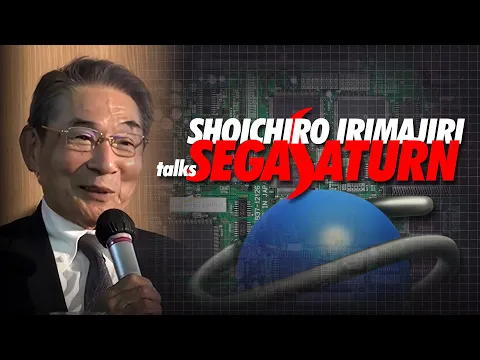
After facing health issues in 1992, Irimajiri left Honda but remained active in the market, taking on leadership positions in other Japanese companies.
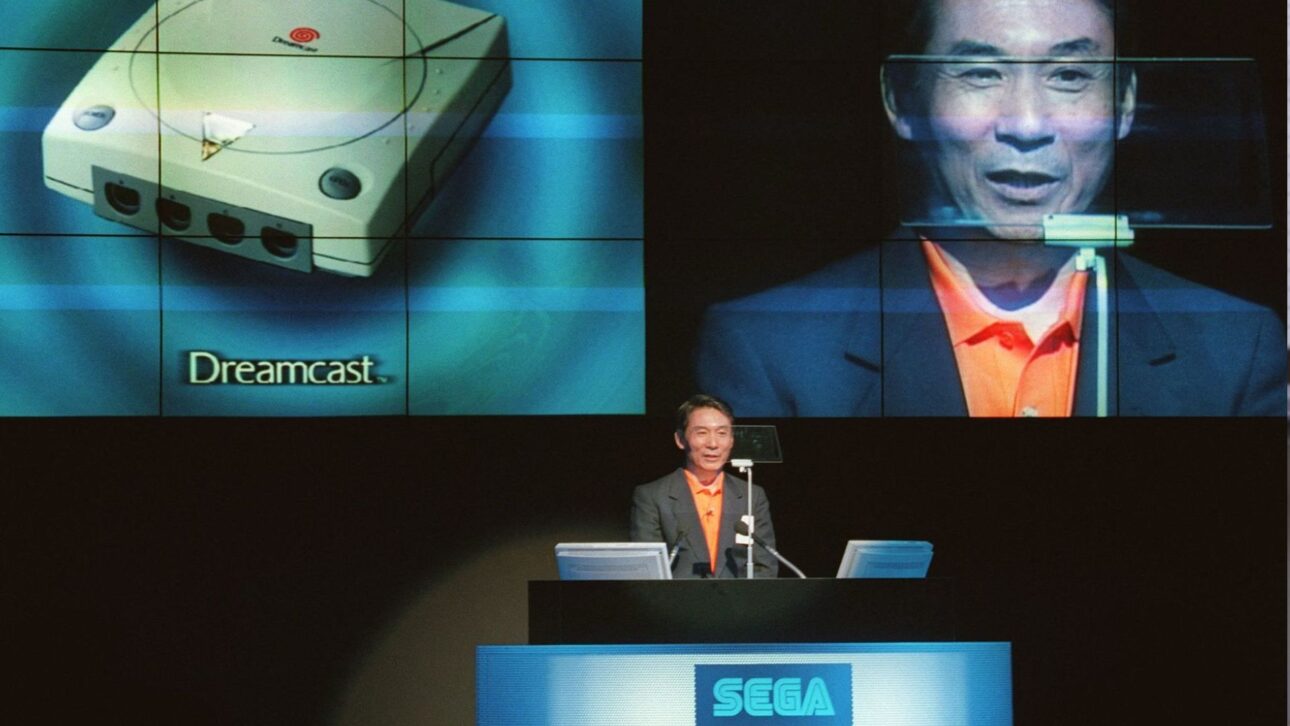
His involvement with Sega stands out, where he was responsible for boosting the launch of the Dreamcast console.
Even distanced from the automotive sector, his influence remained present in the development of new generations of motorcycles and in the continuous improvement of Japanese engineering.

The Influence of Shoichiro Irimajiri on the Honda Gold Wing and Beyond
The legacy of Shoichiro Irimajiri crosses borders, impacting both Honda’s technological evolution and the concept of motorcycles worldwide.
His ideas and projects revolutionized the way large motorcycles are developed, helping to create models that combine emotion, performance, and reliability — principles that continue to guide the brand’s philosophy today.
How can we explain the impact of an engineer capable of making a motorcycle sound like a fighter jet, redefining the concept of two-wheeled tourism, and establishing the foundations for one of the most victorious teams in motorcycling history?
The trajectory of Shoichiro Irimajiri is undoubtedly one of the most fascinating chapters in Japanese engineering and the universe of motorcycles.
In light of so many innovations, what will be the next big technological leap inspired by this boldness?