






 Portuguese
  Spanish
  5 min of reading
  0 comments


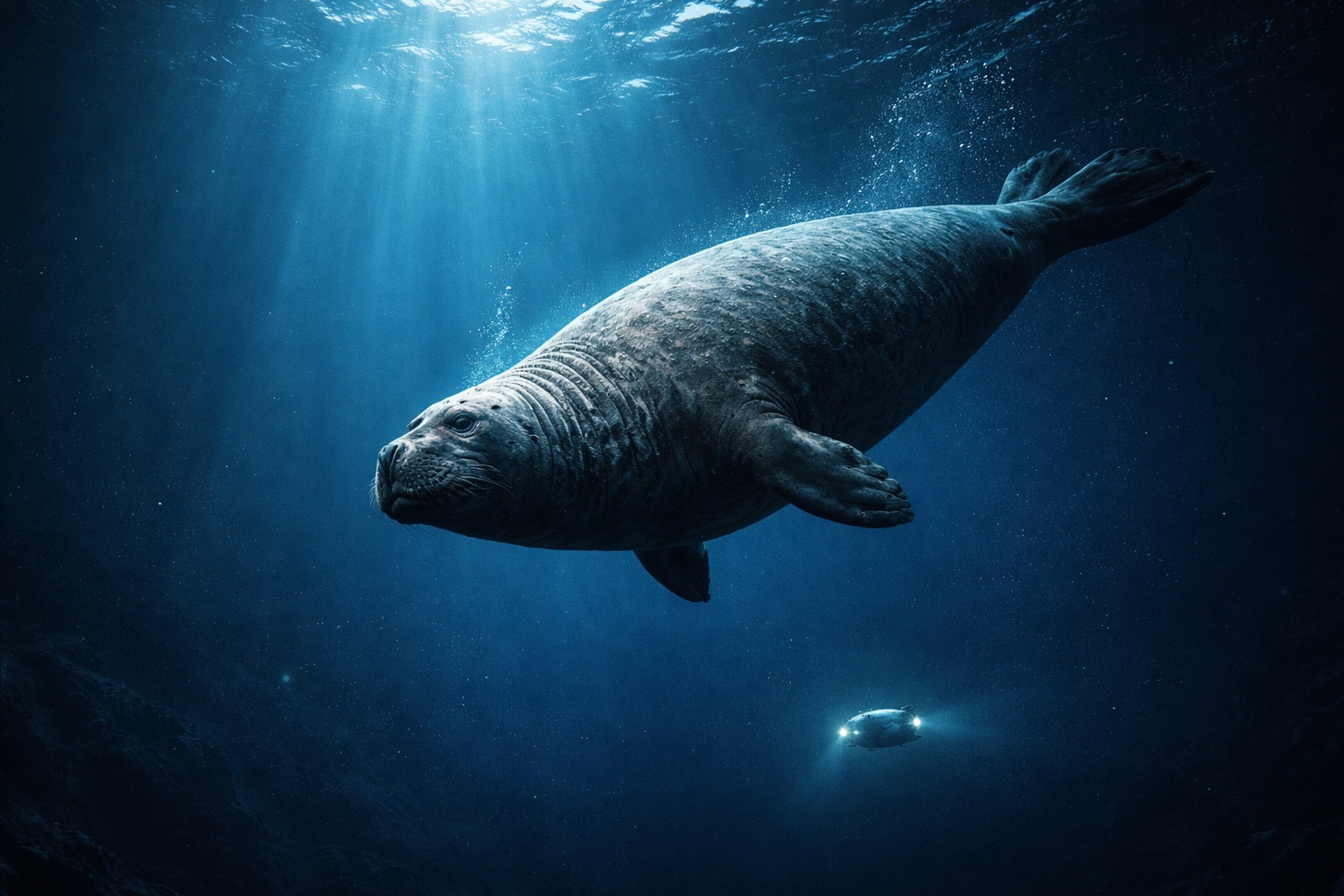
Capable of Diving to 2,000 Meters for Nearly 2 Hours, the Elephant Seal Reveals How Blood and Controlled Pulmonary Collapse Sustain Life in the Deep Ocean.
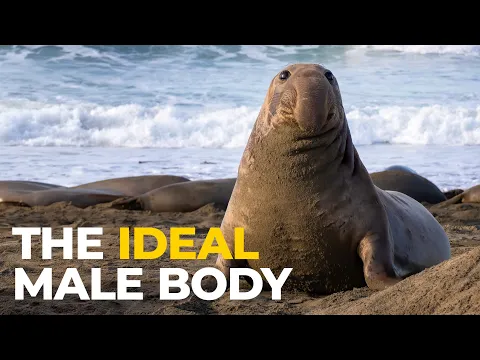
The Southern Elephant Seal (Mirounga leonina) is one of the largest divers in the animal kingdom, and at the same time, one of the most discreet. Weighing up to 3 tons and with a body that seems designed for the cold, it spends much of its life where humans cannot reach: in deep, dark waters with pressures equivalent to tons per square centimeter. In these layers of the ocean, light does not penetrate, temperatures drop, and the physiology of common vertebrates simply fails. For the elephant seal, however, this environment is routine.
The ability to dive to depths of up to 2,000 meters and remain submerged for up to 120 minutes is not a tourist spectacle: it is an ecological strategy. It converges oxygen, blood, muscles, fat, and a physiological trick that sounds brutal to the human ear — the partial and reversible collapse of the lungs that prevents embolism and protects the organism from pressure.
Deep Diving and the Ocean as an Ecological Refuge
The deep ocean serves as a refuge and pantry at the same time. At the surface, the elephant seal is exposed to predators, competition, and the energy expenditure of locomotion. At the bottom, it finds squid, mesopelagic fish, and energy-rich prey.
-
Two Brazilian students created a hospital bed with voice control to help their sick grandmother and won an award in Portugal: the prototype allows patients to adjust height and inclination just by speaking, without cranks, and promises more autonomy for the elderly and people with reduced mobility.

-
Public school students from Sertão de Pernambuco create a $5 filter using sugar-apple peel, transform toxic cassava waste into drinking water, and win 1st place nationally in Samsung’s innovation contest.

-
8-year-old boy found small balls in the yard, thought they were seeds, and helped U.S. universities reveal a hidden natural strategy in oak galls, showing how small domestic observations can change scientific research on discrete natural processes.
-
The owner of Facebook, Mark Zuckerberg, opened his wallet and paid the equivalent of R$ 72.9 billion, or US$ 14.3 billion, to hire a 28-year-old and put him in charge of Meta’s new superintelligence.


This strategy of repetitive diving makes the animal a specialist of the deep ocean, while most predators, including sharks, remain in the mid-layers.
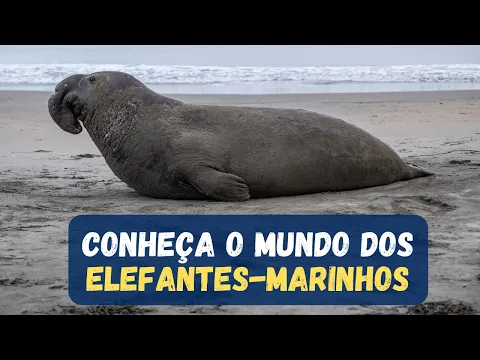

This is an inverted life model: the elephant seal spends just brief windows at the surface to breathe and rest, while the long submerged periods configure its normal feeding mode. Immersed in darkness, it navigates using tactile sensitivity, hydrodynamics, and perhaps even magnetic cues, which are still being researched.
Extreme Pressure and Controlled Pulmonary Collapse
Water pressure increases by about 1 atmosphere for every 10 meters, meaning that at 1,000 meters, the elephant seal faces around 100 atmospheres, pressure sufficient to cause fatal damage to a human lung. The evolutionary solution of this mammal is radical: as it descends, the lungs are partially compressed and air is displaced to the upper airways, preventing nitrogen bubbles from entering the bloodstream.
This “controlled collapse” is not injury; it is protection. By temporarily renouncing deep lung function, the animal avoids the classic risks faced by human divers: barotrauma, embolism, and syncope. The return to the surface, on the other hand, is meticulously slow and adjusted to oxygen expenditure, preventing excessive fluctuations in internal pressure.
Blood and Oxygen: The Invisible Engine of Diving
The great physiology of the elephant seal is less in the lungs and more in the blood and muscles. While humans store much of their oxygen in the lungs, this mammal stores it in the blood (through hemoglobin) and in the muscles (through myoglobin). The concentration of myoglobin is so high that it turns the muscles dark and allows for a slow and steady release of oxygen during dives.
This creates a simple productive arrangement: lungs expel air, but blood and muscle sustain life. Heart rate decreases, perfusion is redirected, and non-essential organs enter a low-consumption mode. Oxygen ceases to be something shared and becomes something rationed. The result is a diver that operates almost like a biological submarine, with an internal tank that does not rely on external compressed air.
Physiology of Effort and Extreme Energy Economy
During a dive, the elephant seal drastically reduces energy expenditure. Heart rate can drop from over 60 bpm to less than 10 bpm.
Blood is prioritized for the brain and heart; skin, limbs, and digestive systems enter standby mode. Meanwhile, the musculature uses stored oxygen and tolerates high levels of carbon dioxide and lactic acid.
This arrangement is particularly important because feeding occurs in short and intense bursts, followed by long intervals of slow swimming. Instead of constant accelerations, the elephant seal alternates between “hunting mode” and “gliding mode,” saving energy on the journey between layers of the ocean.
Thermoregulation and Fat: The Thermal Coat That Makes the Impossible Possible
Cold water is not just discomfort; it is a physiological risk. It drains heat from the body tens of times more efficiently than air. To face this, the elephant seal carries a thick layer of subcutaneous fat rich in lipids, which acts as both thermal insulation and an energy reserve.
This insulation keeps the animal functional in waters of a few degrees without requiring unproductive energy expenditure for heating. The evolutionary design solves two problems with one solution: energy and insulation.
Navigation, Geography, and the Invisible Ecology of the Ocean
The dive of the elephant seal would be useless without navigation. These animals travel thousands of kilometers in the Pacific and South Atlantic, returning to the same breeding and molting areas. There is robust evidence that they use the Earth’s magnetic field, as well as chemical cues and ocean currents for orientation.
This navigation creates a discreet ecological link: the elephant seal connects deep feeding zones with coastal breeding islands. Each dive forms a biological link between distant points and different layers of the ocean. Few terrestrial or marine predators can replicate this routine.
A Diver That Exposes Human Limitations
The most provocative aspect of the elephant seal is not just the depth it reaches, but how it does so: using atmospheric air, without tanks, without regulators, without external technology.
Humans rely on cylinders, gas mixtures, decompression calculations, and still operate at a fraction of the depth achieved by this mammal.
It teaches something important: the limit of human diving is not just physical, but physiological. Pressure, gases, and metabolism impose barriers that our bodies cannot solve. In the elephant seal, evolution has done the engineering work that technology tries to replicate.


Be the first to react!