





 Portuguese
  English
  Spanish
  5 min of reading
  0 comments


Construction at Gran Hotel Barcino revealed part of the forum of ancient Barcino and forced archaeologists to review the orientation of the Roman city of Barcelona.
A common construction in the historic center of Barcelona ended up revealing one of the city’s most important archaeological finds in recent decades. During the installation of an elevator at the Gran Hotel Barcino, in the Gothic Quarter, archaeologists found a monumental Roman pavement preserved under layers of the modern city. According to El País, the discovery forces specialists to review the position and orientation of the ancient forum of Barcino, the political, religious, and commercial nucleus of the Roman colony.
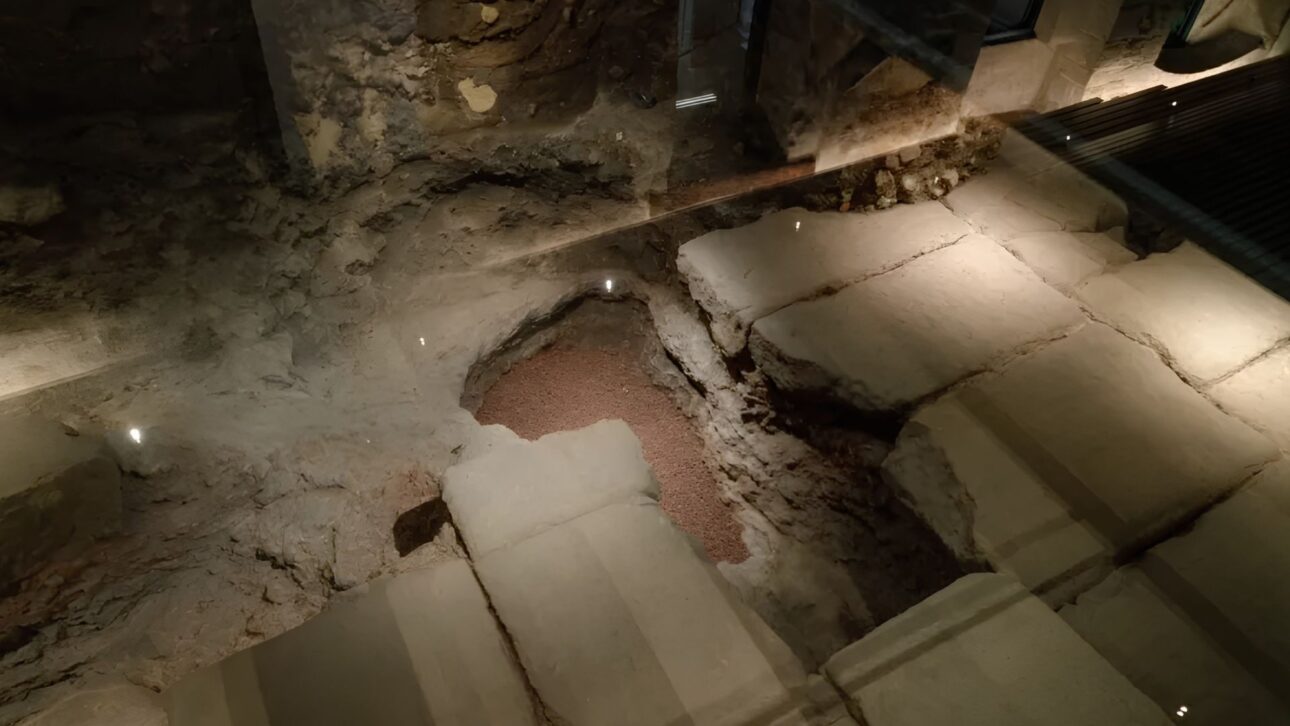
According to Cadena SER, the find began to appear in 2023, when the hotel opened the space for the elevator shaft. What emerged beneath the ground was a surface of about 42 square meters, made with large blocks of Montjuïc stone and dated between 15 and 10 B.C., exactly in the foundational period of ancient Barcino. The degree of preservation was described as exceptional.
Roman pavement found in Barcelona hotel changes the reading of the Barcino forum
The most important point of the discovery is not just the age of the stones, but what they say about the layout of the Roman city. According to El País, archaeologists until now believed that the forum of Barcino followed an orientation parallel to the Mediterranean Sea. The new evidence dismantled this reading and forced a revision of the ancient urban design.
-
“Bottomless” lakes leave legends behind and reveal real abysses: in the Caucasus, a lake of just 2 hectares can exceed 270 meters, drains 70 million liters per day, and still challenges measurements due to underground currents.

-
After losing everything in an earthquake and tsunami in Indonesia, survivors helped choose the land, designed the new settlement, and built 38 resilient houses to start over near the sea.

-
A giant Trojan Horse appeared in front of the Colosseum, and what is inside the exhibition is even rarer; Turkey brought 221 artifacts from 19 museums to Rome to reveal the real city behind the legend.

-
Scientists from Russia and Egypt have proven that the aquatic fern is capable of cleaning soils contaminated by heavy metals and even boosting rice cultivation, which yielded almost 64% more in tests.



According to Cadena SER, the pavement found shows that the forum followed the decumanus, the east-west axis of Roman urbanism, and not the cardo, as was imagined in previous interpretations. In practice, this forces specialists to rotate by about 90 degrees the traditional view of the civic center of Roman Barcelona.
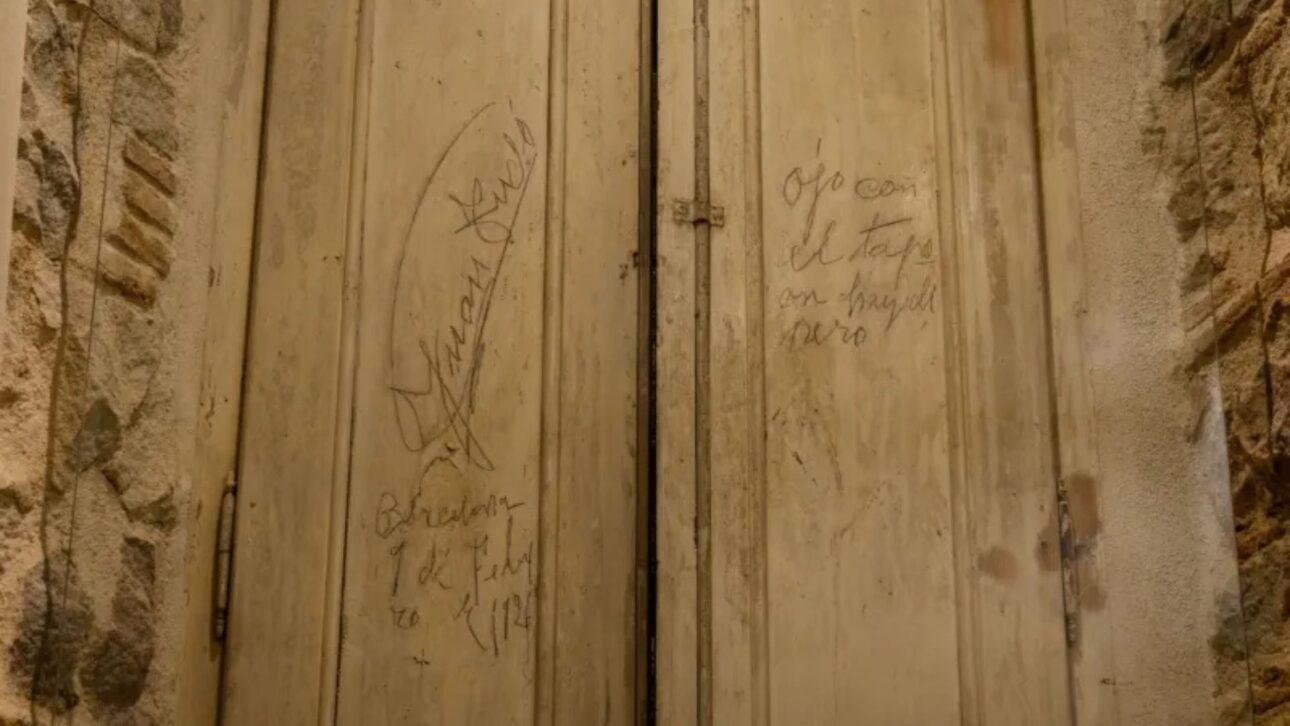
This change does not only affect the position of an ancient square. It alters the understanding of where the administrative, religious, and commercial buildings of the ancient colony founded during Emperor Augustus’s reign were concentrated. Therefore, the impact of the find goes beyond field archaeology and reaches museums, academic studies, and historical reconstructions of the city.
Excavation at Gran Hotel Barcino opened a window to the Barcelona of 2,000 years ago
According to Cadena SER, the site of the discovery is near the Basilica of Saints Justus and Pastor, in the heart of the Gothic Quarter. The area is one of the oldest in Barcelona and already contains different layers of historical occupation, but archaeologists did not expect to find a Roman urban pavement of such size and quality beneath a hotel construction.
The slabs found also impressed with their dimensions. According to Cadena SER, some pieces reach 149 centimeters in length, 118 centimeters in width, and thickness between 18 and 35 centimeters. The size and robustness of these stones reinforce the idea that it was a monumental area, planned to represent the center of urban power.
The state of preservation was possible because the structure remained protected under successive layers of occupation over more than two thousand years. Instead of being completely destroyed by urban transformations, this section of the ancient forum remained buried and ended up functioning as a time capsule beneath contemporary Barcelona.
New discovery reinforces that Barcino was more monumental than imagined
Although today Barcelona is a global metropolis, its Roman origin was much smaller and more compact. Even so, according to El País, the new pavement reinforces the idea that the ancient Barcino was planned with a level of monumentality superior to what many experts had been projecting for the foundational core of the city.
The discovery also strengthens the hypothesis that this point corresponded to the true civic heart of the colony. It is in this type of space that, in Roman urbanism, political functions, religious rituals, commercial circulation, and symbolic affirmation of imperial power over the territory were concentrated.
This helps explain why the finding was treated as so important. It is not just an ancient street or an isolated floor, but an element that redefines the organizing center of the Roman city and changes the way Barcelona understands itself in its early phase.
Hotel project was altered to preserve the archaeological find
According to Cadena SER, the solution found after the discovery was to adapt the hotel project to preserve the remains. Instead of removing the material or treating it as a construction obstacle, the development restructured the intervention to integrate the archaeological structure into the building.
El País reports that the remains were restored and incorporated into a museum-like space within the hotel itself. Parts of the pavement can be observed through glass floors, allowing the structure to remain protected and visible at the same time.
This type of decision is important because it shows how urban archaeology in historic cities increasingly depends on the coexistence between contemporary use and heritage preservation. In this case, a private construction ended up producing a public gain for the city’s history.
Find in the Gothic Quarter shows that Barcelona still hides entire parts of its Roman city
Archaeological discoveries of this magnitude are usually associated with planned excavations or major academic projects. In Barcelona, however, it only took the opening of an elevator shaft to bring to light a central piece of ancient Barcino. The chance of the construction revealed something that was buried a few meters below the surface in one of the city’s most visited areas.
Two thousand years after its construction, the Roman forum reappeared and forced experts to rethink the very geometry of the ancient city. This shows that, even in one of the most studied urban spaces in Europe, there are still entire chapters of history hidden beneath the soil.
The case also reinforces an important lesson of urban archaeology: historic cities are never completely exhausted. In Barcelona, the modern city continues to walk literally over the blueprint of a Roman city that still holds surprises capable of changing established interpretations.






Be the first to react!