Portuguese
  Spanish


Led by Iasser Rebouh from the Russian university RUDN, with the University of Tanta in Egypt, the study combined azolla with fertilization to decontaminate soils and fertilize at the same time. The gain of almost 64%, however, came in pots and with a specific dose, not in open fields.
A small fern that floats on water can help clean soils contaminated by heavy metals and even increase rice harvests. According to the study conducted on June 10, scientists from Russia and Egypt showed that azolla (Azolla filiculoides) contributes to recovering degraded soils and benefiting rice cultivation. The work was conducted by Iasser Rebouh from the Russian University of People’s Friendship, RUDN, with colleagues from the University of Tanta in Egypt, and published on the university’s website, a partner of the TV BRICS network.
Azolla lives on the water’s surface, accumulates biomass quickly, and absorbs nitrogen from the air, allowing its use as a natural fertilizer. According to the material, the plant also reduces the presence of heavy metals in soils by retaining these substances in its tissues, in a process known as phytoremediation. In tests conducted in pots with soil contaminated by copper, zinc, and lead, rice productivity increased by almost 64% in the best combination of doses.
How azolla helps clean contaminated soils
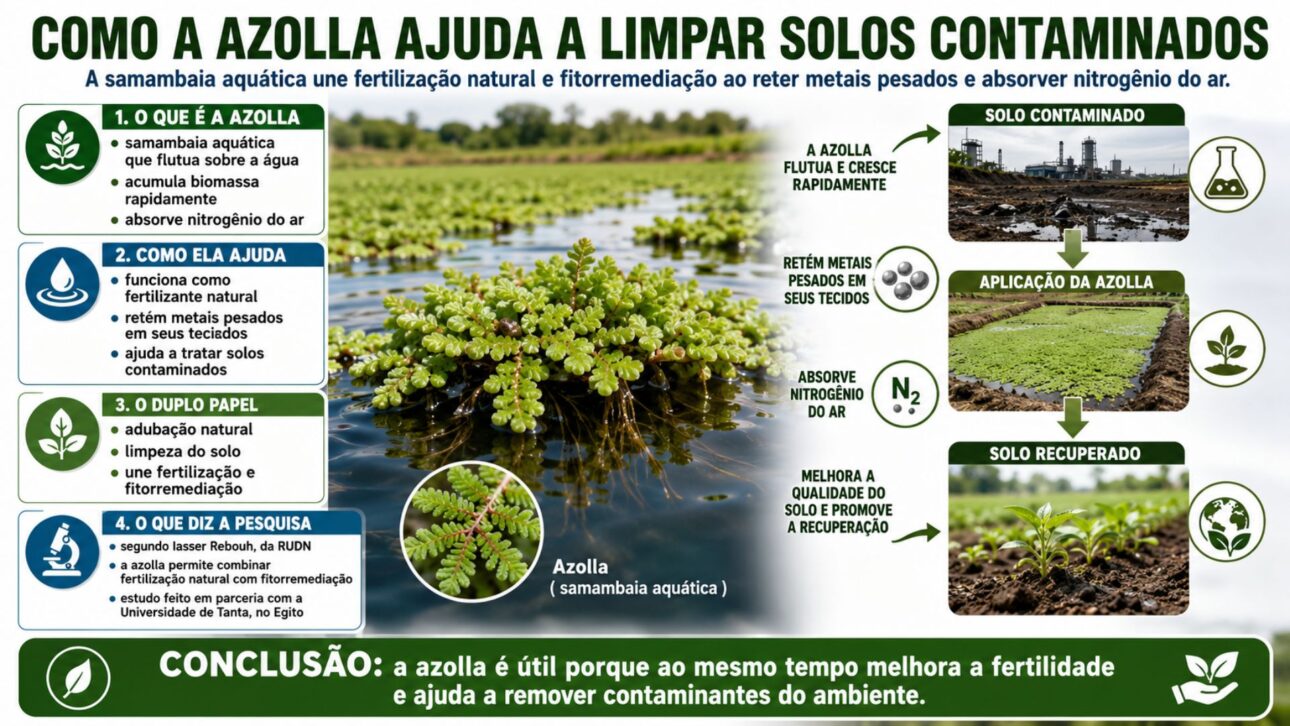
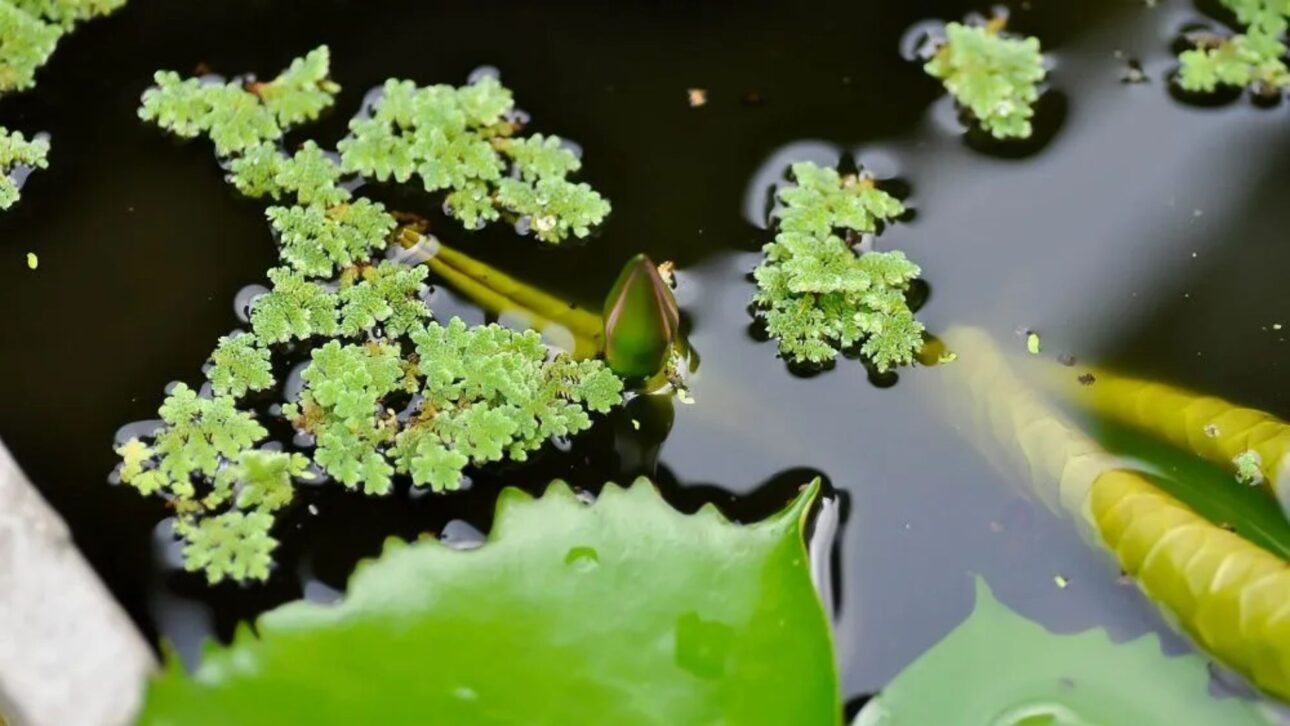
The protagonist of the study is azolla, an aquatic fern that grows floating on water. According to the report, the plant accumulates biomass rapidly and can absorb nitrogen from the air, characteristics that make it useful as a natural fertilizer. At the same time, it helps treat contaminated soils by retaining heavy metals in its tissues.
-
Spanish Farmers Turn Surplus Wool into Thermal Pool Umbrellas to Solve Rural Surplus Problem

-
Brazilian Ship Refuels with 30% Renewable Fuel in Rotterdam: Transpetro Tests B30 for the First Time, Aiming to Reduce Maritime Emissions and Showcase a Quiet Transition in Key Global Ports
-
Brazilian Man Ingeniously Transforms Air Fryer into Functional Speaker with Radio and Volume Controls
-
Rows of “stone balls” emerge at low tide on California beach, with formations up to 1.5 meters aligned like a Pacific bowling alley





This dual role unites two fronts that are usually separate, fertilization and soil cleaning. According to Iasser Rebouh from RUDN, azolla allows for the combination of natural fertilization with phytoremediation, a technique that uses plants to reduce or remove environmental contaminants. The study was conducted in partnership with the University of Tanta in Egypt.
What the study tested and found
To evaluate the effect on soils, researchers planted rice in pots with soil contaminated by copper, zinc, and lead. According to the material, different doses of fresh azolla, compost made from the plant, and mineral fertilizers were tested. The best result came from combining the recommended dose of macronutrients, with nitrogen, phosphorus, and potassium, plus 5 tons of fresh azolla and 7 tons of azolla compost per hectare.
In this combination, rice productivity increased by almost 64% compared to the control group. According to the study, the available levels of zinc and copper dropped to a safe level, and soil quality improved, with more organic matter, greater nutrient retention, and better absorption of nitrogen, phosphorus, and potassium by the plants. It is worth noting that these numbers came from a pot experiment.
Why this matters to agriculture and the environment
The proposal to recover soils without spending much is what makes the technique attractive. According to Rebouh, azolla combines natural fertilization and phytoremediation, and this would be especially important for developing countries, “where farmers cannot afford expensive soil cleaning methods.” The idea is based on transforming the plant’s biomass into fertilizer and a recovery tool.
The researcher associates the approach with the principles of the green economy and circular agriculture. According to the material, the technology can contribute to safer rice production and reduce pressure on the environment. The reuse of azolla, in this sense, avoids disposal and gives a new use to the plant in cultivated soils.
The limits and next steps
Despite the encouraging result, it is too early to treat azolla as a ready solution for all soils. The gains of almost 64% came from a controlled pot experiment, with a specific combination of doses, and not from an open-field crop. In the field, with other types of soil and contamination, the numbers may differ.
The scientists themselves treat the work as a step, not a final point. According to the material, the next phases intend to study the combination of azolla with other plant species and microorganisms. In other words, the technique is promising for soil recovery and rice improvement, but it still needs more tests before reaching a real scale.
The azolla shows how a simple plant can simultaneously fertilize and help clean soils contaminated by heavy metals. If confirmed in real crops, the technique could offer a cheap solution for regions that cultivate rice and deal with degraded lands, especially in developing countries. For now, it holds the promise of combining food production with environmental care.
And you, were you aware of the power of this aquatic fern to recover soils and boost rice? Share your thoughts and exchange ideas with other readers, respecting different opinions.