





 Portuguese
  English
  Spanish
  5 min of reading
  0 comments


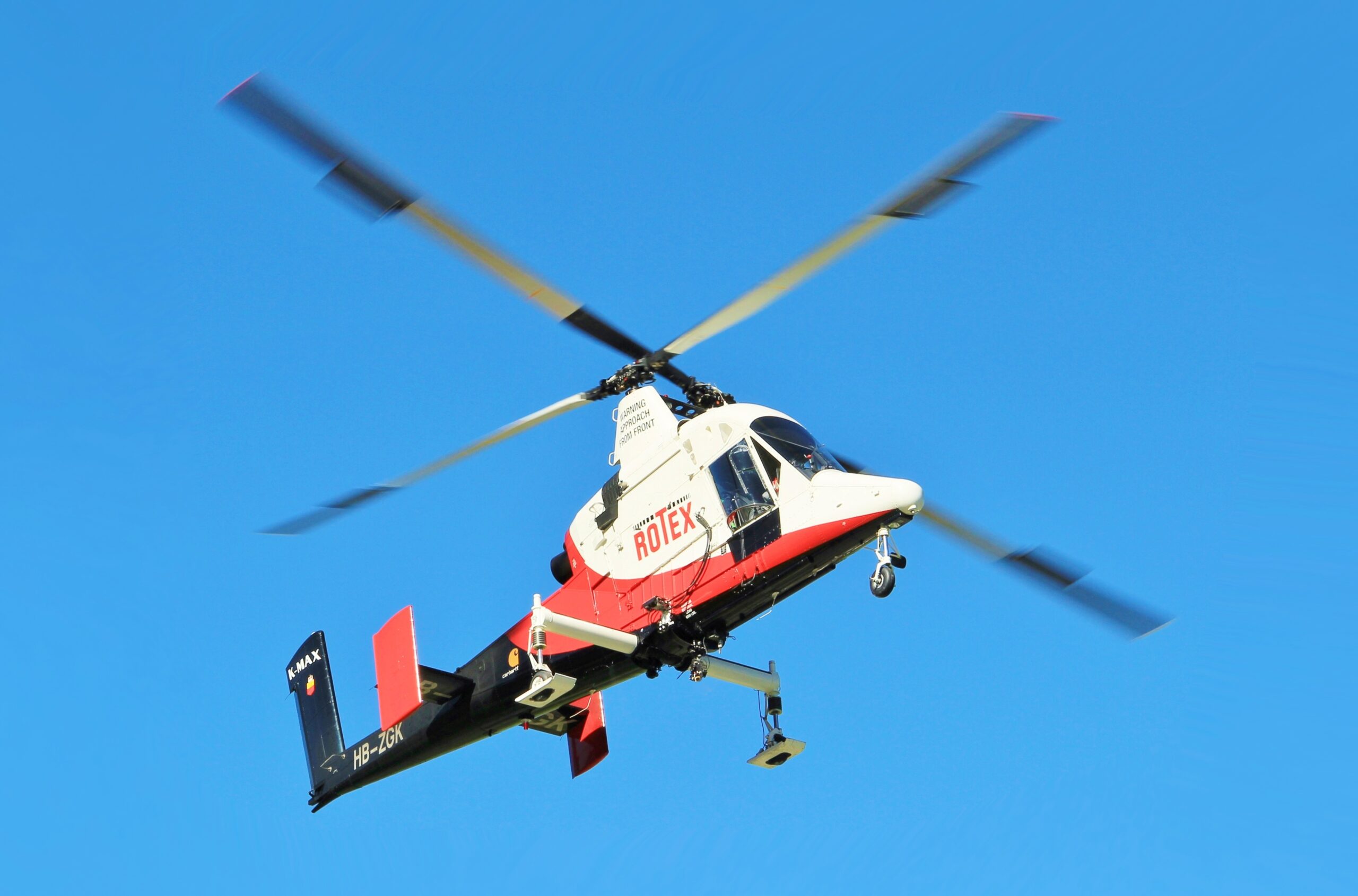
With a Payload of Up to 2.7 Tons, a Range Exceeding 500 km, and Totally Autonomous Operation, the Military Helicopter K-MAX Revolutionized Logistics in War Zones Without Human Risk.
Few people imagine, but one of the biggest silent leaps in modern military technology did not come from supersonic fighters or hypersonic missiles, but from logistics. In contemporary conflicts, delivering water, ammunition, fuel, and food to isolated troops is often more dangerous than the fighting itself. It was precisely to solve this bottleneck that the K-MAX emerged, a cargo helicopter that managed to transform wartime logistics by operating without a pilot, autonomously, in some of the most hostile environments on the planet.
Unlike armed drones or surveillance aircraft, the K-MAX was born with a simple and brutally practical mission: to carry weight. Originally developed by the American company Kaman Aerospace, it was designed from the start to be a “flying crane,” specialized in transporting heavy external loads with extreme efficiency. What no one expected is that this concept would end up becoming one of the most successful experiences of aerial autonomy in a real combat scenario.
The K-MAX Project and Engineering Focused on Lifting Weight
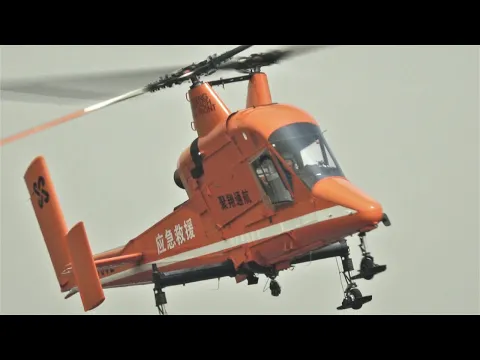
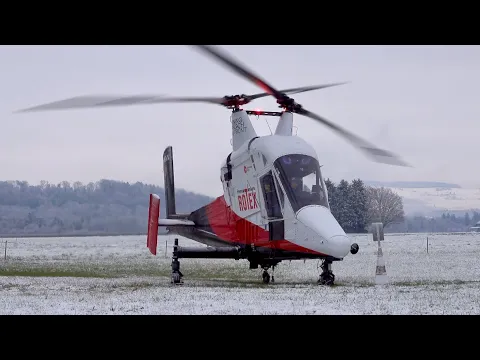
The heart of the K-MAX lies in its unusual design. Instead of a main rotor and a tail rotor, it uses two interconnected and synchronized rotors, known as synchropter. This arrangement eliminates the need for a tail rotor to compensate for torque and converts almost all the engine power into lift.
-
The commander of the Brazilian Army publicly admitted that the country now perceives real threats in South America, something that, according to him, did not exist in the past, and advocates for the increasing use of drones and technology to secure the borders.

-
For the first time in history, a South Korean submarine crossed the Pacific, sailing 14,000 kilometers to Canada, in a show of strength that is part of the competition for a billion-dollar contract to replace the Canadian submarine fleet.
-
Operation Atlas gathered 2,500 marines, armored vehicles, helicopters, fighter jets, anti-tank missiles, and kamikaze drones in a demonstration of firepower in the Cerrado, while the Navy, Army, and Air Force tested coordinated actions in a tactical scenario presented to the Minister of Defense.

-
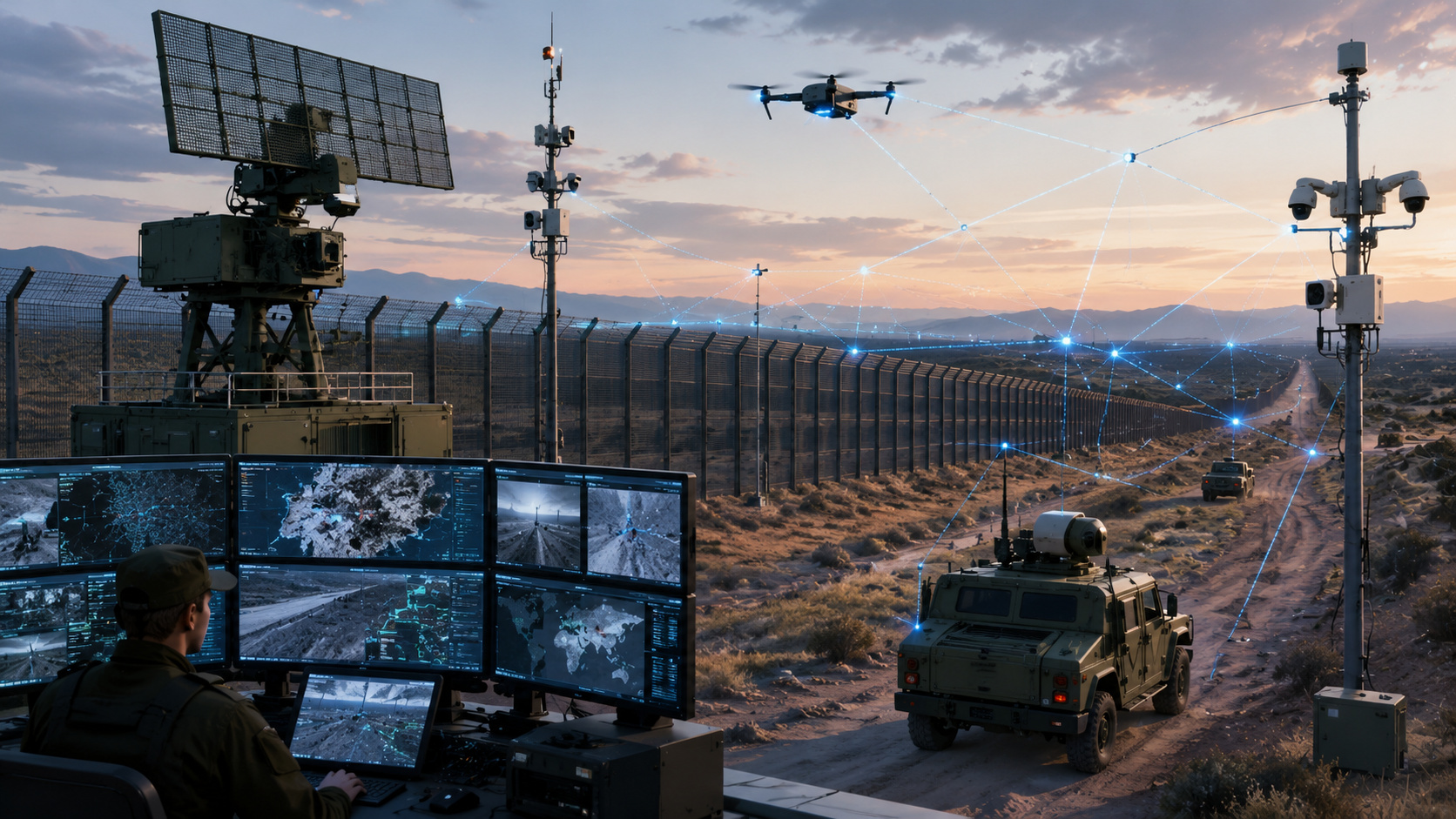
Brazil erects a digital wall along 16,886 km of borders with 10 countries, using sensors, radars, military communications, and the Army’s decision-making system to protect one of the largest land stretches on the planet and showcase the technological strength of national defense.

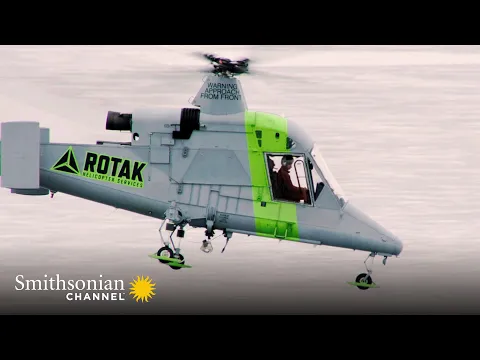

The result is an aircraft capable of lifting loads greater than its own empty weight. In concrete numbers, the K-MAX can carry up to approximately 2,722 kilograms in external loads, secured by a hook. This places it in a unique category among medium-sized helicopters, especially when considering the relatively low fuel consumption for the amount of cargo transported.
This structural efficiency was one of the factors that made the model ideal for military logistics missions, where every liter of fuel saved represents fewer exposed convoys and less risk on the ground.
The Transformation into an Autonomous War Helicopter
The historical turning point occurred when the K-MAX was adapted to operate without a pilot, in a joint program between Kaman and Lockheed Martin.
The idea was bold: completely remove the pilot from the cockpit and allow the helicopter to fly pre-programmed routes, with automatic takeoff, navigation, and landing, monitored from a distance.
This concept became a reality in 2011 when the United States Marine Corps decided to test the unmanned K-MAX in Afghanistan. The scenario could not have been more challenging: mountainous terrain, isolated bases, constant ambush risk, and roads vulnerable to improvised explosives.
Instead of sending ground convoys or manned helicopters, the K-MAX began delivering supplies directly to forward bases, often at night, without putting a single human life at direct risk.
Real Operation in Afghanistan and Impressive Numbers
During its operational deployment, the unmanned K-MAX performed thousands of logistics missions. Over approximately three years of operation, it accumulated nearly two thousand autonomous sorties and transported more than two million kilograms of cargo to troops in remote areas.
These numbers are not laboratory exercises or simulations: they are real missions in a war environment, with wind, dust, hostile terrain, and constant threats. The system demonstrated the ability to land accurately in restricted areas, drop loads precisely, and automatically return to base.
The strategic impact was immediate. Each mission carried out by the K-MAX represented one less convoy subject to attacks and one less manned helicopter exposed to enemy fire.
Range, Autonomy, and Operational Limits
Although the K-MAX is not an intercontinental vehicle, its operational range is more than enough for tactical and logistical missions. In typical configurations, the aircraft can fly for over 500 kilometers, depending on the cargo carried and the flight profile.
In military practice, this means connecting logistics centers to forward bases without the need for stops, roads, or armed escorts. The decisive factor is not only the distance but the predictability: the helicopter follows programmed routes precisely, reducing exposure and operational variability.
It is worth noting that, even though it is autonomous, the K-MAX is not a “blind” system. It operates under remote human supervision, with operators able to intervene in specific situations, although most of the mission is executed automatically.
Why the K-MAX Changed the Concept of Military Logistics
The true impact of the K-MAX lies not only in the numbers but in the mindset change it provoked. For the first time, armed forces proved that autonomous aerial vehicles can take on critical, heavy, and repetitive tasks in a real war environment, without relying on pilots on board.
This paved the way for a new generation of autonomous cargo carriers, both aerial and terrestrial and naval. The logic is clear: if machines can take on logistical risk, soldiers can focus on strategic functions, reducing casualties and increasing operational efficiency.
Moreover, the success of the K-MAX showed that autonomy does not need to be associated only with weaponry, but can be pragmatically applied to save lives.
The Legacy of the K-MAX for Future Wars
Although the specific military program for the unmanned K-MAX has been concluded after tests and operations in Afghanistan, its legacy remains alive. Derived concepts are being applied to larger cargo drones, hybrid aircraft, and even autonomous naval refueling systems.
In an increasingly technological and asymmetric conflict scenario, silent logistics is likely to become as decisive as firepower. The K-MAX proved that it is possible to cross war zones carrying tons of supplies without putting a single pilot at risk.
In the end, the question is not whether this type of technology will be used again, but to what extent it will redefine the very concept of human presence in the battlefields of the future.







-

-

-

10 people reacted to this.