Portuguese
  Spanish



Anatel Granted Starlink, Owned by Elon Musk, the Right to Operate in National Territory Until 2027. This Means the Billionaire’s Company Can Provide Internet via Satellite to the Country
On this Friday (28), the National Telecommunications Agency (Anatel) granted Starlink the right to operate foreign non-geostationary low-orbit satellites, a satellite system from SpaceX, owned by entrepreneur Elon Musk. Therefore, Starlink will be able to provide internet via satellite throughout the national territory. The right to operate lasts for 5 years, that is, until 2027. The final broadband offer to consumers, according to Anatel, may be made by an authorized company that wishes to hire the satellite network capacity or by the group itself, if it manages to obtain authorization to enter this market.
Read Other Related News
Anatel Decided Only 5 Years Due to Unforeseen Impacts
Emmanoel Campelo, advisor to the president, emphasizes that it is in the interest of Starlink, owned by Elon Musk, to provide access to internet via satellite for customers distributed throughout Brazilian territory, which will certainly bring great benefits to schools, hospitals, and other establishments located in remote and rural areas. The arrival of internet via satellite in Brazil could change the entire concept of connectivity we currently know.
Anatel evaluated the possibility of granting the right to operate until 2033, but decided to reduce it to 2027 due to the “pioneering nature” of Elon Musk’s venture and potential unforeseen impacts.
-
28-meter, 156-ton titans traveled 20,000 km from China to the port of Santa Catarina: Portonave received 7 fully electric megacranes, part of a R$ 210 million package, to double container handling.

-
They exchanged the idea of a large house for a 35 m² warehouse, spent US$ 12,000 on the structure, and created a tiny house in Colorado with space to live and work.

-
A newly opened terminal in the middle of the Amazon has begun transporting soy and corn through Amapá, eyeing the queue of ships that is congesting the ports in the South.

-
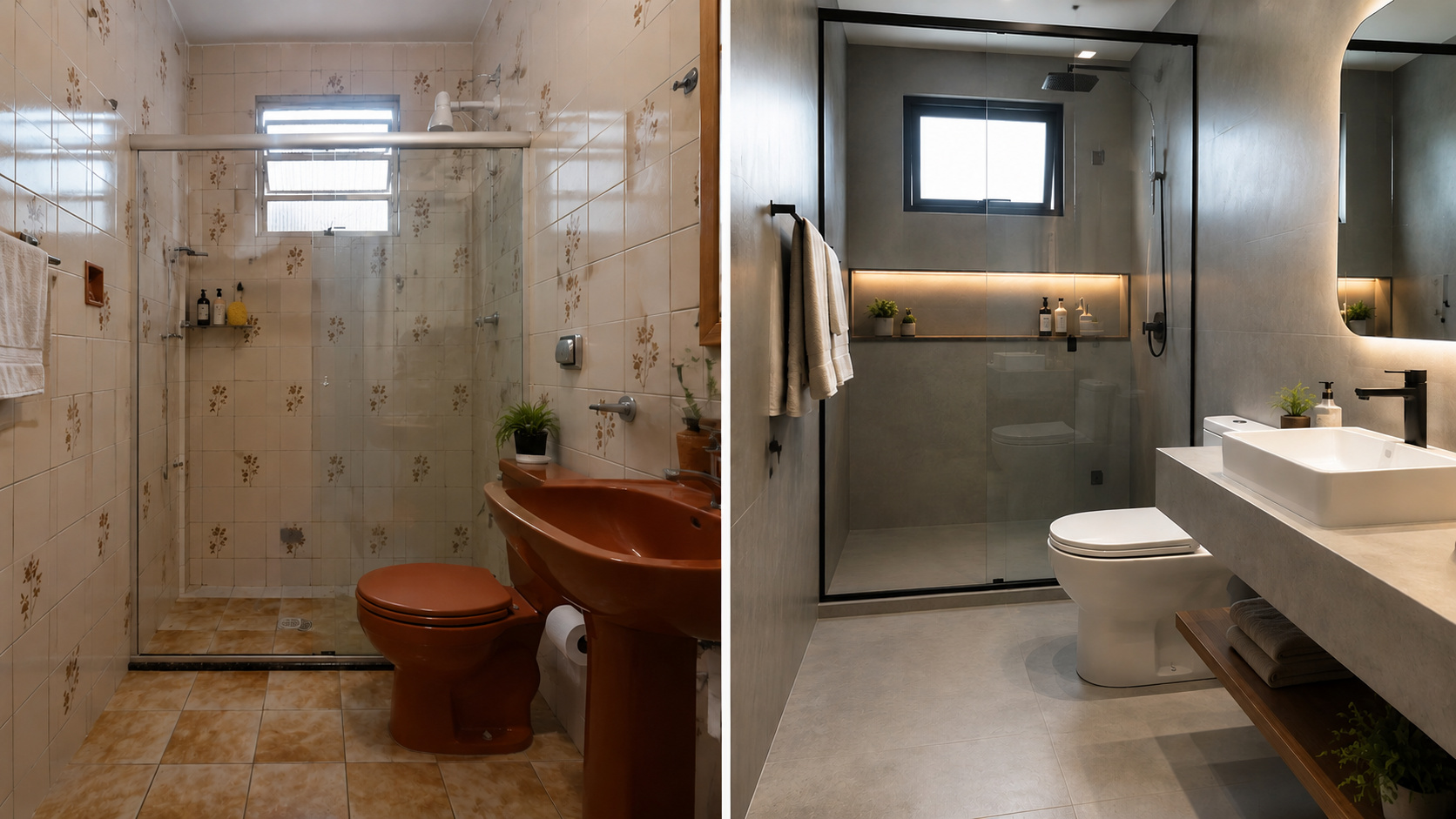
Goodbye to old tiles: renovation technique without construction transforms bathrooms in a few hours, eliminates debris, and reduces costs with coverings using special paints, high-resistance adhesives, and modern finishes that completely renew the space.


Starlink, which plans to provide internet via satellite, will also not have protection rights, meaning it cannot claim in case of interference from other services. This must be explicitly stated in the service provision contract.
Government Plans to Bring Satellite Internet to the Amazon Region
The grant of the right to operate to Starlink was a desire of the Federal Government. Fábio Faria, Minister of Communications, met with Elon Musk last November to discuss a possible partnership with the Government.
The Government’s aim is to use Musk’s companies’ equipment to bring high-speed internet via satellite to the Amazon region, connecting schools, indigenous communities, and health units in remote areas where fiber optic internet is more difficult to reach.
According to the Ministry of Communications, Starlink’s technology could also be used for the preservation of the Amazon forest through the monitoring of illegal deforestation and fires via satellite.
SpaceX Launches Brazilian Satellite into Space
SpaceX, owned by Elon Musk, launched into space the first satellite created by a Brazilian startup via Falcon 9 this January. The PION-BR1, developed by PION Labs, was launched on the 10th of this month in Florida, USA.
The satellite took 7 months to be ready in the company’s laboratory, located in São Caetano do Sul (SP). The main functions of the satellite will be to study long-distance communication capabilities, providing greater experience to the sector in the country.
The project is considered a pico satellite, which can also be called a pocketCube. It is a satellite that measures only 125 cubic centimeters and weighs about 180 grams.