Portuguese
  Spanish


Study published in the journal Astrobiology used stellar evolution models to estimate when the Sun’s increasing brightness will turn the planet into a greenhouse with no return, with a margin between 1.75 and 3.25 billion years
The planet Earth has an expiration date, and it has already been calculated. According to Xataka, in an article from July 3, 2026, a classic study by researcher Andrew Rushby, published in the journal Astrobiology in 2013, estimated that about 1.8 billion years remain for Earth’s stay in the Sun’s habitable zone, the orbital range where liquid water can exist on the surface.
The end of the term has a defined script. When Earth exits the habitable zone, an uncontrolled greenhouse effect will evaporate the oceans and irreversibly eliminate liquid water from the planet, as Xataka describes. It is not a science fiction hypothesis: it is the natural evolution of any star like ours.
The Sun’s clock: why the count is inevitable
The villain of the story is the very star that sustains life. According to Xataka, the core of the Sun contracts and heats up over eons, the outer layers expand, and the luminosity keeps growing, slowly pushing the mild temperature range away from Earth’s orbit.
-
LG Unveils XBOOM Stage 501 Portable Speaker with 25-Hour Battery, AI Karaoke, and Sound by will.i.am in Brazil

-
Scientists Warn San Andreas Fault Holds Highest Seismic Tension in 1,000 Years, Renewing Fears of “The Big One” Megaquake on U.S. West Coast

-
Brazil Advances with 14-X Hypersonic Project to Achieve Speeds Over Mach 5, Surpassing Concorde, After Two Decades of Research
-
Archaeologists Uncover 1,200-Year-Old Gold Treasure in Saudi Arabia, Ownership Remains a Mystery



The physics of this aging has no pause button. Every hundred million years, the Sun becomes a bit brighter, and the inner boundary of the habitable zone advances a little more towards Earth, until the day the planet will be on the wrong side of the line, cooking in the heat of a star that was once its ally.
What is the habitable zone, after all
Before the deadlines, it’s worth understanding the scale. The habitable zone is the range of distances around a star where a planet receives the right amount of energy to maintain liquid water on the surface: too close, the water boils and escapes; too far, it freezes forever. Earth currently orbits comfortably within this range, which is why there are oceans, rain, and life.
The problem is that the range is not fixed. As the Sun’s luminosity increases with age, the entire mild temperature region slowly migrates outward, towards Mars and beyond. The planet isn’t going anywhere: it’s the boundary of life that’s moving, and one day it simply leaves Earth behind. Rushby’s study made exactly this calculation of change, crossing the planet’s fixed orbit with the moving boundary of heat.
From 1.75 to 3.25 Billion Years: The Size of the Window
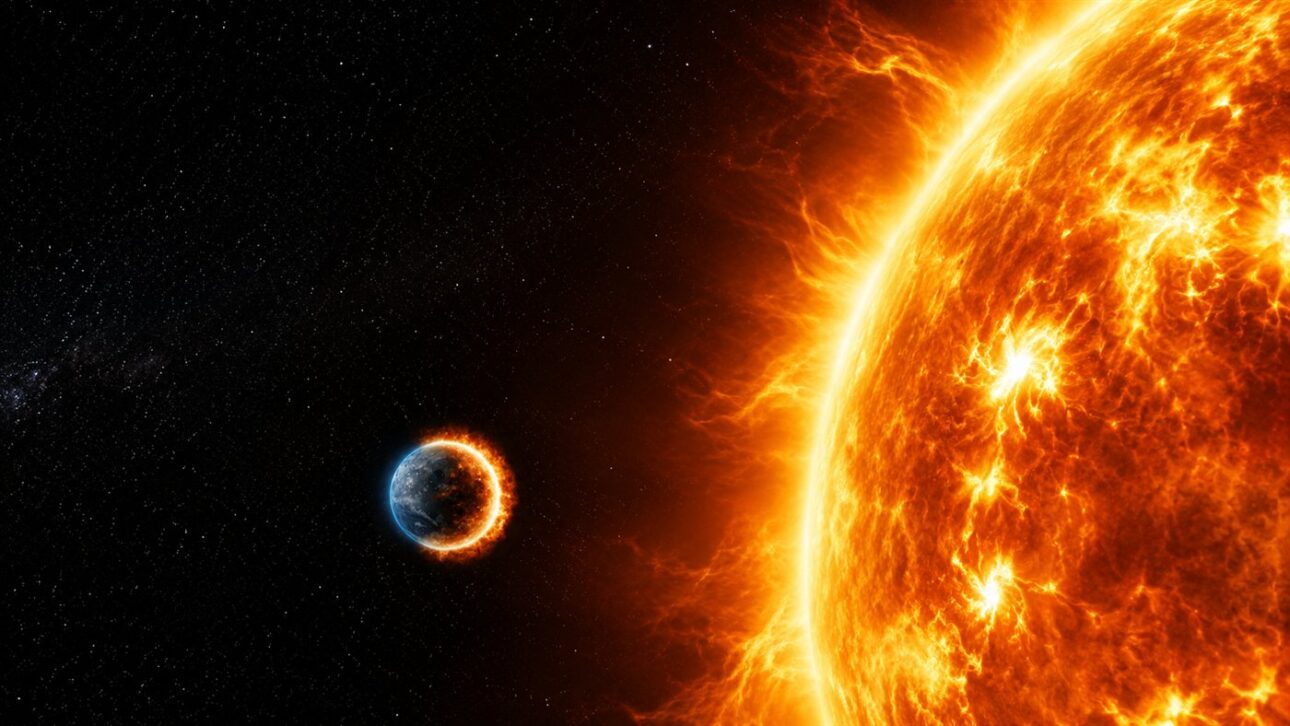
The round number hides an honest scientific margin. According to ScienceDaily, Rushby’s team estimated that Earth will cease to be habitable between 1.75 and 3.25 billion years from now, when the planet will enter the so-called hot zone of the Sun.
The researcher himself summarized the method. The team used the concept of a habitable zone, the distance from the star where temperatures allow liquid water on the surface, combined with stellar evolution models, as ScienceDaily records in Rushby’s statement. With these two measures, the group nailed down the lifespan window not only of Earth but of eight other planets in the habitable phase.
The Day the Oceans Disappear
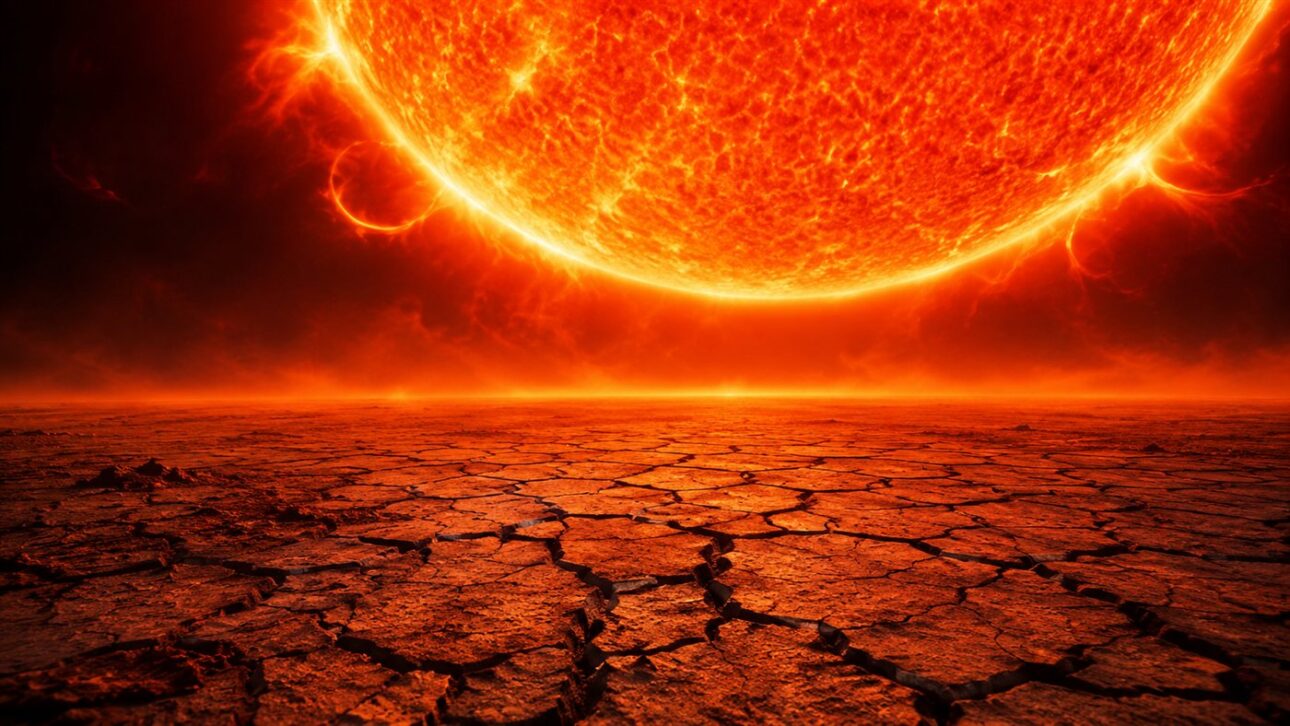
The mechanism of the end is known to planetary climate scientists. According to ScienceDaily, upon entering the hot zone, Earth’s temperatures will reach levels where the seas evaporate, in an extinction event described as catastrophic and terminal for all forms of life.
The sequence is a reverse snowball. More heat evaporates more water, and water vapor is itself a potent greenhouse gas, which further accelerates warming, as Xataka explains when describing the runaway greenhouse effect. Once the cycle starts, there is no turning back: liquid water disappears from the planet forever.
Complex Life Dies Long Before the Final Deadline
The 1.8 billion years is the planet’s deadline, not ours. According to Xataka, complex life will disappear long before the limit, leaving only extremophile microorganisms hidden in isolated niches, like pockets of underground water, resisting until total extinction.
The numbers from our own history show how we are newcomers. Modern humans have existed for only 200,000 years, and intelligent life needed about 75% of the planet’s entire habitable lifespan to evolve, according to ScienceDaily. Insects arrived 400 million years ago, dinosaurs 300 million years ago, and flowering plants only 130 million years ago, a reminder that complexity is the shortest and most fragile chapter in Earth’s biography.
Mars will last longer than Earth
The planetary irony of the study lies with the red neighbor. According to ScienceDaily, Mars will remain within the Sun’s habitable zone until near the end of the star’s life, a horizon of about 6 billion years, long after Earth has turned into a sterile greenhouse.
The detail reignites a strategic argument. In the very long term, the most promising planet in the Solar System for the continuity of any life project is not ours, and this is one of the reasons why space agencies and private companies treat Mars as the species’ insurance policy, no matter how distant the scenario seems to those living the urgencies of 2026.
There is, of course, a catch in this inheritance: being in the habitable zone does not mean being habitable. Mars is at the right distance range, but it lost almost all its atmosphere and surface water billions of years ago, proving that location is a necessary but not sufficient condition. What the study says is that if humanity can one day give the red planet the conditions it lacks, the address will remain valid for much longer than ours.
Gliese 581d and Kepler 22b: the planets that inherit the future
The study also looked beyond the Solar System, and there the timelines are impressive. According to ScienceDaily, the exoplanet Kepler 22b has an estimated habitable window between 4.3 and 6.1 billion years, while Gliese 581d can remain in the life zone for an astonishing 42.4 to 54.7 billion years, ten times the current age of our Solar System.
The explanation lies in the size of the stars. Planets orbiting lower-mass stars gain much longer habitable periods because these stars age slowly, according to ScienceDaily. If life needs time to evolve, the best nurseries in the universe might be precisely the worlds that orbit the most modest stars.
The measure that applies to the search for life beyond Earth
The practical value of the study is not to scare anyone with a billion-year deadline. According to Xataka, understanding the habitability of our planet serves to apply the same measures to exoplanets discovered thousands of light-years away, separating promising candidates from worlds without a future.
For the Brazilian reader following the new space race, the lesson is one of perspective. The Earth is, until proven otherwise, the only successful life experiment in the known universe, and the study shows that even this experiment has an expiration date. Intelligent life spent three-quarters of the available time just to appear; what it will do with the final quarter is the only part of the script that is yet to be written.
Tell us in the comments: does knowing that the planet has an expiration date change anything in your way of seeing the present?