






 Portuguese
  Spanish


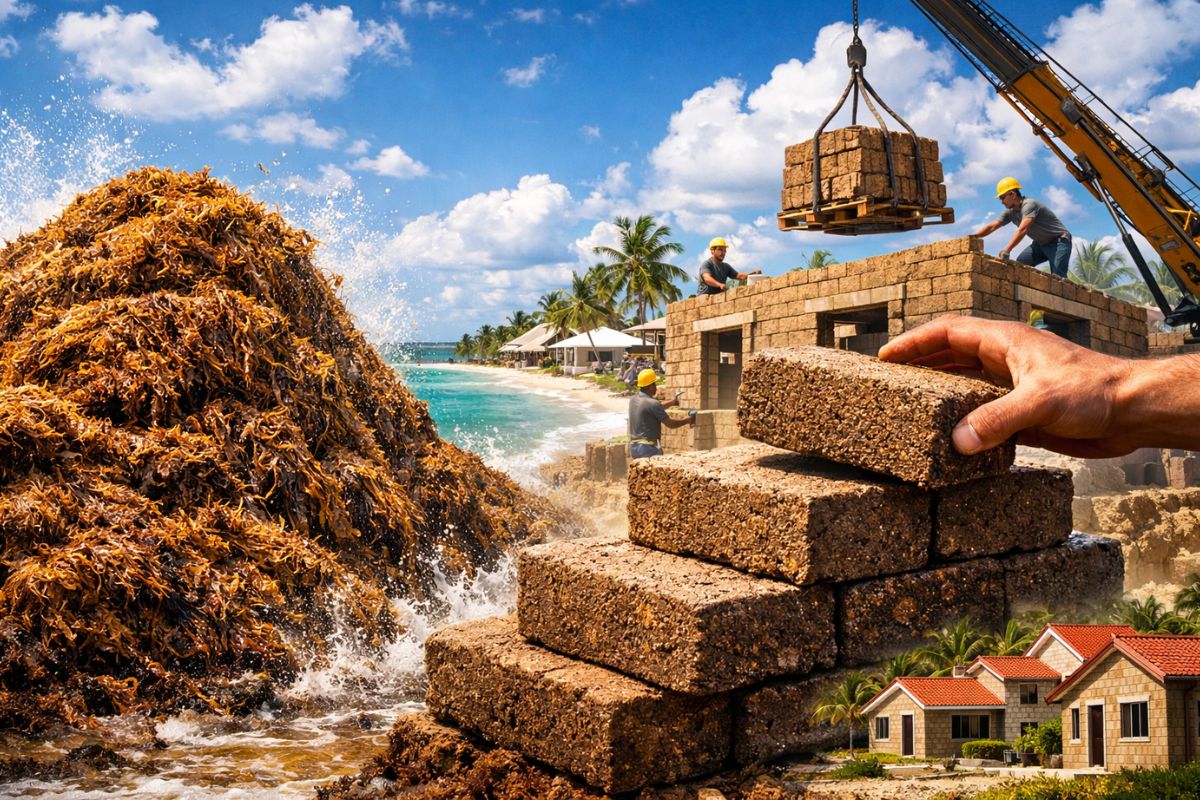


While Coastal Cities Paid to Remove Ocean Trash, Engineers in Quintana Roo Decided to Treat Sargassum in the Caribbean as Raw Material and Not as Waste, Creating a Model in Which the Environmental Problem Becomes Input for Sustainable Construction at Scale.
In 2018, nearly 20 million tons of sargassum in the Caribbean reached the Mexican coastline and turned paradise beaches into strips of brown mud, with a smell of sulfur and decomposing organic matter. Tourists left, fishermen couldn’t launch their boats, and some coastal areas had to be evacuated due to hydrogen sulfide. What few realized was that the sargassum in the Caribbean shouldn’t have been there in that form and amount.
At the same time that governments were spending millions to remove biomass from the beaches and bury the problem in landfills, a local innovation team decided to ask the question nobody was asking. What if that wasn’t waste, but the input for a brick stronger than conventional ones, capable of becoming sargassum bricks to build low-carbon houses precisely in the communities affected by the crisis?
How Sargassum Got Out of the “Sargasso Sea” to Bury the Mexican Caribbean
For centuries, sargassum lived relatively confined to a stable region of the North Atlantic, the Sargasso Sea, a kind of oceanic “gyre” of about 2 million square miles.
-
Brazil’s Minas Gerais Government Signs Agreement for Ring Road to Divert Heavy Trucks Away from Urban Center

-
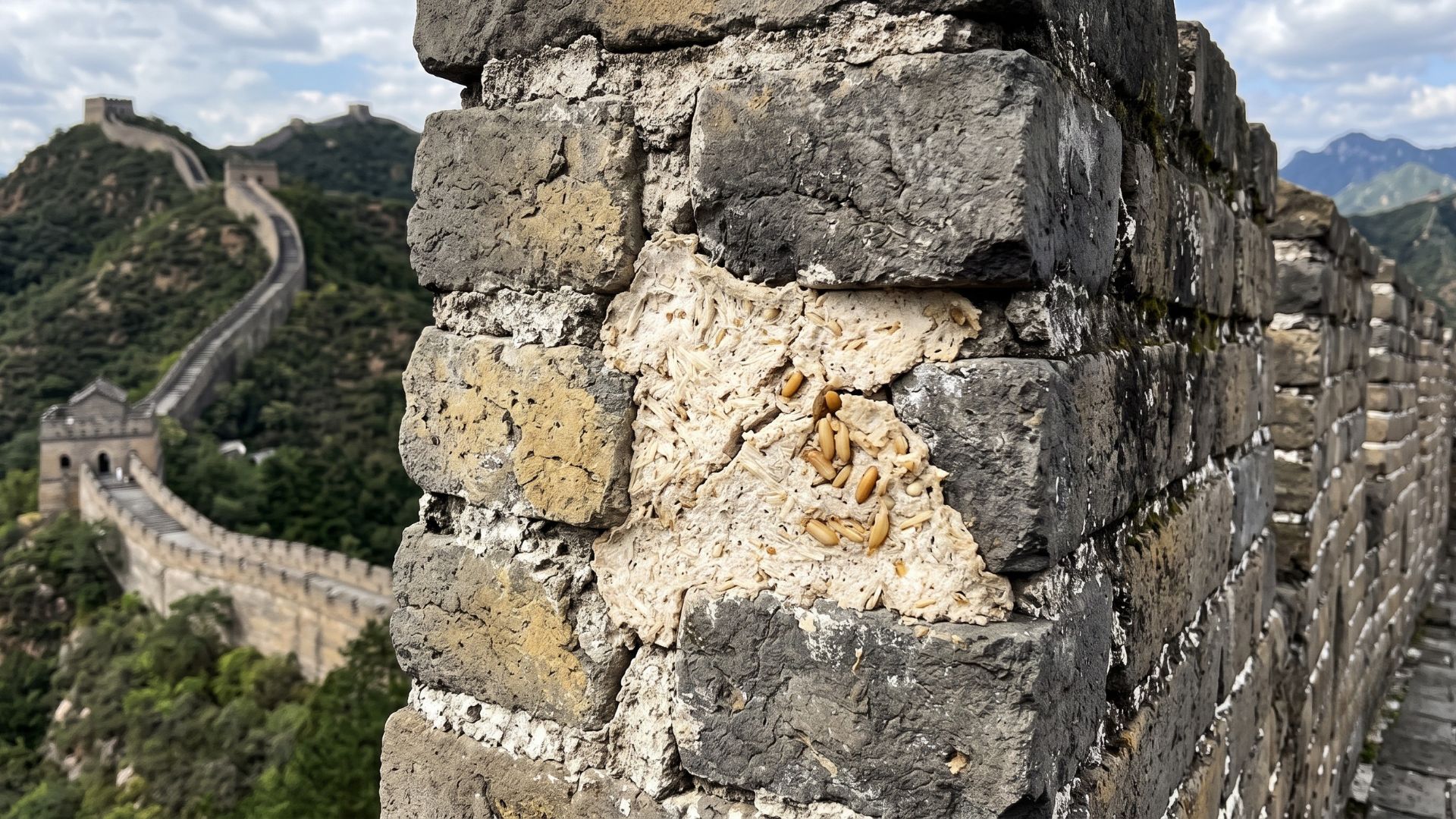
The Great Wall of China was built with a surprising kitchen secret: sticky rice mixed with lime created a mortar so durable it has withstood centuries, earthquakes, and human destruction.

-
Tired of Seeing Homelessness, New Westminster in Canada to Open Region’s First Tiny Home Village: 30 Container Homes with Central Kitchen, Meals, and Facilities
-
Brazil’s Santa Catarina Port Drives 770 Tons of Steel Piles into the Sea, Reaches Midpoint of $100 Million Project to Dock Two Ships Simultaneously by October



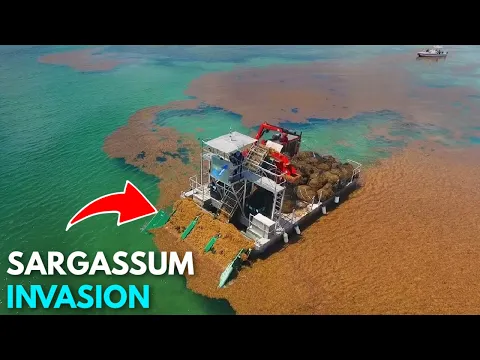
There, pelagic sargassum floated freely in enormous mats, held up by small gas bubbles, without anchoring to the ocean floor.
Starting in 2011, something changed. Satellite data showed that the annual sargassum bloom jumped from about 1 million tons to over 20 million tons in 2018, in a continuous band that stretched from the west coast of Africa to the Gulf of Mexico.
The ocean currents began to push these mats south, and suddenly, the Caribbean started receiving unprecedented volumes of sargassum.
The main hypothesis involves a combination of factors:
- nutrient runoff linked to deforestation and erosion, dumping nitrogen-rich sediments into the Atlantic
- warming surface waters
- changes in winds and currents that put sargassum in the Caribbean on the route of the major currents
The result was an environmental and economic collapse on the beaches. Sargassum is not intrinsically toxic, but decomposing it releases gases, consumes oxygen, and destroys the tourism appeal of an entire region.
From Ocean Waste to the Strongest Brick Than the Conventional

While sargassum in the Caribbean was treated as a pollutant, one detail went unnoticed. Chemically, this biomass is rich in cellulose, lignin, and polysaccharides, the same types of compounds that enhance plant fibers in construction materials.
That’s when an entrepreneur in Quintana Roo decided to experiment. He started drying batches of sargassum, grinding the material into powder, and mixing it with clay, sand, and water, as if he were producing a traditional brick but with a percentage of marine biomass in the mix.
The first prototypes were a failure.
- they cracked easily
- they emitted an unpleasant odor
- they attracted insects
But tests continued, adjusting proportions. When the mixture reached about 20% sargassum by weight, combined with around 40% clay and 40% sand, something unexpected happened.
Compression tests began to show a brick stronger than conventional ones, with a resistance of around 60 kg per square centimeter, well above the minimum required by Mexican building codes, around 35 kg per square centimeter.
The secret lies in the microstructure.
- the cellulose fibers from sargassum act like a microscopic reinforcement, better distributing the load
- the clay particles intertwine with those fibers
- the natural components act as binders, reducing the need for cement
In practice, this sargassum brick behaves like a stronger than conventional brick, using the very “ocean waste” as internal reinforcement. What was an environmental liability becomes a structural asset within the wall.
Sargassum Brick, Thermal Mass, and Comfort in Hot Climates

In the Mexican Caribbean, daytime temperatures often reach 35 °C. In many popular houses, air conditioning can account for about 60% of energy consumption, primarily because most of the housing is built with hollow concrete blocks, which are cheap but terrible at thermal retention.
Tests with the sargassum brick showed something beyond mechanical resistance. The thermal conductivity measured around 0.45 W per meter Kelvin, compared to approximately 1.7 W per meter Kelvin for standard concrete. This means that the sargassum brick allows heat to pass much more slowly.
In practice:
- walls made with stronger than conventional sargassum-based bricks heat up more slowly during the day
- at night, these same walls release heat gradually, smoothing out temperature peaks
It’s like embedding a system of “passive air conditioning” in the very construction material. Studies indicate reductions of up to 30% in cooling costs when the architectural design properly utilizes this thermal mass.
This places the sargassum brick in a clear category of sustainable construction:
- less energy consumption over the house’s lifespan
- more thermal comfort for low-income families
- less need for active cooling systems
Why These Low-Carbon Houses Emit Far Less CO₂
Beyond resistance and thermal comfort, the sargassum brick also alters the emissions balance. The production of traditional fired clay bricks relies on kilns at around 1,000 °C, fueled by fossil fuels or biomass, emitting large amounts of carbon dioxide.
The solution was to revive an ancient technique. Instead of burning each sargassum brick, the process uses solar drying for about 28 days, on elevated racks protected by screens to reduce degradation from UV rays.
With this:
- there’s no need to heat industrial kilns
- the main energy comes from the sun, already abundantly available in the region
- sargassum in the Caribbean, which was already being collected anyway, serves as practically free raw material
Carbon footprint calculations indicate a reduction of around 85% compared to burned clay bricks.
When this stronger than conventional brick is applied to low-carbon houses, the gain multiplies, because the energy savings over decades add up to the emission savings in manufacturing.
The Dark Side of Sargassum: Salt, Heavy Metals, and Quality Control
Transforming ocean waste into building material is not just a matter of creativity, it’s also a matter of chemistry and safety. Sargassum brings two major problems in its baggage: salt and heavy metals.
Even after the initial washing, a quantity of sodium chloride remains trapped in the fibers. In humid environments, this salt can migrate to the surface, a process known as efflorescence, and in reinforced structures, it can contribute to steel corrosion.
To mitigate this, the team developed a two-step process:
- washing with fresh water to remove excess surface salt
- a new wash with diluted vinegar solution, to break chloride bonds in organic compounds
After drying, the residual salt content was below about 0.5% by weight, which reduces the risk of structural problems in masonry walls.
The second critical point is heavy metals. Depending on where the sargassum in the Caribbean is collected, the algae can accumulate arsenic and cadmium in relevant concentrations.
For the sargassum brick to be truly part of a sustainable construction, it is necessary to ensure that these substances do not enter the construction chain.
That’s why each batch of biomass is tested before processing.
- batches with contamination above the limit are rejected
- some parts may be diverted to other uses, such as biogas production
This screening adds cost to the process, but enables certifications and frames the sargassum brick within sustainable construction standards in Mexico. Without this step, low-carbon houses could carry a toxic problem inside their walls.
Scale, Limits, and the Race for Sargassum Brick
With the formula adjusted, the sargassum brick came out of the lab and into construction sites. Recently, over 2 million units have been produced, used in schools, community centers, and social housing projects in Quintana Roo, with expansion to neighboring states like Yucatán and Campeche.
The numbers show the potential:
- projections indicate sargassum blooms in the Caribbean exceeding 24 million tons in certain years
- estimates suggest that if the model is scaled, it would be possible to process 5 to 8 million tons of sargassum annually
- this would be enough to produce sargassum bricks for approximately 400,000 low-carbon houses
In other words, the same phenomenon that suffocates beaches could, in theory, sustain an entire front of sustainable construction in the region.
But there are important limits:
- collecting sargassum requires intensive labor and short-term logistics because the biomass decomposes quickly
- the washing, drying, and quality control process is geographically restricted to areas with plenty of sun and physical space
- the supply chain for stronger than conventional sargassum-based bricks is still in its infancy, needing investments in equipment, certifications, and training
There is also a geopolitical point. The more coastal countries realize that sargassum in the Caribbean is an input and not just a problem, the greater the competition for who will first transform this biomass into value-added products.
The race shifts from beach cleaning to controlling the flow of a new building material.
What Sargassum Brick Reveals About the Future of Construction
Ultimately, the story of sargassum brick is less about a product and more about a mindset shift.
A marine waste that for years was seen as an environmental catastrophe and economic obstacle becomes the heart of a stronger-than-conventional brick, with good thermal performance and a much lower carbon footprint.
When the same biomass is capable of cleaning beaches, reducing emissions, lowering electricity bills, and turning into sargassum bricks to build low-carbon houses, it stops being waste and becomes infrastructure. This opens a window for other similar solutions in plastics, agricultural waste, industrial sludge, and so on.
The challenge now is one of time and scale.
- sargassum blooms in the Caribbean are accelerating
- the industrial capacity to process this material into stronger-than-conventional bricks is still limited
- sustainable construction needs standards, norms, and financing to compete with conventional concrete
In other words, the question has shifted from whether sargassum brick works to how quickly it can be adopted without creating new environmental or social problems.
And you, looking at this scenario, what would you do if you lived in an area affected by sargassum in the Caribbean: would you accept living in a house made of sargassum brick as part of a project for low-carbon houses or would you still hesitate to replace traditional bricks with a stronger-than-conventional brick made from “ocean waste”?







What about using dried sargassum as chicken feed?
Porque no hay que probar si puedes vivir en ella o no
Bravo por una idea de solución, a un grave problema.