Portuguese
  Spanish



In Just One Quarter, China Installed More Solar Energy on Roofs Than European Countries Take Years to Achieve, Fueled by Regulatory Changes
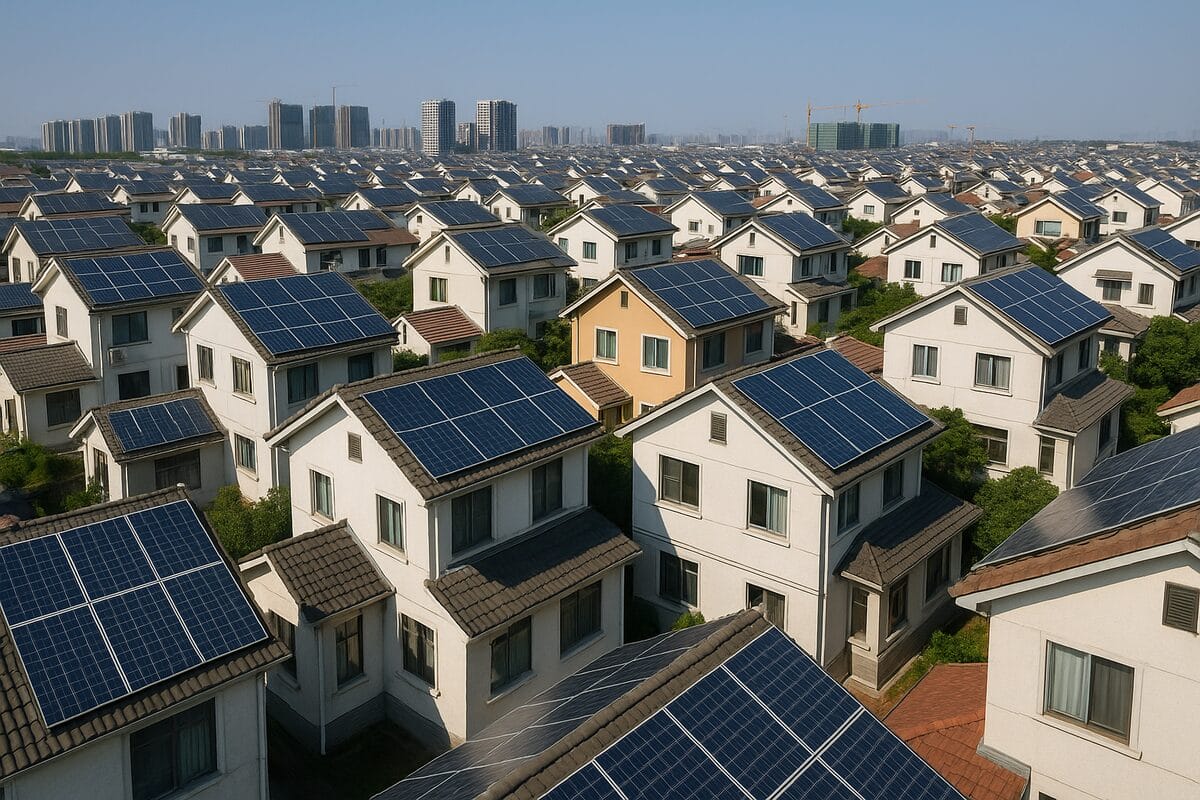
China made an impressive leap in rooftop solar energy installation. In just three months, the Asian country deployed 36 gigawatts (GW) of photovoltaic distributed energy, surpassing what many European countries take years to achieve.
The number draws attention not only for its scale but also for its speed. According to a report from Rystad Energy, the first quarter of 2025 ended with a total of 60 GW of solar energy added — and 60% of that came from rooftops.
The forecast is that the distributed model will continue to grow, even with possible adjustments to the sector’s rules.
-
Solar energy reaches 55 GW, becoming the second largest power source in Brazil’s energy mix

-
Solar energy can increase property value by up to 10% and become a selling point.
-
Solar and wind energy surpass natural gas for the first time in the world and accelerate energy revolution

-
Africa has about 500,000 cell towers and most still burn diesel to operate, while companies rush to cover antennas with solar energy and avoid signal blackouts.



Race Before the Regulatory Cutoff
The Chinese advancement has context. The country is concluding its 14th Five-Year Plan, and with it came new rules from the National Energy Administration (NEA). The changes, in effect since May, spurred a race against time.
Among the factors that motivated the acceleration are incentives for self-consumption, the ability to trade green certificates, and restrictions on access to the traditional energy grid.
The urgency was such that, in a single quarter, China installed more solar panels on roofs than countries like Spain or France can manage in up to three years.
The comparison with Europe highlights the magnitude of the achievement. The European Union installed 56 GW of solar energy throughout 2023, and only part of that was on rooftops. In contrast, China accomplished more than half of that volume in just three months, focusing on rooftops.
Differences Between Provinces
Not all Chinese regions participated equally in the expansion. Provinces like Jiangsu and Guangdong stood out for having more flexible rules. On the other hand, places like Jilin and Inner Mongolia restricted self-consumption so much that they hardly contributed to the advancement.
Despite the good numbers, the regulatory environment is becoming more complex. Commercial projects face difficulties in selling energy to the grid. Legal and contractual uncertainty has also been increasing, which worries developers and investors.
Brazil Lags Behind but Makes Progress
Meanwhile, Brazil celebrates more modest advances. According to the Brazilian Photovoltaic Solar Energy Association (Absolar), the country currently has 55 GW of installed capacity in solar energy.
Of that total, about 37.4 GW comes from self-generation, and 17.6 GW comes from large plants connected to the national system.
Future of Solar Energy on a Global Scale
China demonstrates that it is possible to change the pace of the energy transition. If it maintains its current performance, the country could install more solar energy on rooftops in a single year than many countries combined can achieve in a decade.
With information from Xataka.