






 Portuguese
  Spanish


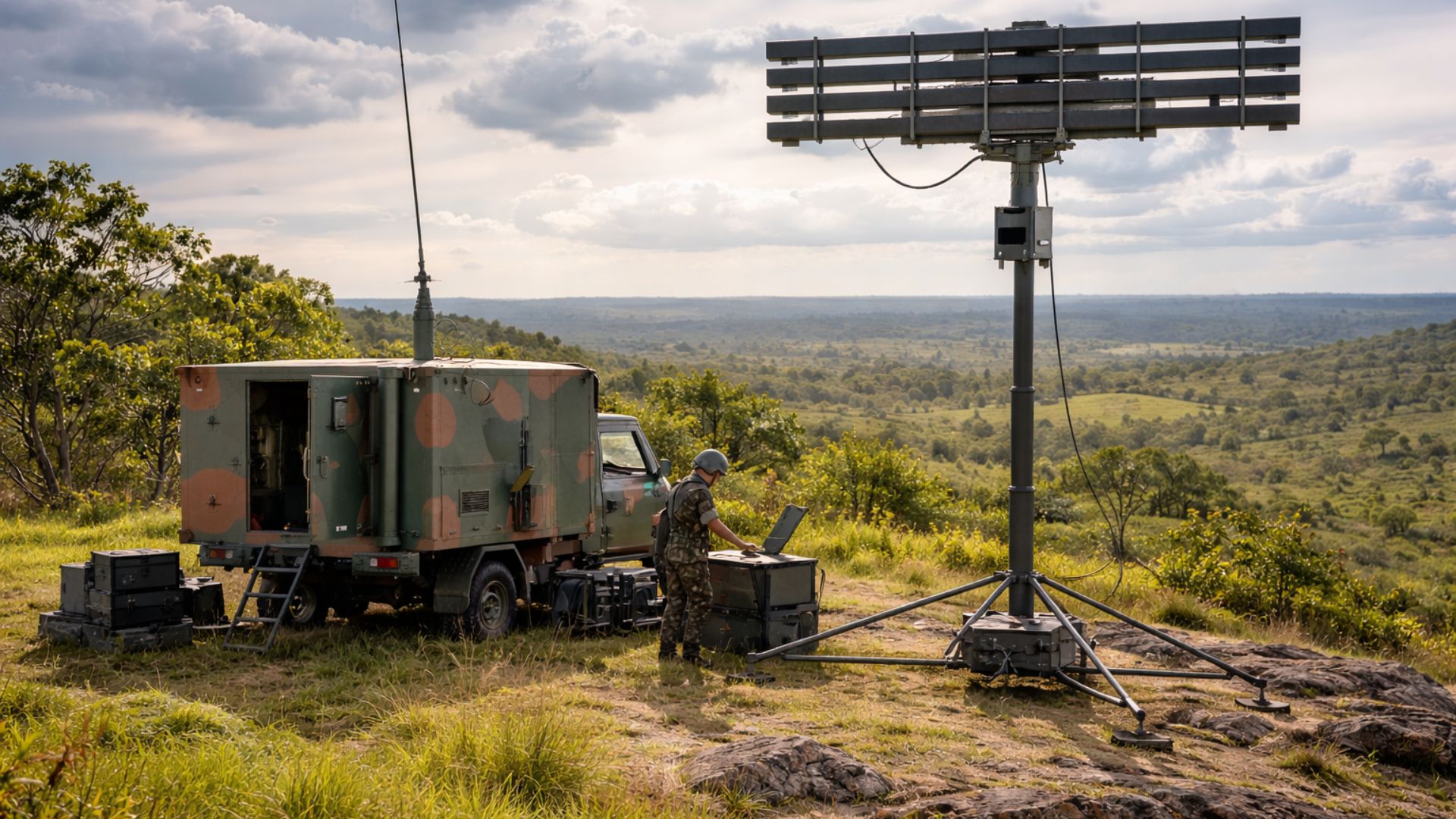

Modernization of M60 radars expands the capacity of the Brazilian Army with Embraer technology, elevating air defense, airspace surveillance, and efficiency in strategic operations in the country.
Embraer completed, last week, the modernization of two M60 radars belonging to the Brazilian Army, marking a significant advancement in the country’s air defense structure. The update is part of a broader contract that provides for the modernization of eight operational units, within a strategic program for the sustainment of surveillance and control systems.
In practice, the delivery directly reinforces the operational capacity of the ground forces, increasing the reliability of the equipment and enhancing efficiency in critical missions. The updated M60 radars have already begun to be used, with noticeable performance gains, according to official information.
This movement consolidates Embraer’s role as one of the main contributors to technological development in the defense area, while strengthening Brazil’s autonomy in sensitive systems such as air defense.
-
U.S. Air Force Launches Air-to-Air Missile Project with Range of Up to 1,850 km for Indo-Pacific Operations

-
Australia to Deploy Up to 8 Nuclear-Powered Submarines in Indo-Pacific, Establishes Billion-Dollar Naval Chain Through AUKUS, Joining Elite Group Capable of Extended Underwater Missions

-
Indonesia Begins Construction of 2,000-Ton Scorpène Stealth Submarines with Advanced Weaponry and French Steel

-
Brazil’s Largest Navy Ship, NAM Atlântico, Transforms into Field Hospital During National Crises




Embraer and M60 radars drive a new technological phase of the Brazilian Army
The modernization led by Embraer on the M60 radars represents more than just a simple technical update. It is a structured process of capability renewal, essential to keep the Brazilian Army aligned with current air defense requirements.
The equipment underwent a mid-life upgrade, migrating from the previous version to version 2.0. This type of technological evolution is common in military systems, allowing already established platforms to continue operating at high performance without the need for complete replacement.
According to the Brazilian Army itself, the modernized versions are already in use and show consistent improvements. The initiative also reinforces the importance of strategic partnerships with the national industry, especially in critical areas such as defense.
Updates to M60 radars increase efficiency and reduce vulnerabilities
The modernized M60 radars have received significant improvements in both hardware and software. Embraer has incorporated new technological standards, enhancing processing capacity and increasing the system’s resistance to external interference.
Among the main advancements implemented, the following stand out:
- More robust algorithms for signal processing
- Greater resistance to electronic interference and noise
- More intuitive operational interface
- Better performance in complex environments
These improvements make the radars more reliable and efficient, reducing operational vulnerabilities. For the Brazilian Army, this means greater accuracy in threat identification and increased safety during air defense operations.
Another important point is the greater availability of the systems. With fewer failures and greater stability, the equipment remains active for longer periods, which is essential in continuous surveillance scenarios.


M60 Radars in Air Defense Gain Strategic Prominence in Brazil
The M60 radars occupy a central position in the air defense structure of the Brazilian Army. Developed in partnership with Embraer, these systems are classified as three-dimensional surveillance and low-altitude fire control radars.
With a range of up to 60 kilometers, the equipment can simultaneously track up to 60 targets, providing broad and efficient coverage. This capability is essential for identifying threats in real-time and coordinating rapid responses.
Furthermore, the radars can be integrated with missile and cannon-based systems, expanding their functionality within air defense. They also operate in conjunction with the Brazilian aerospace defense system, forming an integrated protection network.
This combination of range, precision, and integration makes the M60 radars key components in the protection of strategic infrastructures and sensitive areas of the country.

Embraer Strengthens Air Defense with LPI Technology in M60 Radars
One of the most relevant differentiators of the M60 radars is the presence of LPI technology, which stands for Low Probability of Interception. This feature significantly reduces the likelihood of the radar being detected by adversary systems.
In practice, this allows the Brazilian Army to operate with greater discretion, maintaining its active surveillance capability without easily exposing itself. In conflict scenarios, this characteristic can represent an important strategic advantage.
In addition to LPI technology, Embraer has also enhanced the system with modern solutions that increase data accuracy and the overall efficiency of the radar. The result is equipment better suited to the current demands of air defense.
These advancements reinforce the relevance of the M60 radars within the Brazilian military context, especially in the face of increasingly sophisticated threats.

Mobility and rapid response expand the operational reach of the Brazilian Army
Another factor that deserves attention is the mobility of the M60 radars. The systems were designed to be easily transported and set up in different regions, significantly enhancing the response capability of the Brazilian Army.
In a country with continental dimensions like Brazil, this characteristic is essential. The possibility of rapid deployment allows the radars to be positioned strategically as needed, ensuring greater territorial coverage.
Among the main operational benefits, the following stand out:
- Ease of transport across different types of terrain
- Speed in setup and activation
- Flexibility for operation in multiple scenarios
- Ability to adapt to various missions
This versatility directly contributes to the efficiency of air defense, allowing for quicker and more effective responses to different types of threats.
The modernization carried out by Embraer ensures that these characteristics are maintained and enhanced, further elevating the operational level of the systems.
Partnership between Embraer and the Brazilian Army sustains continuous advancements in defense
The collaboration between Embraer and the Brazilian Army is one of the pillars of technological advancement in the defense sector in the country. This partnership allows for the development of tailored solutions aligned with the specific needs of the armed forces.
Furthermore, it contributes to strengthening the defense industrial base, potentially reducing dependence on external suppliers and stimulating national innovation. The modernization of the M60 radars is a clear example of this cooperation model.
Another relevant point is the continuous update capability of the systems. With the support of Embraer, the Brazilian Army can keep its equipment always updated, keeping pace with the evolution of threats and technologies.
This type of partnership is essential to ensure the sovereignty and security of the country in the long term.
Modernization of the M60 radars reinforces sovereignty and prepares Brazil for new challenges
The update of the M60 radars marks an important moment for the air defense of the Brazilian Army. With the initial delivery of two modernized units and the forecast for the upgrade of eight pieces of equipment, the program demonstrates consistency and strategic vision.
The gains in reliability, availability, and operational performance are clear. More than that, the initiative reinforces Brazil’s ability to develop and maintain critical technologies within its own territory.
By leading this process, Embraer reaffirms its importance in the defense sector and its contribution to national security. Meanwhile, the Brazilian Army expands its operational capacity, becoming better prepared to deal with complex scenarios.
In an increasingly challenging global environment, investing in efficient air defense is not just a choice, but a necessity. And the modernization of the M60 radars shows that the country is consistently advancing in this direction.
With information from AEROIN.


