Portuguese
  Spanish


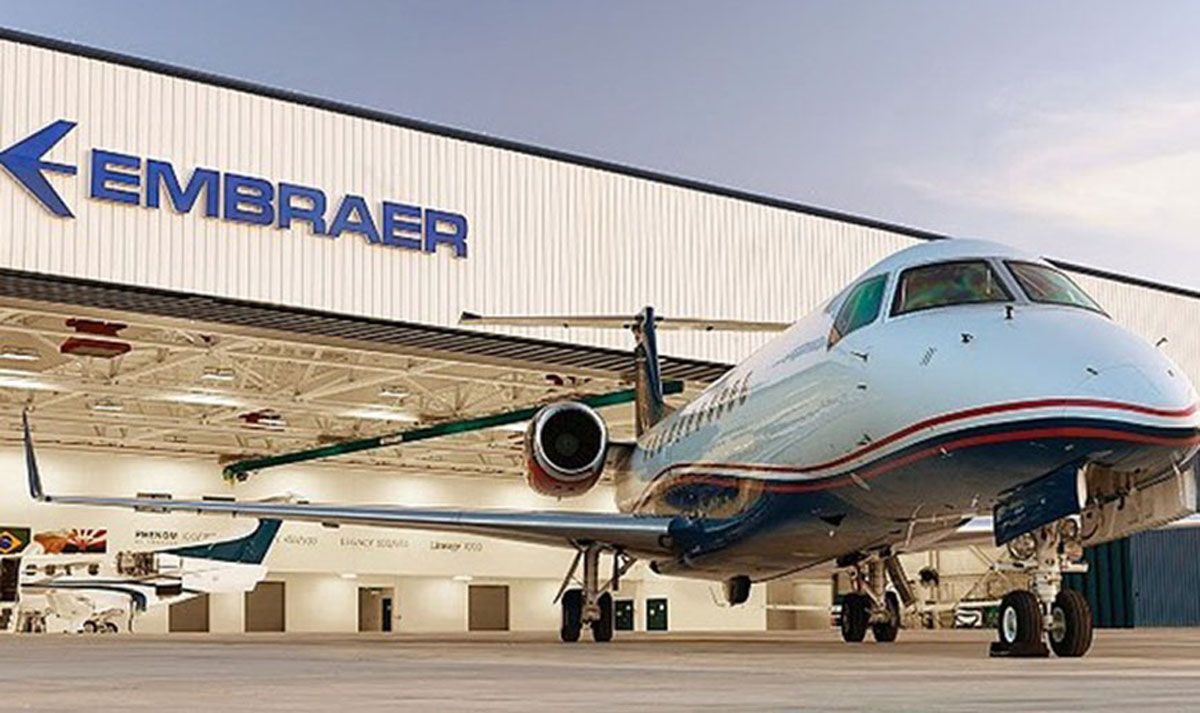

Embraer And Fokker Plan To Develop Projects In Commercial Aviation With Hydrogen-Powered Aircraft, Says The Document
The Brazilian aircraft manufacturer Embraer announced on Monday (10/18) that it has signed a memorandum of understanding with Fokker Techniek and Fokker Services for joint exploration in the defense, commercial aviation, services, and support markets. According to the statement, in the coming months, the partnership between the companies will discuss opportunities in new projects in commercial aviation and defense. Check out this news: Embraer Closes Contract With African Company To Develop New Operational Projects For Urban Air Mobility
- ArcelorMittal, One Of The Leading Companies In The Global Steel Market, Is Accepting Applications For Its 2022 Internship Program
- LG Is Accepting Internship Positions For 2022 In The Goiânia And Belo Horizonte Regions
- Solar Coca-Cola Opens 400 Free Vocational Training Course Positions For Adolescents And Young People In Alagoas
- How To Ensure Investments So That Companies Are Interested In Setting Up And Creating Jobs In The Naval Sector Of Rio State?
- Chinese BYD Plans To Launch The Song Plus, A Hybrid SUV With 1,200km Range, In Brazil
Contract To Develop New Projects In Aviation
In the coming months, Embraer, Fokker Services, and Fokker Techniek will discuss a variety of opportunities and seek to leverage their respective expertise and capabilities in new projects. For Defense, this includes the C-390 Millennium transport aircraft and potential end-user specifications, as well as future fleet support.
“Whether in the Defense market with our support for the C-390 Millennium transport aircraft or any type of support or development in the Commercial Aviation market, we are confident that many interesting projects will emerge in the coming years,” said Menzo van der Beek, CEO of Fokker Services.
-
Flamengo Star Invests in Brazilian Coastal Luxury Real Estate as Itapema Surpasses Balneário Camboriú in High-End Market Growth

-
Brazil to Issue “Panda Bonds” in China, Aiming to Raise Up to 5 Billion Yuan at Lower Interest Rates Than Dollar Debt
-
NATO Faces Internal Tensions as U.S. Pushes for Increased Defense Spending, Targeting 5% of GDP by 2035, with Warnings for Countries Near 2% Level

-
Brazil to Introduce B16 Diesel with Increased Soybean Oil Content for Trucks by 2026


“There is enormous potential for both companies in jointly developing opportunities. This is a very important step in Embraer’s strategy to establish meaningful and strategic partnerships worldwide,” said Jackson Schneider, President and CEO of Embraer Defense & Security. In the commercial aviation market, engineering and logistics support will be key elements to explore, in addition to the development of hydrogen-powered aircraft. Finally, topics related to after-sales support will be analyzed, such as program support, logistics, repair services, and many other opportunities.
In Addition To This New Contract, Embraer Is Expected To Reveal A Series Of Projects Aimed At Achieving Zero Carbon Emissions Next Month
Embraer is expected to reveal a series of projects aimed at achieving zero carbon emissions by 2050 next month. The projects follow the recent commitment announced in August by the Brazilian manufacturer, which included the unveiling of new images of the likely regional turboprop. One of the expectations is a hydrogen-powered demonstrator aircraft that could outline the pathways for the future of regional aviation, including the final design of the turboprop.
In an interview with AIN Online, alongside the recent IATA meeting in Boston, the CEO of Embraer Commercial Aviation, Arjan Meijer, confirmed that studies are underway to explore various technological concepts. Among the options being analyzed are the complete electrification of aircraft, massive use of sustainable fuel (SAF), and the use of hydrogen. The expectation is to obtain certification for the use of 100% SAF for the E-Jet and E-Jet E2 families. Currently, there are some obstacles to using renewable fuels as the sole source of supply, especially related to the physicochemical properties in long-duration flights. The main fuel suppliers are working to ensure maximum confidence in new products, as well as a formulation that allows for efficient reduction of pollutants.