





 Portuguese
  English
  Spanish
  3 min of reading
  0 comments


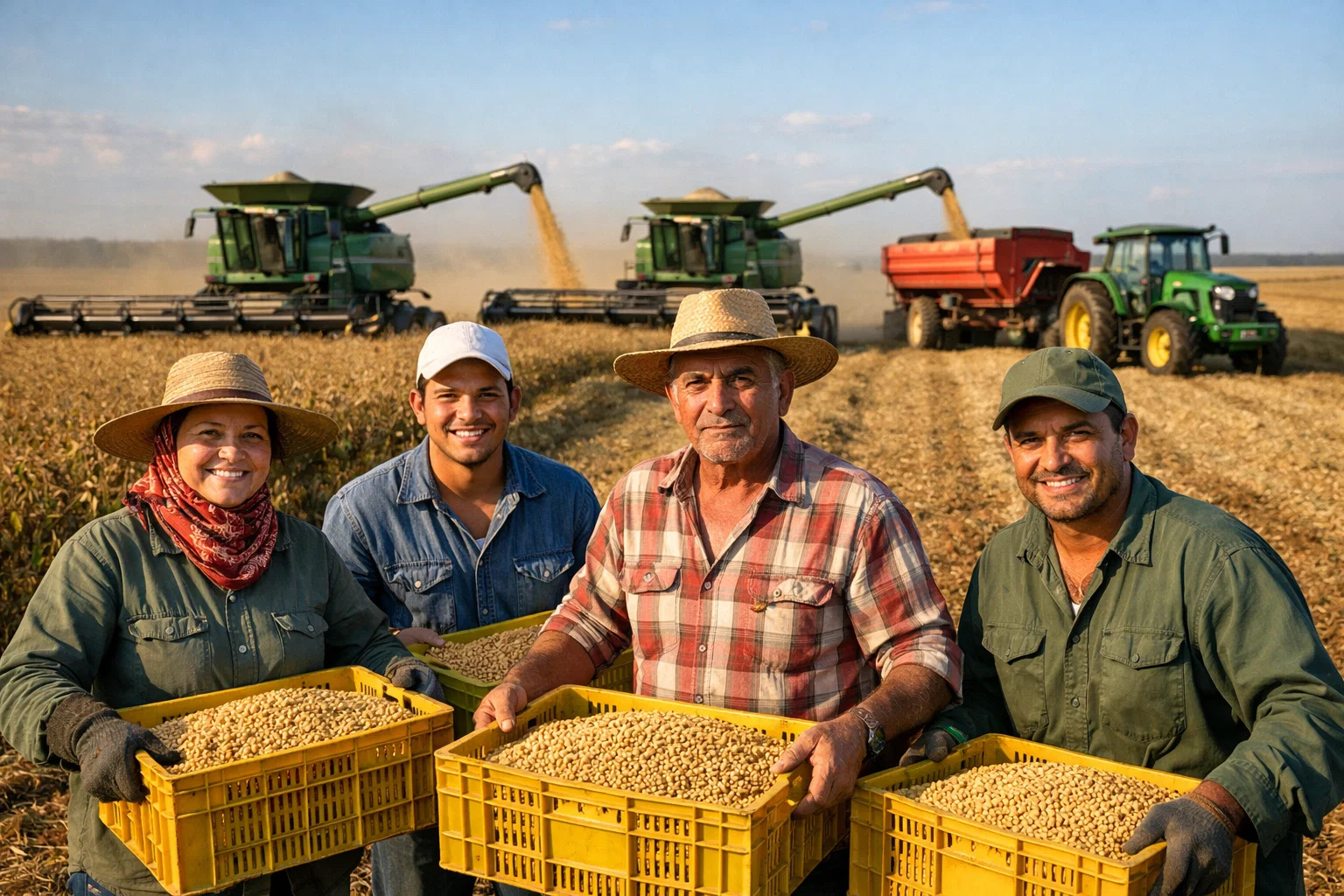
Cepea Survey in Partnership with CNA Shows That Sector Created Nearly 569 Thousand New Jobs in the Third Quarter and Increased Its Participation in the Brazilian Economy
The Brazilian agribusiness has once again demonstrated its structural strength in the national economy by registering a new historical record of jobs in the third quarter of 2025. According to a survey conducted by the Center for Advanced Studies in Applied Economics (Cepea), from Esalq/USP, in partnership with the Confederation of Agriculture and Livestock of Brazil (CNA), the sector employed 28.58 million people during the period.
This information was disclosed by Cepea in conjunction with CNA, according to consolidated data from the third quarter of 2025, highlighting that agribusiness continues to be one of the main engines of job creation in the country.
In percentage terms, the advance was 2.0% compared to the same period in 2024. In practice, this means the creation of nearly 569 thousand new jobs in just one year. This is the largest contingent ever recorded in a quarter since the beginning of the Cepea/CNA historical series, which started in 2012.
-
The bill may become expensive for Brazilian slaughterhouses, with five plants suspended by China and the 2026 quota more than half expected, any shipment arriving late at Chinese ports may be surcharged by 55%, precisely when margins are already tight.

-
In Brazil, a farm impresses: larger than the São Paulo Metropolitan Area, it has 800 km of internal roads, a thousand residents, and produces soy and meat to supply China and Europe.

-
Exports of Minas Gerais agribusiness fall to US$ 5.8 billion in the first four months, but Minas maintains national strength with coffee, meat on the rise, and sales to 160 countries.

-
Imagine raising tons of fish in the middle of the sea using only a cell phone. This is what’s happening in Fuzhou, China, where zero-carbon smart platforms already produce more than 2,200 tons of seafood per year and are expected to reach 15 units.




Furthermore, when compared to the overall performance of the Brazilian job market, the agricultural result stands out even more. In the same period, employment in Brazil grew by 1.3%, incorporating about 1.37 million workers. As a direct consequence of this superior performance, agribusiness’s participation in the total number of jobs in the country rose from 26.15% in the third quarter of 2024 to 26.35% in 2025.
Input Industries Drive Labor Market Expansion in the Field
The growth of employment in agribusiness did not occur in isolation but was distributed across different segments of the production chain. Among them, the input sector was one of the main contributors to the expansion.
According to researchers, the input segment recorded a 1.5% increase in the number of people employed in annual comparison. With the exception of the feed industry, all other activities showed an increase in employment levels.
The highlight was for the fertilizer, agricultural pesticide, veterinary medicine, and agricultural machinery industries. According to analysis from Cepea/CNA, this movement reflects the economic strengthening of agricultural activities, which have been gradually and consistently increasing the demand for inputs over the past few years.
Thus, the growth of production in the field directly stimulates job generation in the supplying industry, creating a virtuous cycle within the agribusiness chain.
Activities within the Gate and Agroindustry Also See Growth
In addition to the input segment, activities carried out within the gate also contributed to the positive result. In this case, the number of workers increased by 0.7% when comparing the third quarter of 2025 to the same period in 2024.
Both agriculture and livestock showed growth in the number of employed, highlighting a heated productive environment. Meanwhile, the agroindustry recorded a 1% increase in employment in the annual comparison.
Among the agro-industries based on agriculture, the clothing and accessories, beverages, wooden furniture, and ethanol sectors were crucial for the positive result. In the case of agro-industries based on livestock, the growth was mainly driven by activities related to animal slaughter and the dairy industry.
Agroservices Lead Growth and Consolidate the Dynamics of the Production Chain
However, the highest proportional growth was observed in the agroservices segment, which showed a 4.5% increase between the third quarter of 2025 and the same period in 2024.
According to researchers, this performance is directly related to both the national economic scenario and the increasing relevance of services to the Brazilian agribusiness economy. The advancement of agroservices accompanies the recovery of agro-industrial activities, which encompass everything from the processing of agricultural products to the manufacturing of inputs.
Moreover, the good performance of agriculture — supported by expectations of record harvests and sustained high slaughter levels — has significantly increased the demand for labor in services that support the production chain.
As a result, the labor market in the field remains strong, consolidating agribusiness as one of the most resilient pillars of the national economy.
Regional data also point to significant movements, such as the record number of jobs in the Bahia agro sector, according to numbers released by the FAEB.
Source: Canal Rural







Be the first to react!