Portuguese
  Spanish


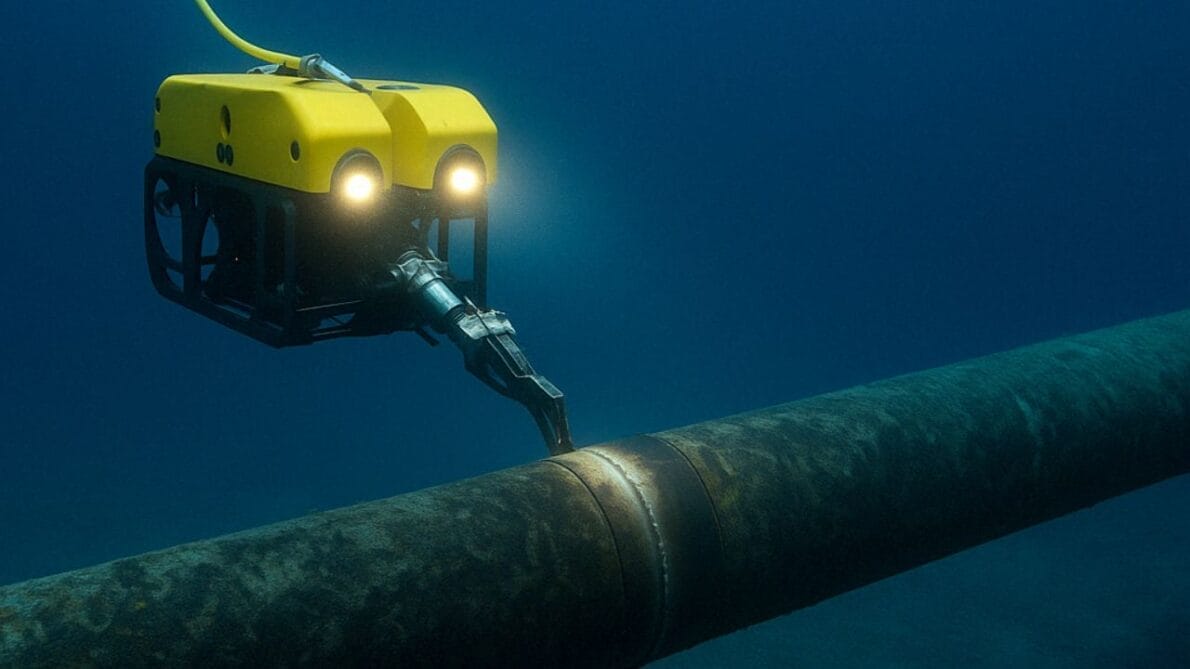


TSC Subsea Will Apply Ultrasonic Technology for Weld Inspection in Rigid Pipelines at Depths of Up to 3,000 Meters
TSC Subsea, a company specialized in technology for underwater environments, has signed a multi-year contract with an operator in Brazil to provide weld inspection services in ultra-deep waters. The agreement is valid until 2027 and reinforces the British company’s presence in the national offshore sector.
Offshore Inspection of Welds in Ultra-Deep Depths
The contract provides for the use of PAUT (Phased Array Ultrasonic Testing) technology to carry out inspections on circumferential welds of rigid subsea pipelines, including flowlines and risers. According to information from Offshore Energy, the services will be performed at depths of up to 3,000 meters, requiring robust solutions tailored for the operating conditions of Brazil’s pre-salt. TSC Subsea has qualified its robotic system through rigorous testing, including tests in pressure chambers and analysis of samples with controlled defects.
Cutting-Edge Technology in Challenging Environments
TSC Subsea has adapted its tools to perform reliable inspections in extreme conditions, focusing on crack detection and accurate measurement of weld failures. The company’s sales manager, David Melo, emphasized that the contract is a recognition of the reliability of the company’s solutions in Non-Destructive Testing (NDT) applied to critical subsea assets. The technology aims to support safe and sustainable operational decisions in offshore oil and gas operations.
-
A 24,200-ton oil platform is removed from the North Sea in just 10 seconds and taken to be scrapped on land, in an operation where more than 97% of the Brent Delta structure was reused or recycled.

-
Ocyan takes AI and data to the FPSO Brazil Congress 2026 to showcase how digital technologies can enhance safety, integrity, and performance in next-generation FPSOs.

-
Sodexo debuts unique maritime hospitality on Seagems ship to transform the well-being, food, and comfort of offshore professionals.

-
European ship will transport captured CO₂ to be stored under the North Sea as the Greensand project prepares the first industrial offshore storage in the European Union to operate in 2026 with an initial target of 400,000 tons per year in Denmark.



Qualification and Safety of Offshore Operations
Before the contract approval, the system underwent a series of technical qualifications, including FAT (Factory Acceptance Testing), to ensure accuracy and safety in operations. The ability to apply efficient inspection on submerged components, especially in deep-water projects, is considered essential to maintain the integrity of pipelines and offshore structures in areas like the pre-salt.
TSC Subsea’s Expansion in Brazil
With this new contract, TSC Subsea expands its operations in the Brazilian market, where it already conducts inspections of flexible pipelines and isolated components. The company is betting on the growth of demand for advanced inspection technologies in underwater environments, especially as the country invests in the expansion of offshore oil and gas production in deep waters. The expectation is that the use of these solutions will help extend the lifespan of critical assets and reduce operational risks.
The company also views Brazil as a strategic point for the development of new solutions applied to challenging scenarios, such as those found in the pre-salt. Strengthening offshore operations is among TSC Subsea’s priorities in the coming years, focusing on innovation, technical qualification, and local partnerships.