Portuguese
  Spanish


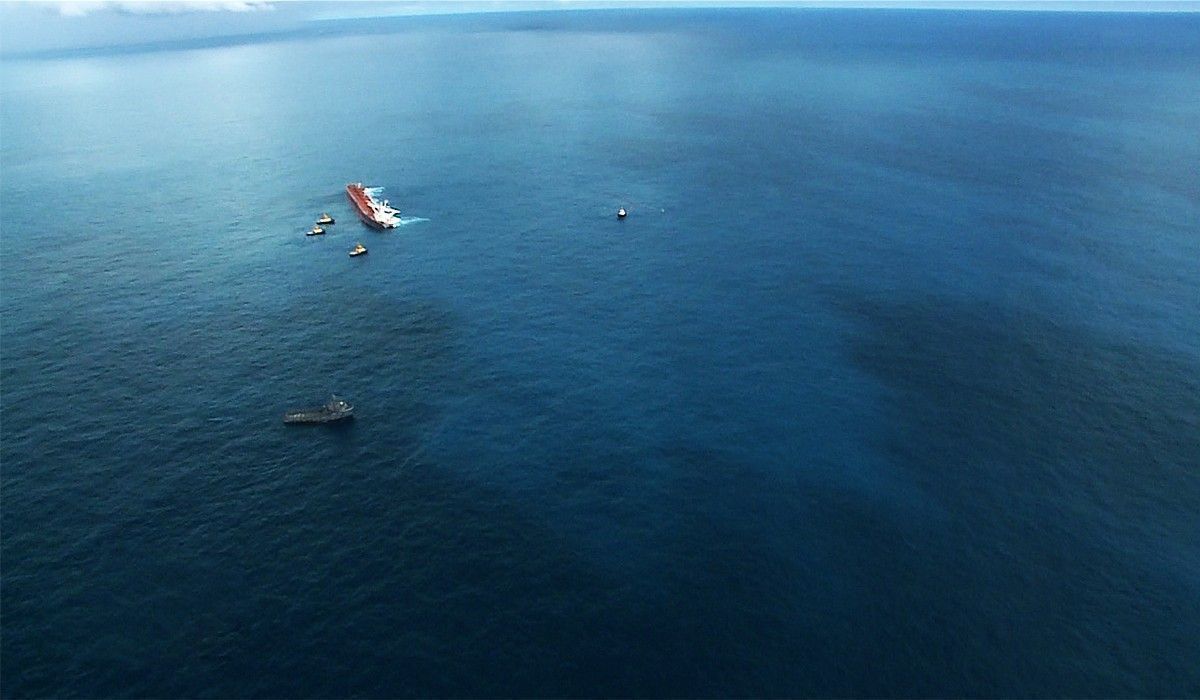

Vale, Polaris, and Ibama Decide to Use Technique That Makes Marine Bacteria Absorb Oil to Combat the Ship Leakage
Those who are Brazilian and follow the case of the ship Stellar Banner, carrying ore from Vale, are concerned about the environment and are anxiously awaiting the outcome of this story. The ship is stranded 100 km off the coast of Maranhão, with about 290,000 tons of iron ore, in addition to four million liters of fuel and oil.
- Investments by Norwegian Companies in Brazil in Solar Energy, Hydroelectric Power, Oil, and Gas Have Already Created 612,000 Jobs
- Agreement Between Eletronuclear and Westinghouse Provides for the Completion of Angra 3 and the Construction of New Nuclear Plants
- Leading the Ethanol Market in Brazil, BP Bunge Hires Electricians, Engineers, Operators, and Much More
After the captain deliberately ran the ship aground on a sandbank, more than 333 liters of oil have already leaked from the ship and spread over an area of 0.79 km², according to Ibama. Fearing a larger environmental tragedy, representatives from Polaris (the vessel’s owner), Vale (which supplied the ship), and the Brazilian Institute of Environment and Renewable Natural Resources (Ibama), decided to use the technique of ‘mechanical dispersion’ in which marine bacteria absorb the oil already spread in the water.
What few know, however, here in Brazil is that the South Korean Polaris Shipping, owner of the ship and contracted by Vale to transport the ore to China, has a history of shipwrecks with Vale and inspection issues with its vessels in China.
-
55 km Link Between Hong Kong, Zhuhai, and Macau Includes 33-Block Undersea Tunnel to Avoid Disrupting Ships and Planes

-
Abandoned Factory in Rio’s North Zone Becomes Urban Hazard with Standing Water and Debris

-
The U.S. Navy Conducts Submarine Tests in Idaho Lake to Detect Underwater Noises Hidden by the Ocean
-
British Factory Transitions from Mechanical Parts to Producing 420,000 Electric Power Units Annually, Supplying 70% of Ford’s Electric Cars Sold in Europe


The company also owns the ship Stellar Daisy, which sank in the Atlantic Ocean in 2017 after being loaded with 260,000 tons of ore at the Guaíba Island Maritime Terminal (RJ), which belongs to Vale and was also headed to China.
Onboard the Stellar Daisy were 24 crew members, including Filipinos and Koreans. According to the Uruguayan Navy, an emergency call was made six days after the ship left Brazil, about 3,700 km from the port of Montevideo, Uruguay. 2 crew members were rescued alive in a lifeboat, and the bodies of the other 22 have not been found to this day.
Regarding the certification of its vessels, Polaris Shipping has also faced issues; one year after the sinking of the Stellar Daisy, the company was notified by the Ministry of Maritime Affairs of South Korea after 22 unauthorized modifications were found on the Stellar Eagle, flagged under the Marshall Islands, during a safety inspection at the port of Rizhao, China. The ship was not allowed to leave the port until safety items met the standards.
Therefore, as can be observed, this time Vale and Polaris’s problems will be with the Brazilian authorities. By Renato Oliveira