






 Portuguese
  Spanish


Chinese companies are transforming Brazil into an automotive innovation center, with promises of 10 thousand charging stations and semiconductor factories. The future of electric vehicles in the country looks promising, with large international investments.
Last Monday (12), Brazil received major news from the transport and technology sector, with the announcement of billion-dollar investments from two Chinese giants.
DiDi, the parent company of the 99Táxi app, and Longsys, a semiconductor manufacturer, revealed their plans to expand infrastructure and production capacity in the country.
These initiatives not only indicate an acceleration in the electrification process of the national fleet but also strengthen the Brazilian technology sector, focusing on innovation and sustainability.
-
How to Prevent Brown Recluse Spider Bites: Common Hiding Spots and Free Tips to Reduce Risks

-
Natto: The Unusual Japanese Superfood Gaining Popularity on Social Media and Driving Record Exports
-
Brazilian Mayor Goes Undercover as Homeless for 24 Hours to Assess Public Services

-
15-Year-Old Entrepreneur Malu Lira Publishes 20 Children’s Books on Financial Education, Earns $500,000, and Expands Her Project to the Amazon Rainforest




DiDi Announces Investment in Charging Infrastructure for Electric Vehicles
The first major announcement came from DiDi, a company known for its operations in the transport sector through 99Táxi.
The Chinese giant revealed that, in an effort to support the energy transition in Brazil, it plans to build 10 thousand public charging stations for electric vehicles across the entire national territory.
With the goal of boosting the electrification of the Brazilian fleet, the company bets on the expansion of charging infrastructure as a key factor to accelerate the adoption of sustainable vehicles in the country.
There is no exact forecast for when operations will begin, but the initiative marks an important step for Brazil, which is already seeing a growing increase in the adoption of electric cars.
According to the Brazilian Association of Electric Vehicles (ABVE), the fleet of electric cars in the country has grown significantly in recent years, with more than 22 thousand units in circulation in 2024.
With the installation of these charging stations, DiDi aims to meet a growing demand, providing greater ease and confidence for consumers while contributing to the advancement of sustainability in the transport sector.
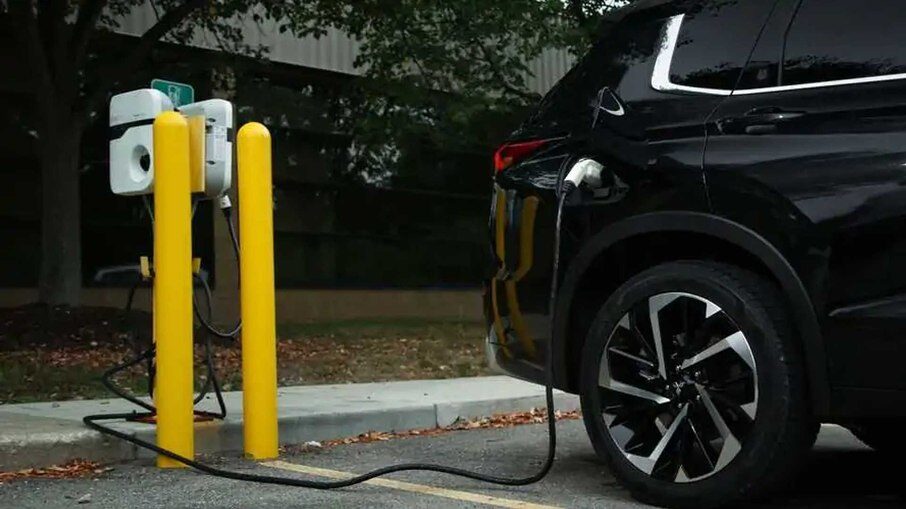
Longsys Bets on Semiconductors for the Electric Vehicle Industry
Meanwhile, Longsys, one of China’s leading semiconductor manufacturers, announced investments amounting to R$ 650 million to expand its production capacity in Brazil.
The company will direct these resources to its factories in São Paulo and Amazonas, aiming to strengthen the national technology sector.
These electronic components are essential not only for the production of electronic devices but also for the manufacturing of electric and hybrid cars, equipment in high demand today.
Semiconductors are key components in the electric vehicle industry, as they are used in control systems, batteries, and other vital components of vehicles.
With this investment, Longsys aims not only to increase chip production but also to strengthen collaboration with Brazilian and international automakers, favoring the establishment of new factories and development centers in the country.
Additionally, expanding national semiconductor production is expected to help Brazil reduce its dependence on imports, a strategic step to enhance competitiveness in the global technology market.
Investments from Chinese Companies Boost Brazil as an Electric Vehicle Hub
These announcements are part of a package of investments in Brazil totaling R$ 27 billion, as confirmed by the Brazilian Agency for Export and Investment Promotion (ApexBrasil).
The entry of Chinese companies into Brazil also includes an investment of R$ 6 billion from GWM, an automaker that aims to transform Brazil into a strategic base for exporting electric and hybrid vehicles to South America and Mexico.
This movement reflects the search for emerging markets and the growing demand for clean and sustainable technologies.
With GWM, Brazil gains even more prominence in the electric car sector. The automaker is investing in a production plant in the country and is expected to generate thousands of direct and indirect jobs, in addition to contributing to the increase in the capacity to manufacture sustainable vehicles.
GAC and the Future of Electric Cars in Brazil
Another major Chinese player announcing investments in Brazil was Guangzhou Automobile Group (GAC).
The automaker formalized an investment of R$ 7.35 billion over the next five years, focusing on the production of electric, hybrid, and flex hybrid vehicles.
The project includes the installation of a production unit in Goiás and a research and development (R&D) center in the Northeast region.
This movement is part of a broader strategy by GAC, which seeks to consolidate Brazil as a center of excellence in the development of new automotive technologies, especially focusing on sustainable vehicles.
GAC joins the growing wave of international automakers that see immense growth potential in the Brazilian market for electric vehicles, with government policies for tax incentives and an increasingly environmentally-conscious population.
Moreover, GAC is heavily investing in R&D to develop cars that meet the standards and tastes of Brazilian consumers. The idea is to offer more accessible and efficient options, favoring the mass adoption of electric vehicles in the country.

The Strategic Role of China in the Brazilian Automotive Sector
These investments are part of a growing trend of China becoming a global reference in the automotive sector and, more specifically, in the market for electric vehicles.
With large-scale production and relatively low costs, Chinese companies are establishing themselves as protagonists in the transformation of the global automotive industry.
In Brazil, partnering with Chinese companies presents a great opportunity to accelerate the energy transition and the modernization of the national fleet.
According to the Ministry of Economy, electric cars represent an expanding market, and Brazil is increasingly positioning itself as a hub of innovation and sustainability in Latin America.
Challenges and Expectations for the Brazilian Electric Car Market
Despite progress, Brazil still faces challenges for the electrification of its fleet to be realized more quickly.
Among the obstacles are the lack of infrastructure in many regions, the high costs of electric vehicles, and the lack of clear public policies to foster large-scale adoption.
However, with investments from DiDi, GWM, and GAC, the expectation is that these challenges will be gradually overcome, and Brazil will become an example for other countries in Latin America.
The evolution of charging infrastructure and the expansion of electric vehicle production in Brazil are important steps, but the continuity of the energy transition will depend on new investments, partnerships, and, of course, the adoption of innovative technologies by the Brazilian automotive industry.
The Future of Sustainable Transportation in Brazil
As China expands its investments in Brazil, a significant change in the automotive sector can be observed.
Partnerships with automakers and technology companies promise to transform the electric car market, both in terms of production and accessibility.
The big question now is: is Brazil ready to accelerate the electrification of its fleet in a sustainable and efficient manner?






