






 Portuguese
  Spanish


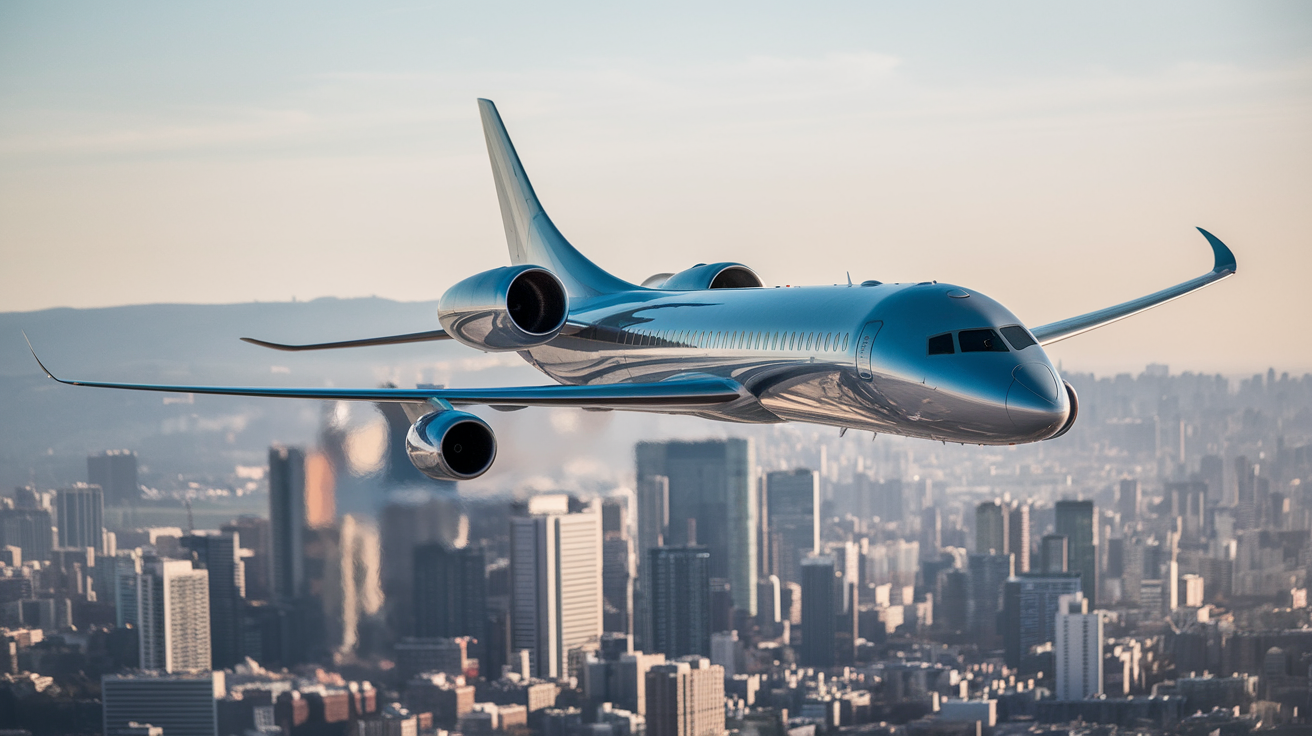


Company Reveals New Supersonic Airplane That Could Transform Aviation! With Advanced Technology, Aircraft Promises Ultra-Fast Commercial Flights, Covering From São Paulo to Rio de Janeiro in Just 18 Minutes.
Airplane That Travels From SP to RJ in 18 Minutes: Boom Supersonic has taken a significant step towards the return of supersonic commercial flights. At the end of January 2025, the company successfully broke the sound barrier for the first time with its new supersonic aircraft, the XB-1, since the start of testing in March 2024. This milestone reinforces the advancement of high-speed technology in aviation, bringing the sector closer to a new era of fast and efficient travel. According to the manufacturer, future commercial planes from Boom could drastically reduce travel time, with predictions of routes like São Paulo to Rio de Janeiro in just 18 minutes. In this article, we explore the details of this innovation and how it could transform the aviation market.
New Supersonic Airplane Reaches 1,374 km/h
So far, the company has completed 12 successful flights, which has caught the attention of major companies in the air transport sector. In total, the manufacturer has received 130 orders and bookings from United Airlines, American Airlines and Japan Airlines for this new airplane that travels from SP to RJ in 18 minutes.
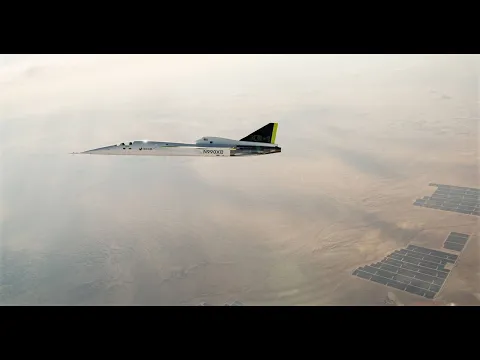

The new supersonic airplane used in the tests was the XB-1, which reached Mach 1.122, equivalent to about 1,374 km/h, a figure that is 10% above the speed of sound. Thus, it would be possible to fly from São Paulo to Rio de Janeiro in just 18 minutes. With this, the new supersonic airplane became the first independently built aircraft to break the sound barrier.
-
In September 2035, Mars to Shine Brightest Since 2003, Aligning with NASA and China’s Planned Human Mission to the Red Planet

-
Robots Descend Four Kilometers to Operate in the World’s Deepest Mine, Unbearable for Humans

-
Brazilian Students Develop Membrane to Clean Contaminated Water for Just $0.01 Per Use, Removing Oil, Dye, Turbidity, and Microorganisms, Reusable 20 Times, Offering Affordable Treatment to Communities Without Potable Water
-
Brazilian Students Turn Manganese Mining Waste into Functional Battery, Present at Major Science Fair




After the Concorde retired in 2003, various companies tried to recreate the idea of supersonic commercial flights, but without success. Challenges such as high fuel consumption, high pollutant emissions, and deafening noise when breaking the sound barrier, which is prohibited over populated areas, are some of the factors that make a greater offering of supersonic air travel services unfeasible.
New Supersonic Airplane Will Have Capacity for 80 Passengers
The variant used in the tests, the XB-1, will serve as the basis for the production of the Overture, the airplane that travels from SP to RJ in 18 minutes. The new supersonic airplane will have the capacity to carry between 54 to 80 passengers that the company plans to put into operation by the beginning of 2030.
The CEO of Boom Supersonic, Blake Scholl, stated a few years ago that the plans with the new technology are for passengers to be able to pay US$ 100, equivalent to about R$ 583, to go anywhere in the world. As of last year, the plan was still in place and, although it is a very interesting idea, it is subject to changes until the debut of the airplane that travels from SP to RJ in 18 minutes.
Currently, the aviation sector is also advancing, managing to develop Sustainable Aviation Fuel. It reduces the problem of high pollutant emissions. However, the fuel still has a very limited availability and comes with relatively high prices.
Comparison of the New Technology With Current Aircraft
As mentioned earlier, the new airplane that travels from SP to RJ in 18 minutes, designed to operate at speeds greater than the speed of sound, reached 1.1 Mach, equivalent to 1,374 km/h, at 35,000 feet altitude. To give an idea of the significant achievement made by the company with the new technology, commercial airplanes fly, on average, at about 850 km/h.
Although supersonic jets already exist, they are widely used only by the military sector. The F-39 Gripen fighter jet, from the Brazilian Air Force (FAB), for example, can reach speeds of up to 2,400 km/h, which is double the speed of sound.
The fastest classified aircraft is the Lockheed Martin SR-71 (Blackbird), which can reach a speed three times greater than that of a commercial airplane, equivalent to 3,700 km/h.





A preguiça tomou conta da imprensa brasileira. Fazem uma matéria e colocam na capa a foto de outro avião. Deixam tudo para a IA. Triste.