Portuguese
  Spanish


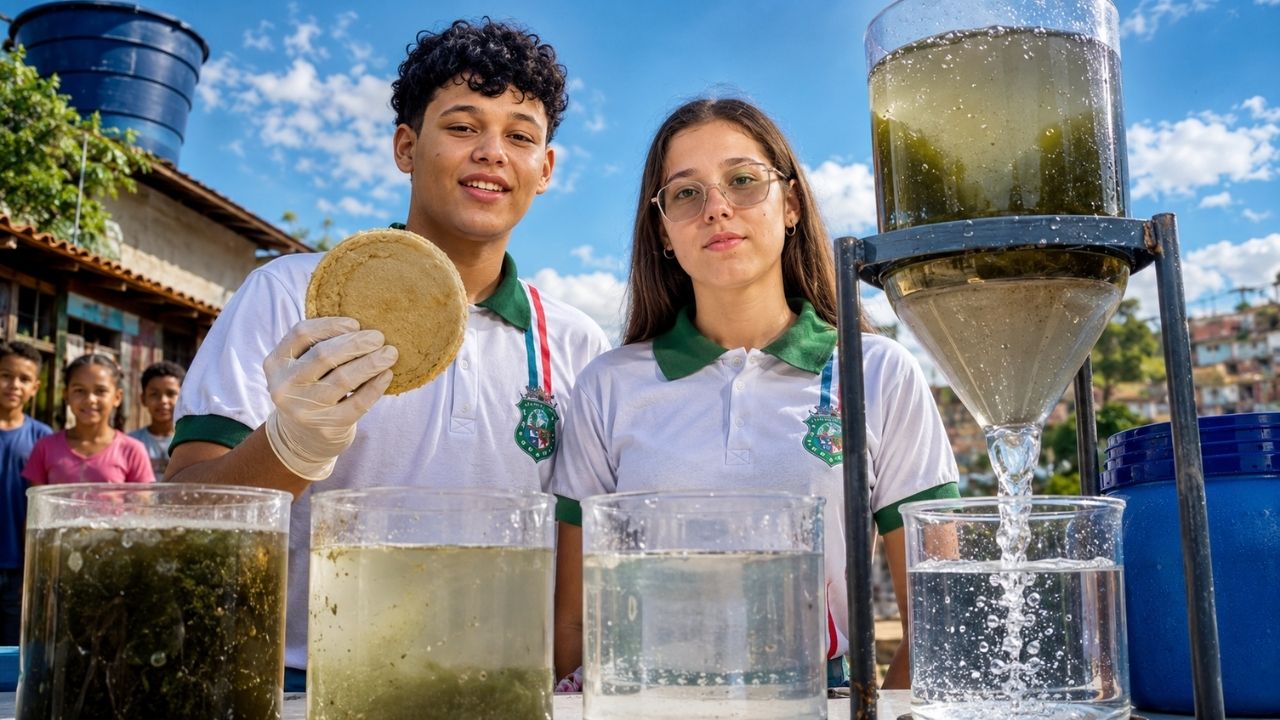

Watreat Project, finalist of FEBRACE 2025, uses biopolymeric membrane to treat contaminated water at low cost, according to official summary; students Isabelle de Sousa Battocchio and Miguel Ribeiro da Silva report removal of vegetable oil, methylene blue, turbidity, and microorganisms, with reuse for 20 cycles and flow rate of 24 L/h.
A solution created by Brazilian students to treat contaminated water attracted attention at FEBRACE 2025 by proposing a low-cost, reusable biopolymeric membrane aimed at domestic, community, and industrial applications in regions without safe access to drinking water.
The project AGR-6133, called Watreat: biopolymeric membrane for water treatment, is authored by Isabelle de Sousa Battocchio and Miguel Ribeiro da Silva, from E.E.M.T.I. Marconi Coelho Reis, in Cascavel, Ceará. The guidance is by Heloina Lopes Capistrano and Francisco Augusto Oliveira Santos, according to the official page of the Brazilian Science and Technology Fair.
Idea was born to tackle the cost of water treatment
The starting point of the project was a known problem, but still far from a solution for many communities: access to drinking water. In the summary presented to FEBRACE, the authors state that millions of people do not have this resource and that waterborne diseases continue to be associated with deaths every year.
-
Brazilian Students Turn Manganese Mining Waste into Functional Battery, Present at Major Science Fair

-
NASA Issues Warning: 20-Year-Old Telescope That Detected Over 2,000 Explosions More Energetic Than the Sun Is Rapidly Losing Altitude; Unprecedented Mission Aims to Prevent Its Fall and Extend Operation by 5 Years.
-
NOAA Scientists Discover Mysterious Aligned Holes on the Mid-Atlantic Ridge Seafloor at 2,540 Meters Depth

-
Interstellar Comet 3I/Atlas, Potentially 12 Billion Years Old, Baffles NASA Scientists with Unprecedented Features


In this scenario, the students’ proposal was to develop a polymeric membrane through a biotechnological route to treat contaminated water in a more accessible, effective, and sustainable way. The aim is to combine low cost, reuse, and the ability to deal with different types of contaminants in the same material.
The work was classified in the area of Agricultural Sciences, in the subcategory of Food Science and Technology. Although the theme dialogues with sanitation, public health, and environmental engineering, the approach presented at FEBRACE highlights water treatment as a technological solution with potential use in communities, homes, and industrial environments.
The official source does not provide, in the available summary, a single creation date for the membrane. What is documented is the project’s participation as a finalist at FEBRACE 2025, with identification of the authors, advisors, institution, and technical results obtained in the tests.
Membrane removed oil, dye, turbidity, and microorganisms
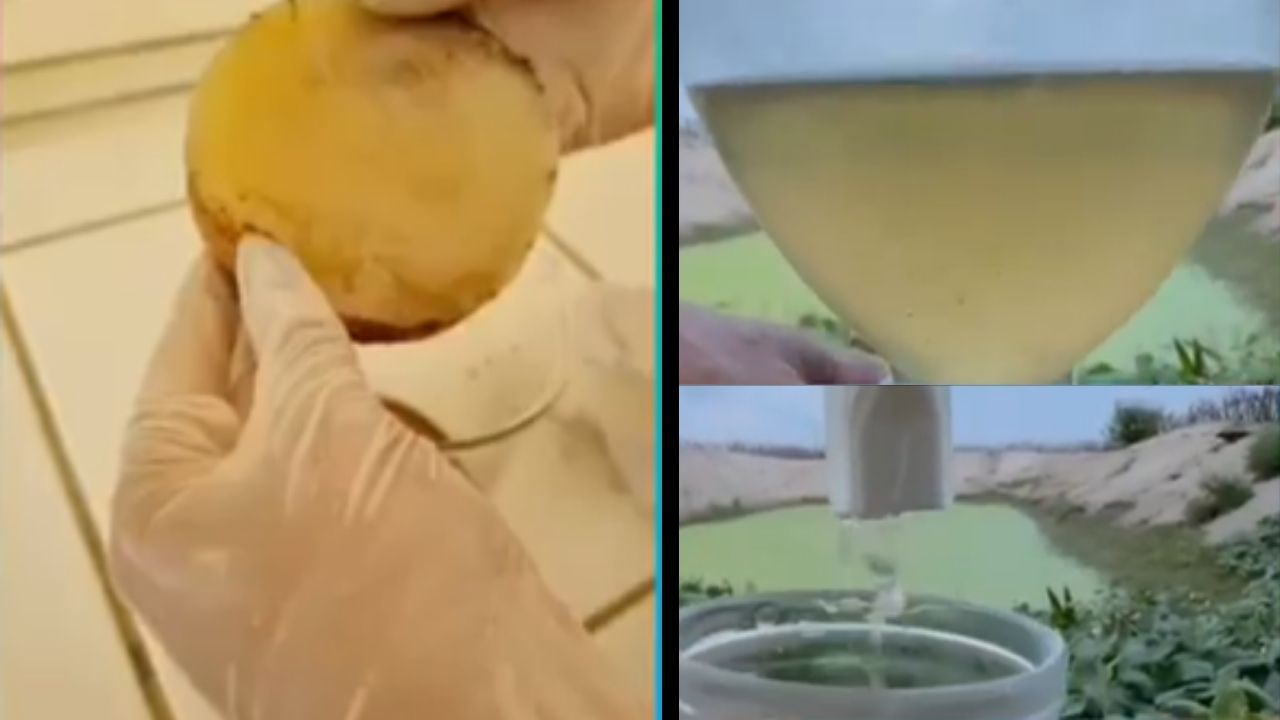
In the tests described in the official summary, the four best formulations of the membrane were evaluated in the treatment of contaminated water by different elements. The analysis included turbidity reduction, apparent color, removal of methylene blue, vegetable oil, and microbiological parameters.
The most efficient formulation had a thickness of 1.5 mm, porosity of 89.43%, and Young’s modulus of 410.09 MPa, according to the data released in the project. These numbers indicate the physical and mechanical characteristics of the material, used to assess its structure and performance in the filtration process.
The reported results are noteworthy for their reach. The membrane showed an apparent color removal of over 99.3%, a 98.4% reduction in turbidity, and 100% removal of vegetable oil in concentrations up to 200 ppm. The material also removed 100% of methylene blue dye up to 40 ppm.
Additionally, the summary states that the membrane eliminated pathogenic microorganisms. This point is especially relevant because microbiological contamination is one of the main concerns when it comes to water unfit for human consumption.
Cost of R$ 0.01 per application increases social interest


One of the strongest data points of the project is the reported cost: R$ 0.01 per application. In a country where many treatment solutions depend on expensive infrastructure, constant maintenance, or less accessible inputs, this value makes the proposal more appealing to low-income communities.
The membrane can also be reused 20 times, according to the FEBRACE summary. This feature reduces waste and improves the economic viability of the system, especially when considering domestic or community use in regions with difficulty accessing conventional technologies.
The reported flow rate was 24 liters per hour. In practice, this data helps to gauge the potential use of the material, although real-scale application depends on prototypes, additional validations, local water conditions, and safety parameters defined by technical standards.
The project should not be read as an immediate substitute for public sanitation policies. The proposal appears as a student innovation with the potential to support water treatment, especially in contexts where simple, cheap, and reusable solutions can make a difference.
Prototypes and workshops took the proposal beyond the laboratory
In addition to the tests, the authors developed prototypes of the filter. This detail shows that the project did not remain only at the stage of material formulation but sought to transform the membrane into something closer to a usable solution.
The summary also informs that community workshops were held on the use of the product. This step is important because a technology only gains social strength when people can understand how it works, how it should be used, and what precautions are necessary.
In communities without regular access to drinking water, the adoption of any solution involves trust, maintenance, availability, and guidance. Therefore, educational activities can be as relevant as the technical development of the material itself.
The proposal also mentions that after its initial useful life, the membrane can be reactivated and inserted into new stages of water treatment. This reuse reinforces the sustainable nature of the project and reduces the dependence on quick disposal.
Project connects school science and the UN’s 2030 Agenda
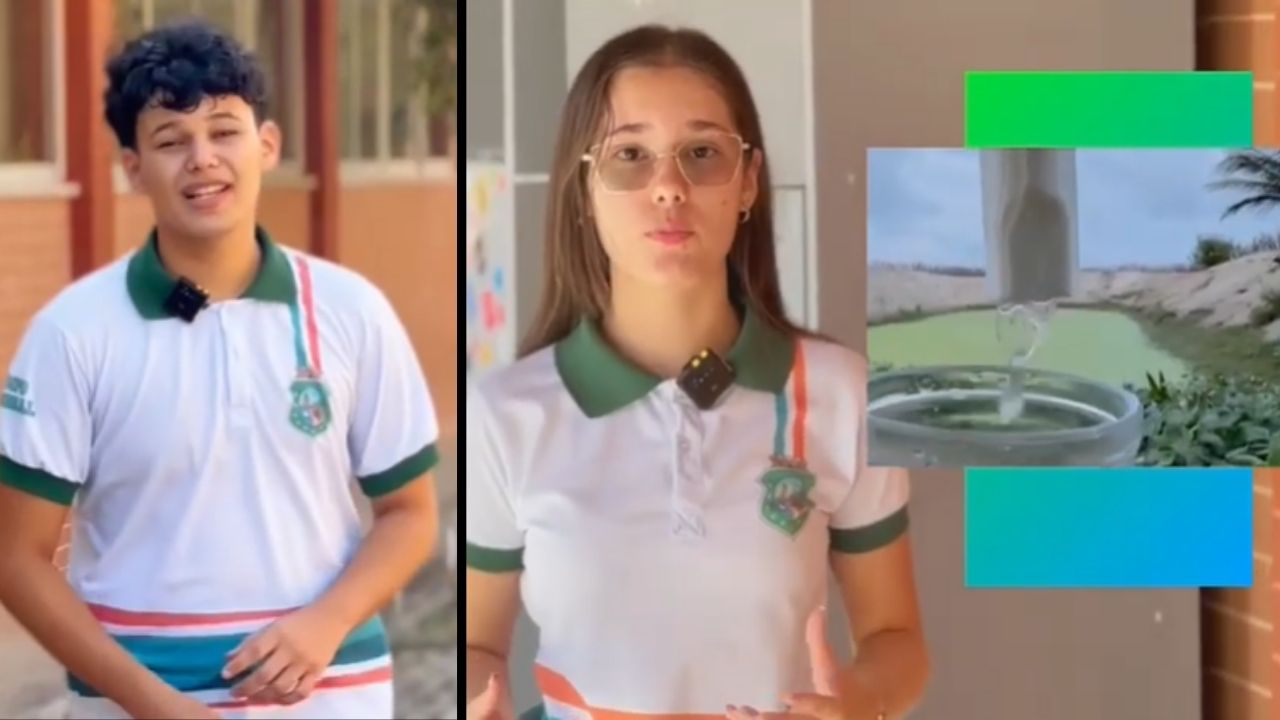
Watreat was presented as a solution that collaborates with eight of the 17 Sustainable Development Goals of the UN’s 2030 Agenda. The source does not detail, in the available excerpt, which these eight goals are, but the theme directly connects to access to water, health, innovation, reduction of inequalities, and sustainability.
The involvement of basic education students in a project with tests, statistical analysis, prototypes, and community action also shows the strength of scientific initiation. When public schools produce applied research, local problems can turn into solutions with technical language and social impact.
Participation in FEBRACE 2025 gave visibility to the work of Isabelle de Sousa Battocchio and Miguel Ribeiro da Silva. The fair, linked to science and technology, brings together projects from students from different regions of the country and serves as a showcase for ideas with innovation potential.
In the case of Watreat, the highlight comes from the combination of apparent simplicity and technical complexity. The membrane seems like a straightforward solution for treating contaminated water, but behind the result lies experimental planning, comparative tests, and statistical analysis of the data obtained.
Path to real use still requires validations
Despite promising results, it is important to maintain journalistic caution. The FEBRACE summary presents high performance in tests but does not inform, in the provided material, regulatory approval, commercial scale production, or official use in public supply systems.
This means that the membrane should not be treated as a product already available to solve, on its own, the problem of potable water. The project shows potential and relevant data, but real applications require new stages, quality control, expanded technical validation, and compliance with health standards.
The very diversity of contaminated water in different regions poses challenges. A solution tested against vegetable oil, dye, turbidity, and microorganisms may need additional evaluations when exposed to heavy metals, industrial waste, pesticides, or other specific contaminants.
Even so, the proposal has value because it points to an accessible path. Instead of relying solely on large structures, the project suggests that biopolymeric materials can contribute to decentralized, reusable, and low-cost solutions.
When a school membrane points to a national problem
The creation of the Watreat membrane draws attention not only for the numbers but for the question it leaves for Brazil: how many low-cost solutions might be emerging within schools, science fairs, and student laboratories without receiving enough scale to reach those in need?
In the case of Isabelle de Sousa Battocchio and Miguel Ribeiro da Silva, the project turned a social challenge into applied research. The membrane against contaminated water removed oil, dye, turbidity, and microorganisms in the presented tests, could be reused 20 times, and achieved a reported cost of R$ 0.01 per application.
The technology still needs validations for widespread use, but it already shows how students can bring science, sustainability, and real need closer together. In a country with inequalities in access to potable water, such initiatives help remind us that innovation can also arise from simple, cheap, and community-based solutions.
Do you believe that projects created by students at science fairs should receive more investment to become real solutions in communities without potable water? Leave your opinion in the comments.