Portuguese
  Spanish


24-Meter Wheels And Robotic Arms Harvest Strawberries With Precision In New Dyson Greenhouse, Which Is Heavily Investing In Cutting-Edge Agriculture
In the interior of Lincolnshire county, England, a massive structure attracts attention. It is the new vertical farming greenhouse created by Dyson, known for its vacuum cleaners and fans.
But now, the company is heavily investing in food production. Spanning 26 acres and featuring cutting-edge technology, the space houses over 1.2 million locally grown strawberry plants to supply British consumers.
Giant Greenhouse And Robotic Technology
Inside the facility, giant wheels measuring 24 meters in length and 5 meters in height support rows of strawberry plants.
-
Volvo’s New Loaders Feature Obstacle Detection, Automatic Braking, and 360-Degree Operator View

-
Chinese Manager Accused of Whipping Worker Sparks Protest by 1,200 Employees at Major Brazilian Factory

-
France Revamps 530 Social Housing Units with Large Balconies and Glass Facades Without Demolishing Existing Buildings

-
10-Year-Old Max Makes History with Paris Fashion Show, Launches Own Brand, Hires Staff, and Sets World Record as Youngest Runway Designer





The structures, weighing about 500 kilograms each, rotate slowly to ensure optimal exposure to natural light.
UV robots traverse the aisles to eliminate fungi from the leaves. Other specialized robots release beneficial insects to combat pests like aphids.
When the harvest time arrives, 16 robotic arms spring into action. They carefully pick the fruit to avoid damaging the plants.
According to James Dyson, the robots have already managed to harvest 200,000 strawberries in just one month.
Engineering Applied To Agriculture
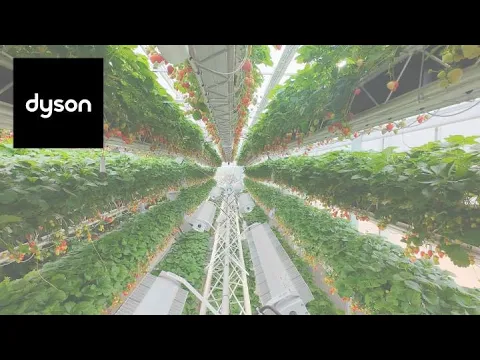

For James Dyson, the project is closely related to his background. “Farming is like manufacturing,” he states in the video released by the company.
He explains that, as a manufacturer, he always thought about efficiency and technology. His goal now is to apply that reasoning to agriculture: improving land use, enhancing the quality and taste of food, and reducing waste.
According to Rob Kyle, an engineer at Dyson, the wheels that support the strawberry plants are the largest equipment ever developed by the company.
Clean Energy And Recycled Resources
The greenhouse also impresses with its efficient use of energy. The facility has an anaerobic digester that converts grain gases into energy for turbines.
The heat generated also warms the greenhouse environment. The remaining material, the “digestate,” is repurposed as fertilizer.
The strawberries are irrigated with rainwater collected from the greenhouse roof, which measures 760 meters in length.
The system also prioritizes the use of natural light, with artificial lighting only as a support.
Less Imports And More Sustainability
Another important point is local production. Since the strawberries are grown in the UK, there is less need for imports, especially during times of the year when growing would normally be unfeasible in the country.
This reduces energy expenditure on transportation and contributes to British food security.
The estimate is that the facility can produce 1,250 tons of strawberries per year.
Technology And The Future Of Agriculture
For Dyson, the project holds value beyond agricultural production. “Sustainable food production, food security, and the environment are vital for the health and economy of the country,” he asserts.
He believes that high-tech agriculture can lead a revolution that transforms the sector and has a direct impact on people’s lives.
Dyson concludes: “Dyson Farming strives to be at the forefront of this.”
If you are in the UK, Dyson strawberries can already be found in selected stores of the Marks and Spencer chain and at local farm outlets.
With information from New Atlas.