Portuguese
  Spanish


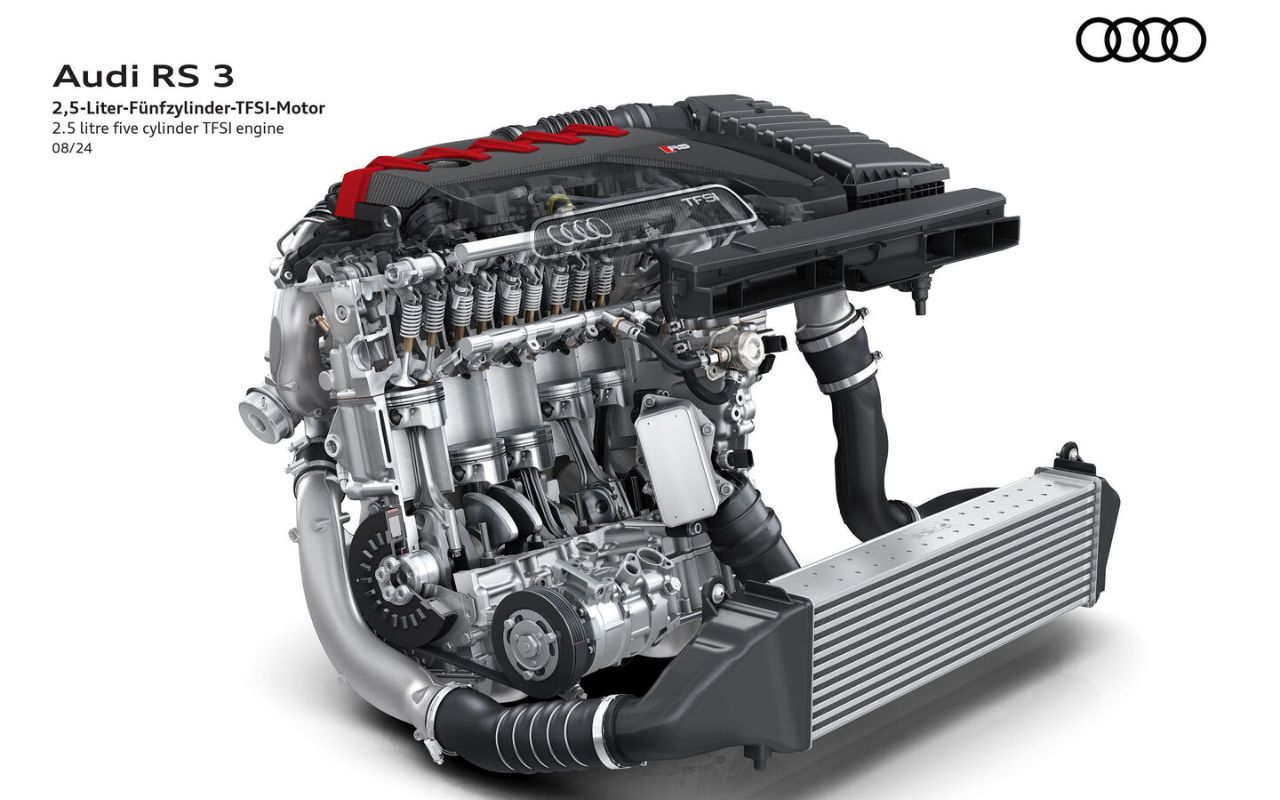

Audi announces the end of the five-cylinder engine by 2026, ending a 50-year legacy marked by performance and innovation.
Audi has confirmed that it will end the production of its iconic five-cylinder engine by the end of 2026, marking the end of a journey of about 50 years. The decision was made by the German automaker as part of the transition to electrified vehicles, driven by stricter environmental regulations, especially in Europe. Currently, the engine survives only in the Audi RS3, a model that symbolizes the pinnacle of this technology.
The change comes at a time when the automotive industry faces strong pressure to reduce emissions. Thus, Audi chose to direct investments towards the development of electric cars, leaving behind traditional technologies such as the five-cylinder engine, even with its award-winning history.
Five-cylinder engine: remarkable performance and farewell in the Audi RS3
The last model equipped with the five-cylinder engine will be the Audi RS3, especially in the Performance Edition version. The mechanical set delivers an impressive 407 horsepower and 51.0 kgfm of torque, positioning the car among the fastest compacts in the world.
-
New Law Proposal in Brazil Could Heavily Penalize Drivers: Dangerous Overtaking May Become a Serious Offense with Fines Increased Tenfold and a 12-Month License Suspension; Update on 2026 Progress

-
Electric Revolution: Watts W125 Motorcycle Offers 160 km Range, 90 km/h Speed, and Affordable Price Starting at $3,000

-
General Motors Replaces Over a Thousand Workers with 50 Cobots at Electric Vehicle Plant, UAW Union Criticizes Move Amid Industry’s Automation Push
-
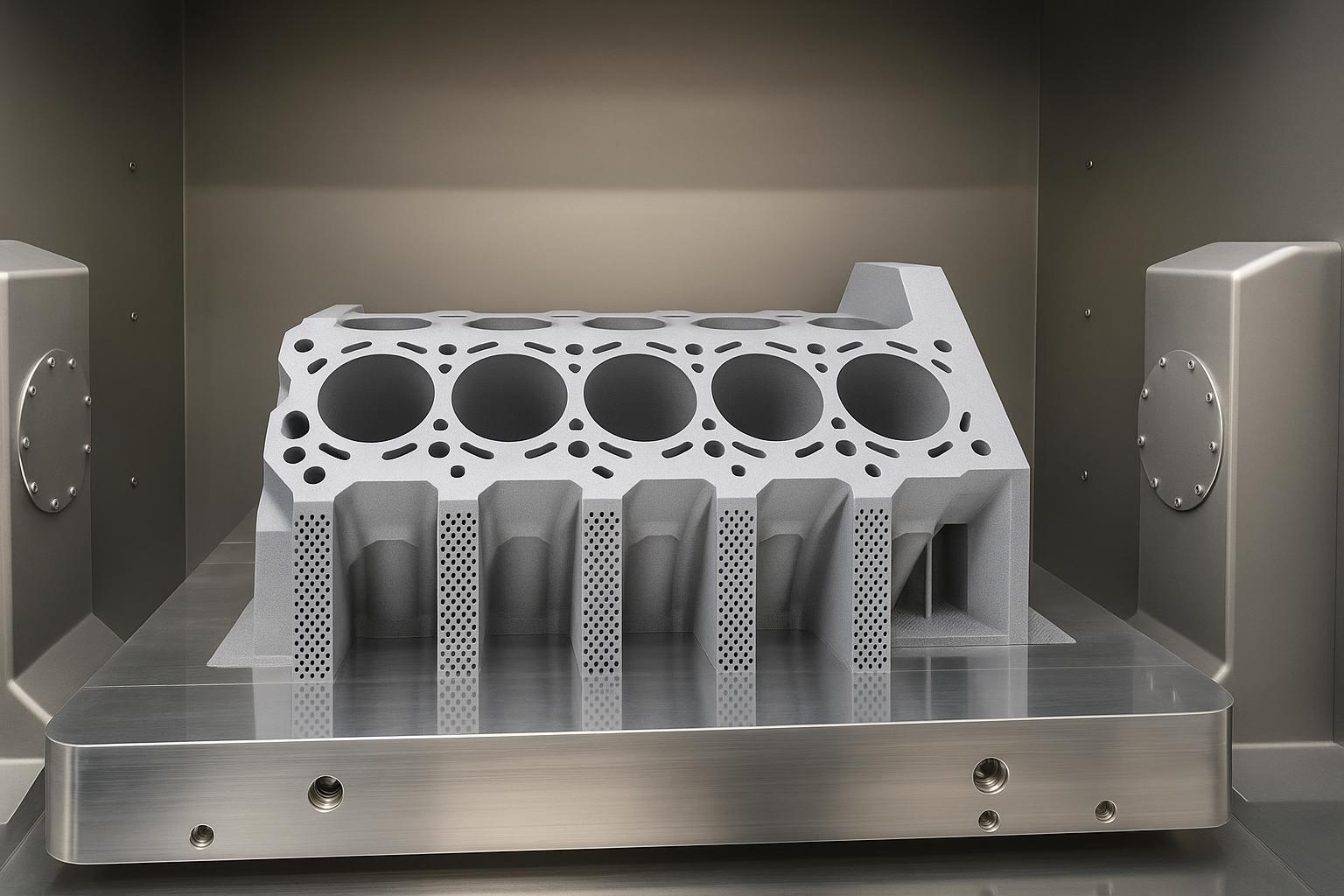
Bosch and Nikon 3D Print Entire Aluminum V8 Engine Block, Sparking New Competition in the Automotive Industry



Additionally, this engine also powered other Audi sports models, such as the TT RS and the RS Q3. Over the years, the engine gained global recognition, including nine consecutive wins at the “International Engine of the Year” award.
On the other hand, adapting the five-cylinder engine to current environmental requirements would require significant investments. Therefore, the automaker decided to prioritize sustainable technologies and zero-emission solutions.
Why did Audi decide to end the five-cylinder engine?
Audi’s decision did not happen suddenly. In fact, it had been anticipated by the automotive sector due to the implementation of regulations such as Euro 7, which impose stricter emission limits.
Moreover, larger and more complex engines, such as the five-cylinder engine, face greater difficulty in adapting to these requirements. Consequently, the development cost increases significantly.

In this way, Audi reinforces its strategy for total electrification by the beginning of the next decade, aligning with global trends in sustainable mobility.
The origin of the five-cylinder engine at Audi
The first five-cylinder engine from Audi appeared in 1976, in the Audi 100 (C2) model. At the time, engineers were looking for an intermediate solution between four-cylinder and six-cylinder engines.
Four-cylinder engines did not meet performance expectations. On the other hand, six-cylinder engines had limitations in space and weight. Thus, the solution was to develop the five-cylinder engine, based on the EA 827 design.
This first engine had a displacement of 2,144 cm³ and delivered 136 horsepower. With this, Audi was able to position the model in a more sophisticated segment, expanding its presence in the market.
Technological evolution and notable versions of the five-cylinder engine
Over the years, the five-cylinder engine has undergone various evolutions. As early as 1978, Audi launched a diesel version, increasing the versatility of the technology.
In 1979, the automaker introduced an important advancement: the first gasoline engine with a turbocharger. This setup delivered 170 horsepower and 265 Nm of torque, elevating performance to a new level.
Among the main milestones of evolution, the following stand out:
- Introduction of the turbocharger
- Use of intercooler for greater efficiency
- Application of four valves per cylinder
- Advancements in electronic fuel injection
These improvements solidified the five-cylinder engine as a reference in automotive engineering.
Audi Quattro and the dominance on rally tracks
The peak of the five-cylinder engine occurred in the 1980s, with the legendary Audi Quattro. Equipped with all-wheel drive and a turbo engine, the model revolutionized motorsport.

In 1982, Audi won the World Rally Championship. The following year, driver Hannu Mikkola secured the world title, consolidating the brand’s dominance.
Additionally, versions like the Sport Quattro further elevated performance. With up to 306 horsepower in the street version and up to 450 horsepower on the tracks, the model became an icon.
Meanwhile, success in competitions has helped strengthen Audi’s image as a reference in innovation and performance.
How the five-cylinder engine is produced today
The production of the five-cylinder engine takes place at the Győr plant in Hungary. The process is notable for being highly artisanal, with no intensive use of robots.
The 2.5 TFSI engine is manually assembled by specialists in 21 stages. Each component is carefully installed to ensure precision and quality.

Among the main assembly stages are:
- Installation of the crankshaft and pistons
- Securing the cylinder head and spark plugs
- Assembly of the turbocharger
- Mechanical and electronic tests
Additionally, the process includes cold and hot tests, ensuring that the five-cylinder engine operates perfectly before being installed in the vehicle.
Technical features that made the engine unique
One of the main differentiators of the five-cylinder engine is its unique firing order (1-2-4-5-3). This pattern generates a characteristic sound, easily recognized by enthusiasts.
Moreover, the engine offers better balance compared to four-cylinder engines. This results in lower vibration and greater smoothness of operation.
Another highlight is the efficiency in power delivery. Even with high performance, the five-cylinder engine manages to maintain competitive levels of consumption and emissions — within the limitations of technology.
The future of Audi after the end of the five-cylinder engine
With the end of the five-cylinder engine, Audi is entering a new phase. The automaker is betting on electric vehicles, focusing on instant torque and zero emissions.
This change represents not only a technological evolution but also a transformation in the brand’s DNA. Performance will continue to be a priority, but with new solutions.
Meanwhile, the legacy of the five-cylinder engine remains alive in Audi’s history, being remembered as one of the most iconic engines ever produced.
Source: AutoPapo