





 Portuguese
  English
  Spanish
  6 min of reading
  0 comments


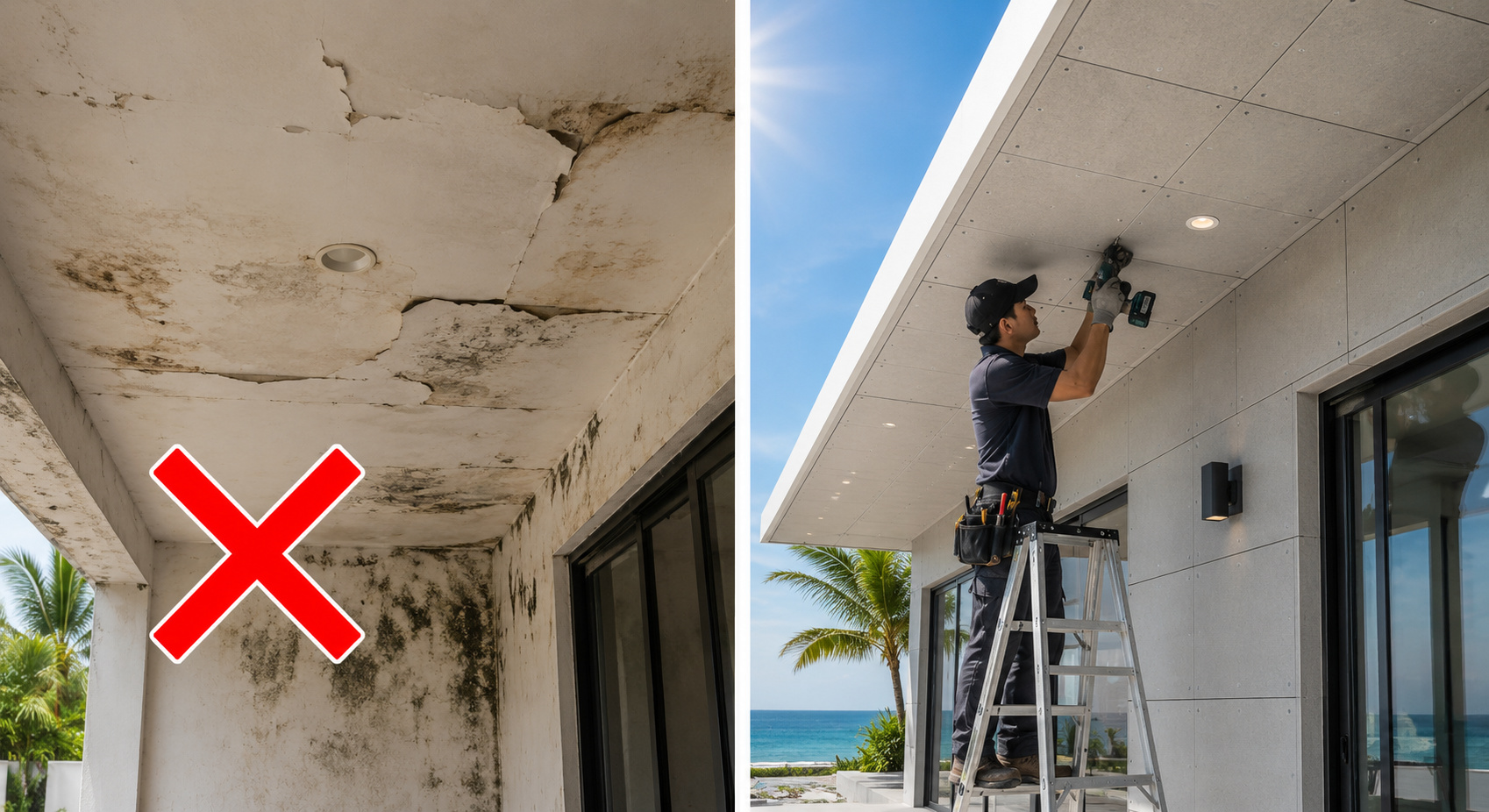
Superboard Cement Board uses autoclaved Portland cement, resists moisture, fire, and mold, weighs up to six times less than masonry, and replaces plaster in internal and external areas.
According to Gypsum, the Superboard cement board is produced with Portland cement, synthetic fibers, and special additives through the autoclaving process, a technique that subjects the material to high pressure and temperature during curing. This process provides dimensional stability, mechanical strength, and superior performance compared to boards produced by conventional curing. The product is manufactured by the Etex Group, a world leader in dry construction boards, a pioneer in drywall and cement board in Brazil, and a participant in the creation of the ABNT NBR 15498 standards that regulate the sector. Superboard boards can be used in external walls, ventilated facades, bathroom ceilings, service areas, garages, and environments subject to moisture.
The boards are up to six times lighter than the traditional masonry system. A board measuring 1.20 m by 2.40 m weighs between 15 kg and 20 kg, while the equivalent in bricks and plaster can exceed 100 kg. This lightness reduces structural load, speeds up transportation, and allows applications where additional weight would be a problem.
Superboard Cement Board replaces plaster in humid areas, facades, and external ceilings
Superboard differentiates itself from gypsum drywall mainly by its resistance to moisture. While conventional gypsum is recommended for dry internal environments, the cement board can be installed in wet, external areas exposed to climatic variations.
-
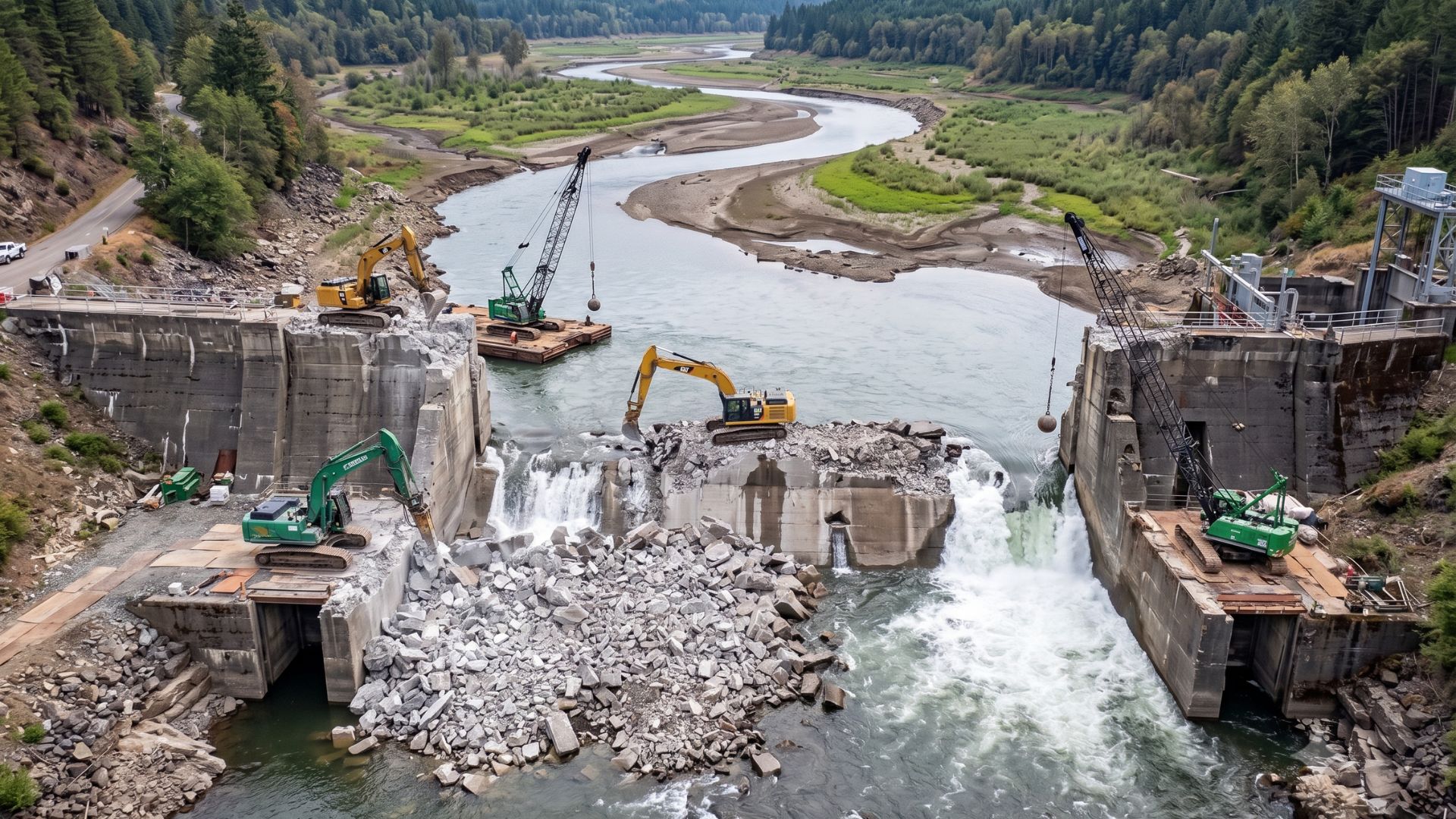
Old dams are being torn down by excavators in the United States: 108 concrete walls have been removed to free more than 4,000 kilometers of dammed rivers and transform obsolete megainfrastructure into living corridors of water, fish, and sediments.

-
Goodbye traditional brick? New 3D-printed brick promises houses ready in up to 30 days, cooling without air conditioning, and a reduction of up to 9°C in urban heat using only water and natural evaporation in civil construction.

-
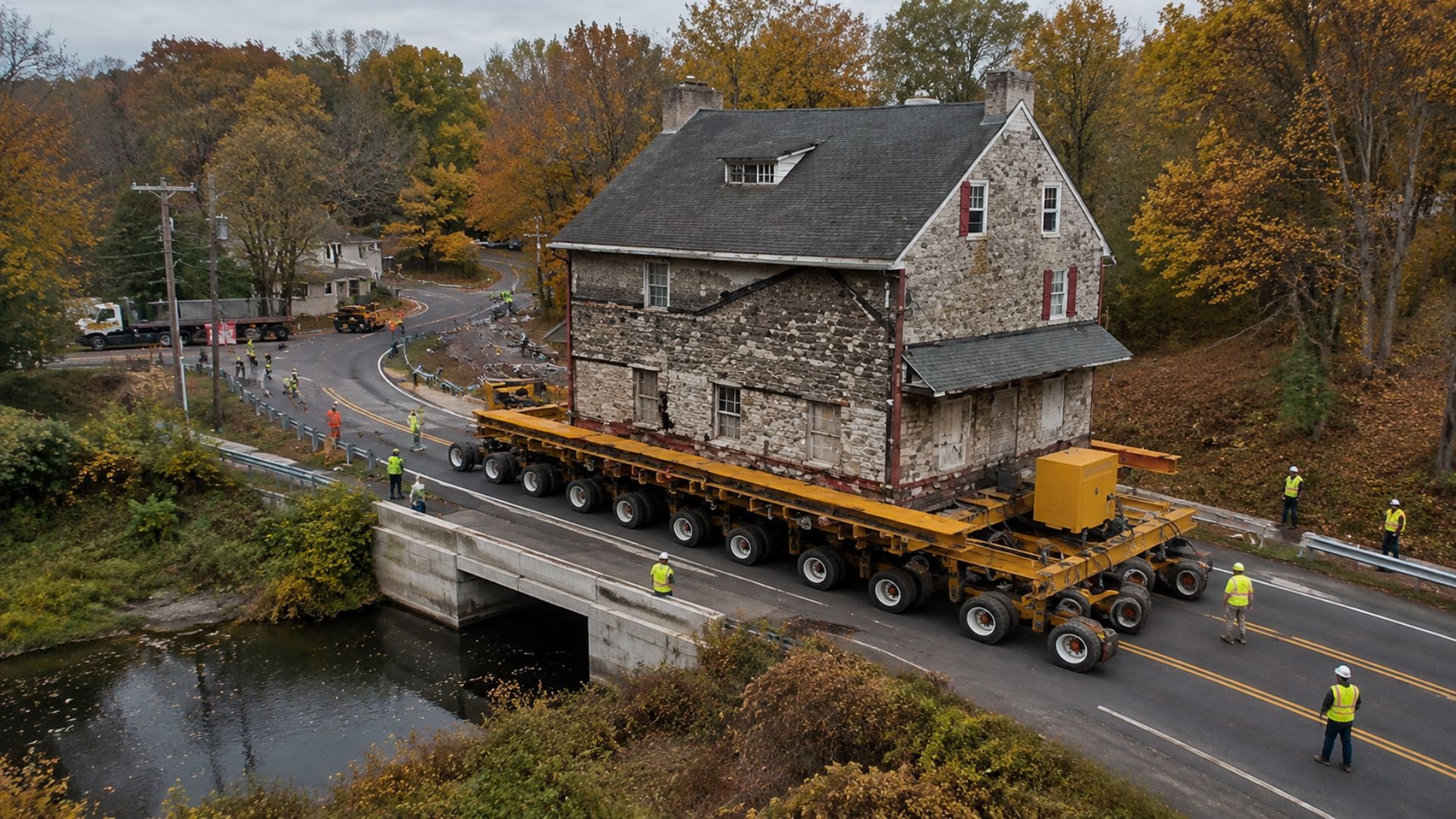
387 tons of stone from a mansion slid intact across a closed state highway and over a canal in less than four hours when the historic restaurant Chez Odette’s was lifted and moved about 300 meters in New Hope.
-
Old buildings without balconies can now gain a veranda built from the outside in using a retrofit technique that enhances the property’s value but still faces high costs and the approval of the condominium owners.



The material is non-combustible, classified as Class II-A by IT-10 of the Fire Department, and maintains stability even in humid environments. Therefore, it can be used in bathroom ceilings, saunas, garages, facades, service areas, and external coverings.
Unlike gypsum drywall, Superboard does not absorb water in the same way, does not deform with climate changes, and does not create favorable conditions for mold growth. It is a more technical solution for constructions where common gypsum tends to fail.
Gypsum ceiling fails in humid environments because it absorbs water and loses strength
Conventional gypsum drywall is widely used in dry internal ceilings and walls because it has a competitive cost, quick installation, and simple finishing for painting. The problem arises when this material is exposed to constant moisture.
In bathrooms, service areas, poorly ventilated environments, or places with frequent steam, plaster can absorb water through the core. Over time, the panel loses mechanical strength, stains, creates efflorescence, and may develop mold.

In more severe cases, the ceiling softens, deforms, and may collapse. There are moisture-resistant plasterboards, usually identified by the green color, but they are intended for occasional exposure, not for permanent contact with steam and water.
Superboard resists moisture because it uses Portland cement and autoclaving process
The cement board solves the limitation of plaster through its composition. Portland cement behaves differently in contact with water and does not lose strength like the gypsum core when exposed to moisture.
The board can be repeatedly wet, installed on facades exposed to rain, or applied to bathroom ceilings without losing dimensional stability. This makes the material safer for renovations in environments with steam, sea air, or frequent contact with water.
The autoclaving process reduces the internal porosity of the board and improves its stability. In practice, the board does not swell, warp, or suffer significant deformations when the environment alternates between dry and humid.
Autoclaving increases mechanical strength and dimensional stability of the cement board
Autoclaving uses high-temperature and pressure steam to complete the curing of the material. It is an industrial process similar to the principle used in pressurized chambers but applied to the manufacturing of cement boards.
This controlled curing generates a denser internal structure, with lower porosity and greater dimensional stability. This means that the board undergoes less expansion and contraction when temperature and humidity vary.

This stability is what helps prevent warping, cracks, and deformations. A board that does not change dimension significantly does not create internal stresses capable of compromising the finish or installed structure.
Superboard cement board meets ABNT NBR 15498 and is fire resistant
The Superboard complies with the ABNT NBR 15498 standard, which defines requirements for cement boards used in civil construction. The standard addresses aspects such as flexural strength, moisture performance, and fire behavior.
The non-combustible classification is another important differential. Unlike conventional drywall, which has a non-combustible gypsum core but paper faces, the cement board does not sustain combustion in its layers.
This performance broadens its use in technical areas, facades, garages, commercial environments, and places where fire safety is a specification criterion. The board combines the lightness of dry construction with superior resistance compared to common internal materials.
Superboard Siding and Superboard Wood simulate wood without rotting or suffering from termites
The Superboard Siding is produced in a long and narrow strip format, simulating wood cladding on facades. It can have a smooth finish or a cedar texture in low relief.
This model is suitable for projects seeking the wood look but without the typical problems of natural material in outdoor areas. The board does not rot, does not suffer termite attacks, and does not require as intense periodic maintenance as real wood exposed to the weather.
The Superboard Wood follows the same proposal, but in a conventional board format, with a low-relief texture simulating planks. It can be used on internal and external walls to create a rustic finish with greater moisture resistance.
Price of installed Superboard cement board varies between R$ 45 and R$ 90 per m²
The cost is still one of the reasons that limit the presence of cement board in residential renovations. According to the base text, the installed Superboard ranges between R$ 45 and R$ 90 per m², depending on the thickness, model, and regional labor.

For comparison, conventional gypsum drywall in ceilings usually ranges between R$ 40 and R$ 70 per m². Moisture-resistant drywall ranges between R$ 55 and R$ 85 per m², while molded gypsum ceilings with crown molding can vary between R$ 80 and R$ 150 per m².
In direct comparison, the Superboard is close to moisture-resistant drywall, but offers superior performance in wet environments, facades, and outdoor areas. The initial cost may be similar, but the durability tends to be greater where gypsum would fail.
Cement board can speed up construction by up to 70% compared to traditional masonry
Gypsum estimates up to 70% savings on the project schedule compared to conventional masonry. This happens because the panels arrive ready at the site, with standardized measurements and dry installation.
A 50 m² ceiling in cement board can be completed in one day by two professionals, depending on the site conditions. The same service with plaster on the slab can take two or three days, plus curing and drying time before painting.
This difference has a direct impact on renovations with a short deadline, commercial projects, and environments that need to resume operations quickly. Less construction time means less mess, less waste, and lower indirect costs with labor and interruptions.
Superboard Network has distributors in Brazil, but consumers are still not well-acquainted with the solution
Superboard has an authorized network of distributors and assembly companies in different regions of Brazil. The product also appears in major construction material chains and distributors specialized in drywall.

The main obstacle for many owners is not availability, but lack of awareness. Many people still only compare gypsum, PVC, wood, and masonry, without considering cement board as an intermediate solution between lightness, strength, and durability.
Before starting a renovation in a wet area, facade, or external ceiling, researching the correct application can avoid rework. Those who understand where Superboard works better than gypsum tend to use the cement board precisely in the most critical points of the project.






Be the first to react!