





 Portuguese
  English
  Spanish
  5 min of reading
  0 comments


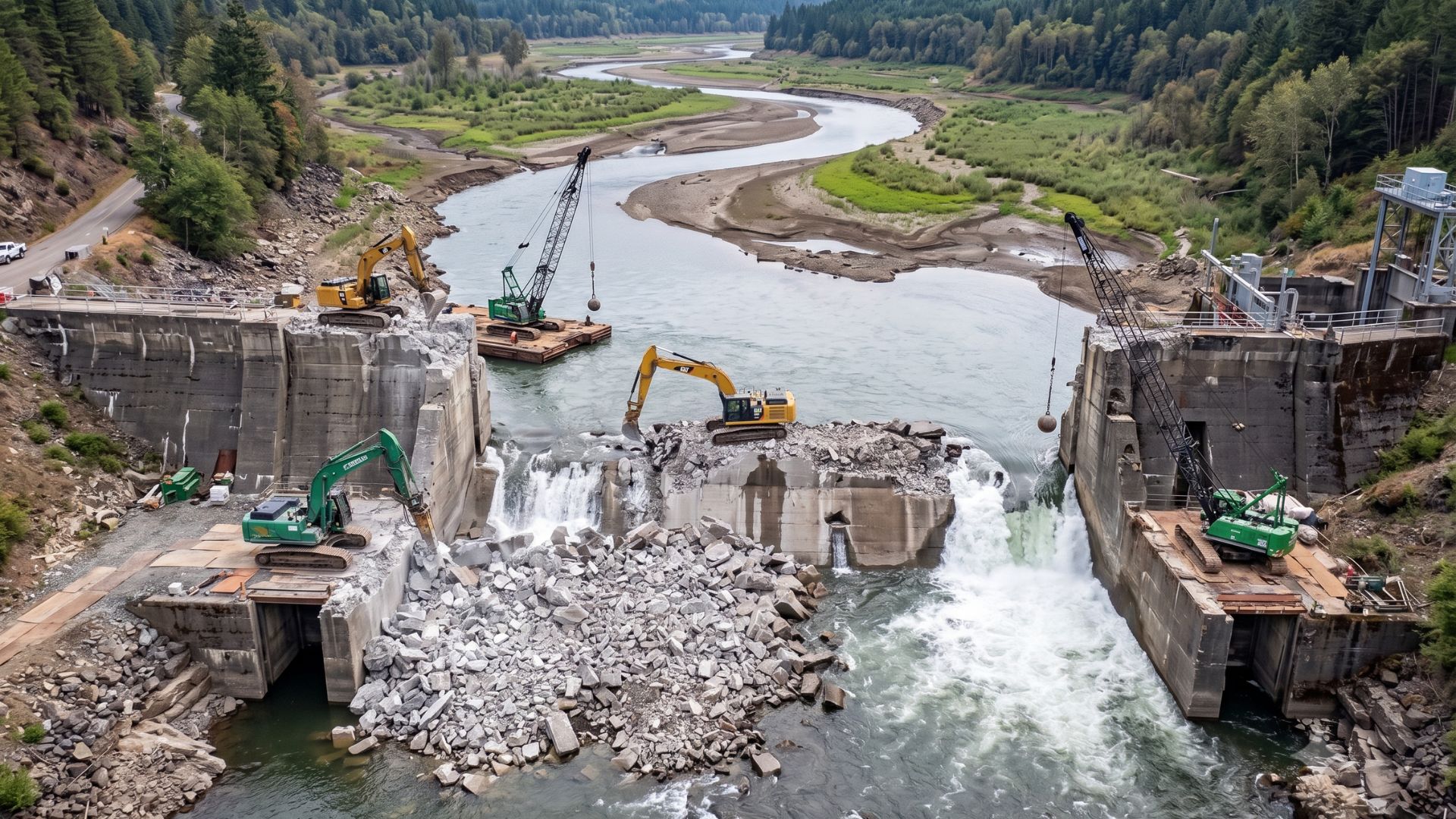
The United States removed 108 dams in 2024, reconnected more than 4,000 kilometers of rivers, and accelerated a historic dismantling of structures that for more than a century symbolized progress, energy, and water control.
For more than a century, building dams was treated as synonymous with development. They helped control floods, supply cities, irrigate agricultural areas, move industrial structures, and generate energy. Now, part of this logic has begun to reverse. In various regions, aging, obsolete, or too expensive to maintain dams are being demolished, and rivers are beginning to recover sections that have been interrupted for decades. According to American Rivers, the United States removed 108 dams in 2024, matching the annual record already recorded in the country.
According to the organization (American Rivers), these removals reconnected more than 2,528 miles of rivers, equivalent to approximately 4,068 kilometers, restoring free flow to river systems that were fragmented by old structures.
Old dams have ceased to be an automatic symbol of progress and have come to be treated as environmental and structural liabilities
According to American Rivers, the United States has more than 550,000 dams spread across the territory. Many of them were built for uses that have lost economic relevance or simply no longer exist. The entity states that a significant portion of these structures is already considered obsolete, unsafe, or economically unviable to maintain.
-
Goodbye traditional brick? New 3D-printed brick promises houses ready in up to 30 days, cooling without air conditioning, and a reduction of up to 9°C in urban heat using only water and natural evaporation in civil construction.

-
387 tons of stone from a mansion slid intact across a closed state highway and over a canal in less than four hours when the historic restaurant Chez Odette’s was lifted and moved about 300 meters in New Hope.

-
Old buildings without balconies can now gain a veranda built from the outside in using a retrofit technique that enhances the property’s value but still faces high costs and the approval of the condominium owners.
-
China has begun construction on what is set to become the world’s largest river lock on the Yangtze River, a megaproject costing 77.2 billion yuan that aims to more than double the cargo transport capacity at the Three Gorges Dam.



This point helps explain the change in logic. Instead of spending millions of dollars on repairs, reinforcements, and adjustments on small and medium dams that no longer play a relevant role, many communities have come to see removal as a cheaper, safer, and more environmentally advantageous option. What once seemed unthinkable has come to be treated as a rational infrastructure decision.
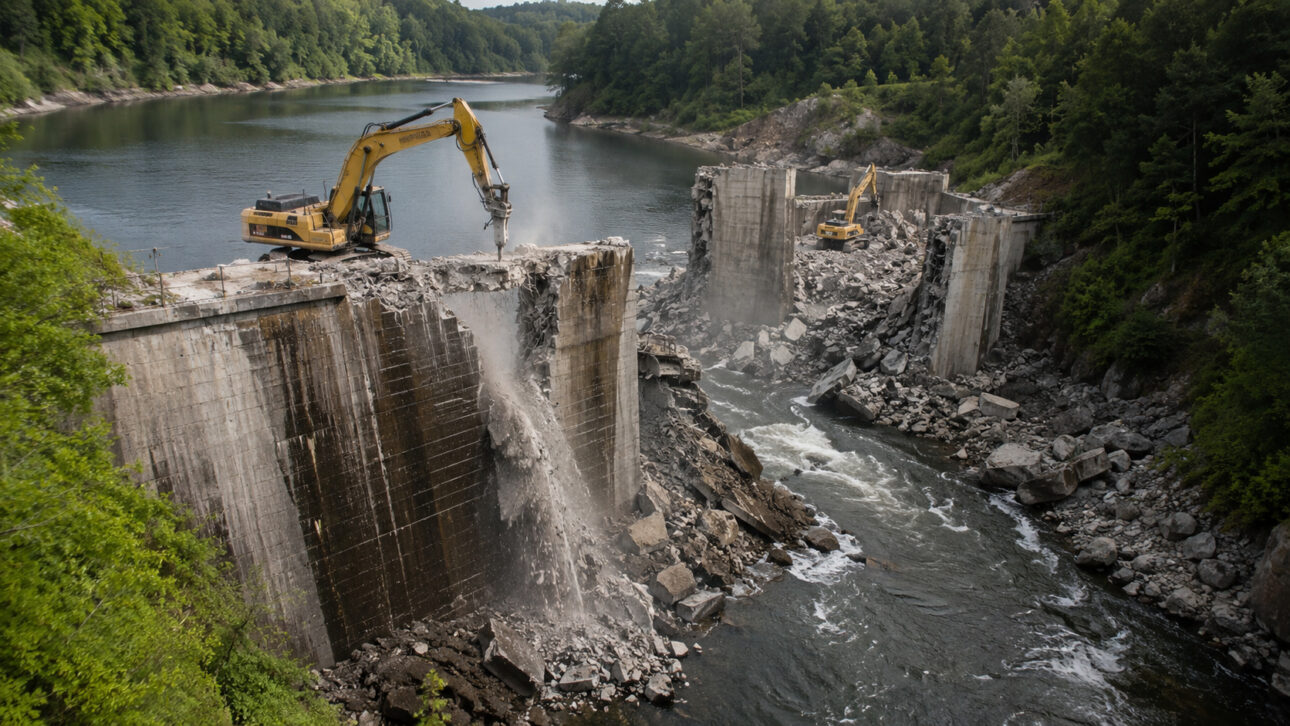
The transformation is silent, but widespread. According to American Rivers, since 1912 more than 2,240 dams have been removed in the country, and the pace of demolitions has increased significantly since the 2000s. The movement gained momentum especially among smaller structures, which no longer have enough energy or logistical weight to justify high maintenance costs.
Dam demolition already produces quick returns for migratory fish, sediments, and water quality
The removal of these structures is not done just to eliminate old concrete. According to American Rivers, environmental effects can appear very quickly, with signs of recovery observed within hours or days after the river is opened. Migratory fish often return to access areas that have been blocked for decades.
The reconnection also restores the natural transport of sediments, improves flow dynamics, helps recover water quality, and favors aquatic and terrestrial habitats associated with the river’s natural course.


In other words, the benefit is not just in the removal of the structure, but in the reestablishment of ecological processes that the dam had interrupted.
This environmental argument gained strength because it began to be coupled with the economic argument. When the dam no longer generates significant energy, does not sustain decisive supply, and still represents cost and risk, removal ceases to seem radical and starts to appear more efficient than insisting on preserving an aging structure.
Public safety has become one of the central drivers of dam removal in the United States
The discussion about dams does not only involve biodiversity. According to American Rivers, many of the structures demolished in 2024 were already classified as unsafe or too expensive to maintain. In a scenario of aging infrastructure and more extreme weather events, this factor has gained increasing weight in decision-making.
Old dams were not designed to withstand the current pattern of intense rainfall, extreme hydraulic pressure, and more modern regulatory demands.
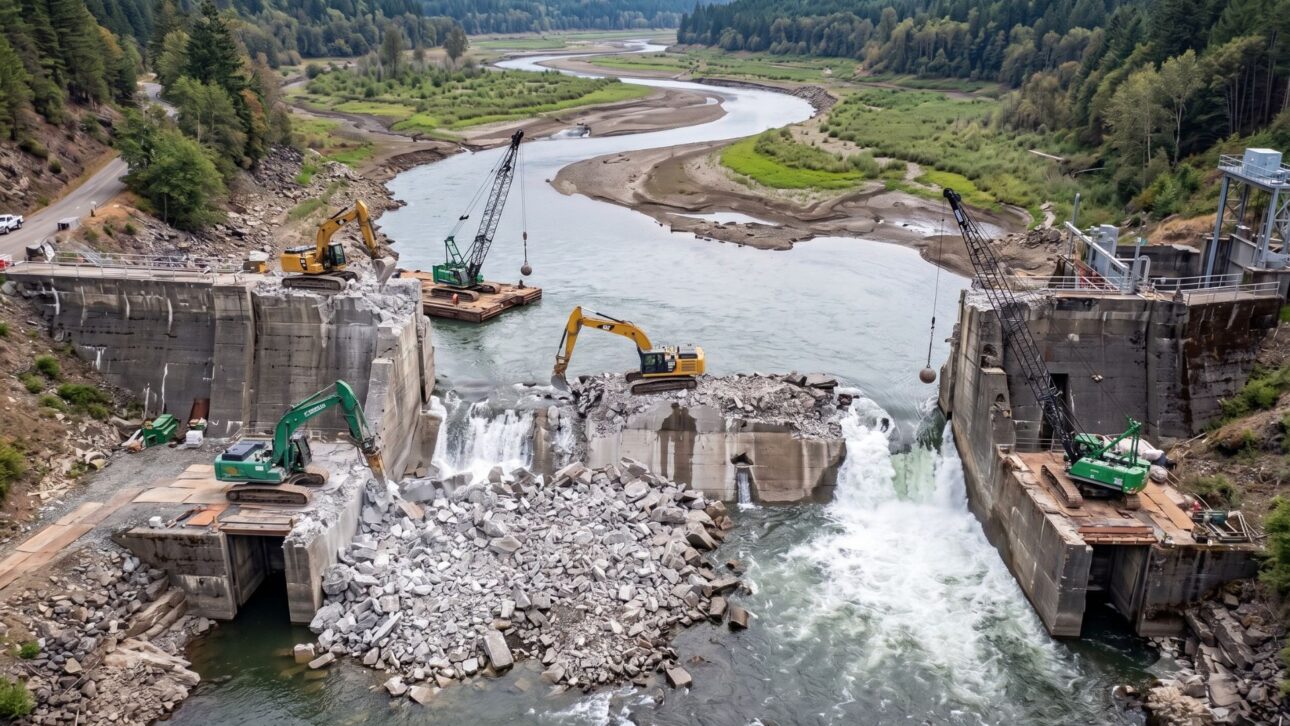
In various situations, the cost of modernization outweighs any residual benefit that the structure still offers to the community. When this happens, removal is also seen as a risk prevention strategy for populations located downstream.
This change in mindset has helped transform dam dismantling into a broader public policy. The debate has shifted from being solely ecological to also involving risk management, fiscal cost, and aging water infrastructure.
Klamath River project helped turn dam removal into a national topic
One of the most emblematic cases of this recent movement was the Klamath River system, between California and Oregon. The removal of the Iron Gate, Copco No. 1, Copco No. 2, and J.C. Boyle dams became one of the largest river restoration projects ever undertaken in the United States and helped to increase the project’s public visibility.
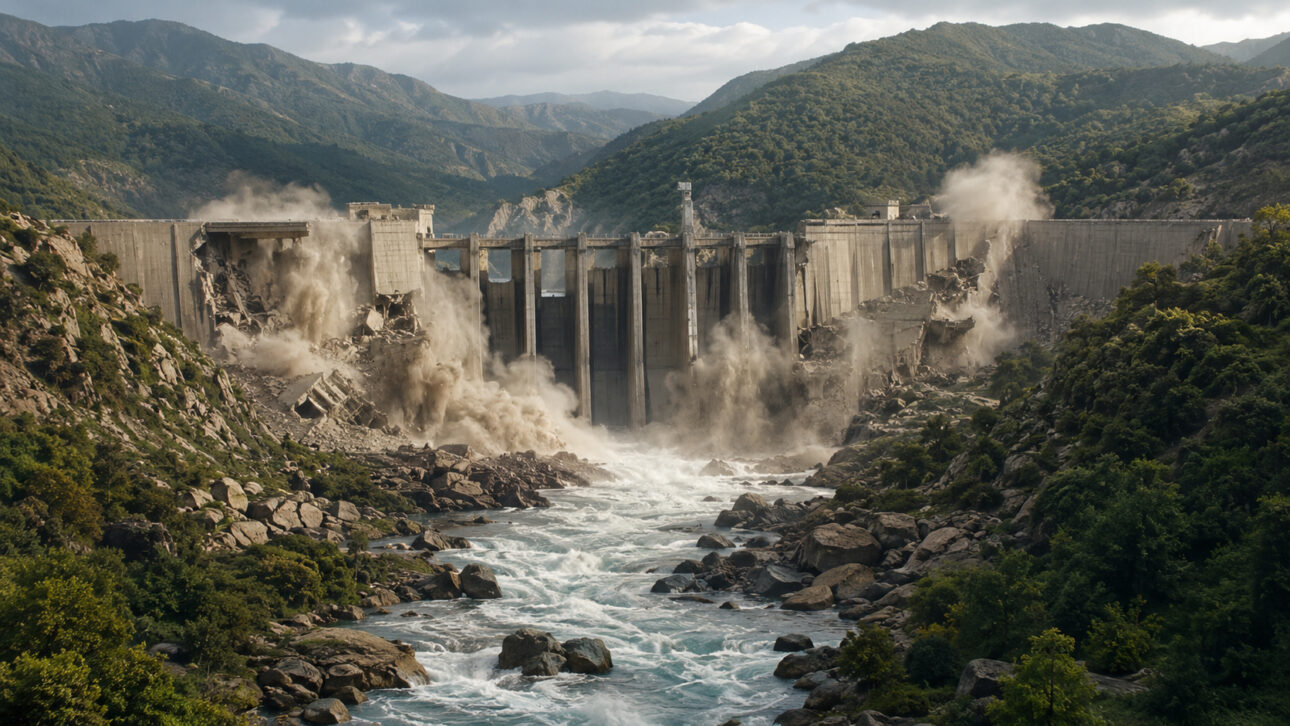
The importance of the case was twofold. On one hand, it showed that even large structures can be removed when ecological, social, and economic benefits outweigh the logic of preserving the work. On the other, it reinforced the perception that river reconnection can move from a local scale to impacting basins with significant regional weight.
As a result, dam removal no longer seems like an isolated phenomenon in small communities and has come to be seen as part of a structural trend of reassessing 20th-century water infrastructure.
Europe further accelerated the movement and recorded 542 removals in 2024 and 602 in 2025
The trend is not restricted to the United States. According to Dam Removal Europe, the continent removed at least 542 river barriers in 2024, in 23 countries, reconnecting more than 2,900 kilometers of rivers. The number included dams, weirs, culverts, thresholds, and other structures that interrupted river continuity.

The progress continued the following year. According to the European report of 2025, the total reached 602 removals, a new continental record, with more than 3,740 kilometers of reconnected rivers. This shows that river restoration is shifting from being a one-off action to becoming an environmental and water policy of increasing scale.
Europe is expanding the weight of this debate because it demonstrates that the dismantling of barriers is no longer a movement restricted to local conservation contexts. In several countries, it has already entered the center of discussions on water security, climate resilience, biodiversity, and the requalification of aging infrastructure.
The world may be entering the era of selective dismantling of aging water infrastructure
For almost the entire 20th century, engineering worked to build dams, reservoirs, and large water control works.
Now, a new cycle is gaining strength: deciding which of these structures still fulfill a strategic function and which have become environmental, economic, or safety liabilities.
In the United States, 108 dams removed in a single year and more than 4,000 kilometers of reconnected rivers show that this process can no longer be treated as an exception. In Europe, the consecutive records of 2024 and 2025 reinforce the same direction.









Be the first to react!