





 Portuguese
  English
  Spanish
  3 min of reading
  0 comments


An Innovative Startup Has An Ambitious Plan: Bury Nuclear Reactors 1.5 Km Deep. Understand The Reasons Behind This Revolutionary Strategy And The Impact It May Have On The Future Of Nuclear Energy
The startup Deep Fission, from California, is catching attention with a revolutionary proposal for nuclear energy. Led by the father-daughter duo Richard and Elizabeth Muller, the company aims to bury small nuclear reactors one mile deep, an idea that promises to solve long-standing issues in the nuclear industry.
After raising US$ 4 million in seed funding, Deep Fission is determined to transform the way we handle nuclear energy.
A Solution For The Challenges Of Traditional Nuclear Energy
The proposal from Deep Fission is to build compact nuclear reactors, only 30 inches in diameter, and place them in wells drilled 1.5 km deep. This innovative approach could overcome the complexities that have challenged conventional nuclear energy for decades, such as exorbitant costs and safety concerns.
-
American company drills a 1,830-meter hole in Kansas using oil well technology, places a nuclear reactor inside, and claims it will generate electricity without any cooling tower.

-
Canada invests more than 2 billion dollars to upgrade an old nuclear laboratory and try to rival the world’s major atomic energy powers.
-
Nuclear company backed by Bill Gates partners with Hyundai for next-generation 345 MW nuclear reactor

-
Russia is sailing all 8 nuclear icebreakers of its fleet simultaneously for the first time in history, as the Arctic freezes two weeks earlier than expected.




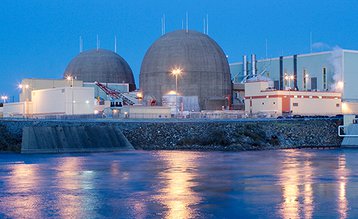
Traditional nuclear reactors require enormous reinforced concrete and stainless steel containment structures to protect the environment in case of accidents.
Additionally, complex cooling systems and other safety measures make nuclear plants expensive and challenging to build and maintain. Examples of this are delays and budget overruns, such as the Hinkley Point plant in the UK, which has an estimated cost of 50 billion euros, making it one of the most expensive projects in history.
Although modern nuclear technology is considered relatively safe, fear and skepticism still prevail. This is largely due to historical events such as the Three Mile Island accident in 1979, in the United States, and the Chernobyl disaster in 1986, which had serious repercussions on health and the environment.
These incidents, along with the Fukushima Daiichi collapse in 2011, after an earthquake and tsunami in Japan, contributed to public and political resistance to nuclear energy.
Why Bury Nuclear Reactors Underground?
The innovation proposed by Deep Fission addresses the challenges of nuclear energy in a completely new way. By burying nuclear reactors one mile deep, the startup aims to eliminate the need for massive containment structures and expensive cooling systems.
The logic behind this is that, in the event of an accident, the earth surrounding the reactor would serve as a natural barrier, minimizing the risk of radioactive material leaking into the environment.
Moreover, this underground approach would drastically reduce the visual impact of nuclear plants, an issue that often causes public resistance.
The Deep Fission plants would be nearly invisible on the surface, making them an attractive solution for densely populated or environmentally sensitive areas.
The Future Of Nuclear Energy
The proposal from Deep Fission represents a significant advancement for nuclear energy. By simplifying and reducing construction and maintenance costs, the company could pave the way for a future where nuclear energy is a viable and sustainable solution for the global energy crisis.
While the idea of burying nuclear reactors one mile deep may seem futuristic, it is precisely this kind of bold thinking that the nuclear industry needs to overcome decades of stagnation.
Deep Fission bets that this innovation will bring nuclear energy back to the center of discussions about energy transition, allowing the world to harness the unlimited potential of nuclear energy in a safe and sustainable manner.
From this approach, the California startup may redefine the parameters of how we produce clean and safe energy, leveraging what was once seen as a dangerous resource and transforming it into a modern and effective solution for the energy future.




Be the first to react!