Portuguese
  Spanish


The Renewable Energy in Minas Gerais with an Automated Tax Regime That Stimulates Clean Sources Such as Solar, Wind, Biogas, and Small Hydropower Plants.
Minas Gerais has always played a central role in Brazil’s energy history. From the gold rush in the 18th century to the large hydroelectric projects of the 20th century, the state has actively participated in building the national energy matrix.
For this reason, the pursuit of innovation and sustainability has become a natural continuation of this historical process.
Currently, investments in clean and sustainable sources are growing significantly, especially with the advancement of renewable energy in Minas Gerais. In this way, public policies, environmental commitments, and the increasing demand from society for cleaner sources drive this transformation.
-
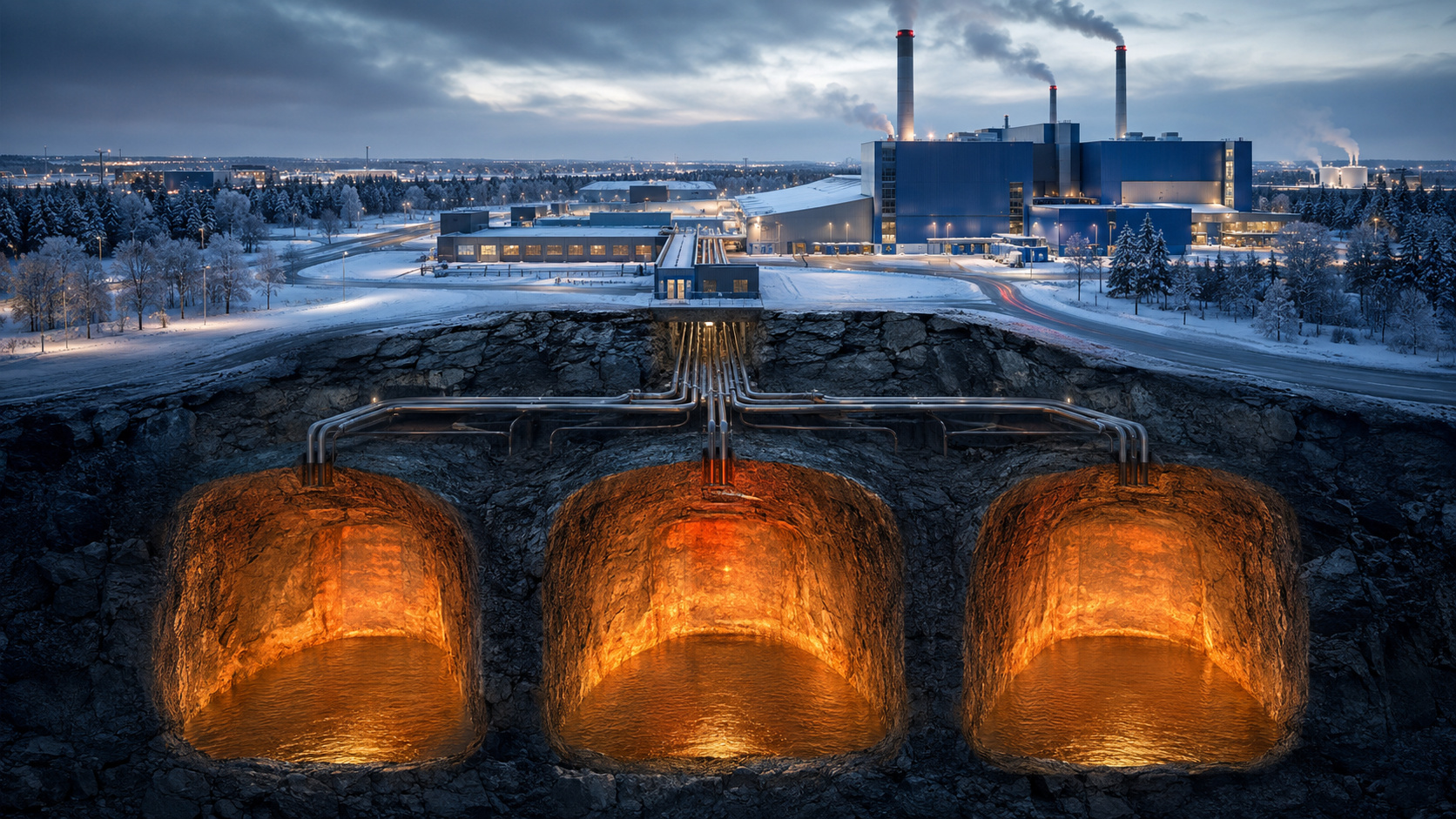
California Project Aims to Store Heat Underground in Former Oil Reservoir to Generate 100 kW of Electricity for Over 12 Hours

-
French Port Harnesses Industrial Waste Heat to Power Up to 30,000 Homes
-
Belgian Port to Install Shore Power for Cruise Ships by 2027, Cutting Dock Emissions by Up to 5% and Meeting EU Regulations
-
Canadian Project Converts Hot Water from Mature Oil Fields into Electricity, Repurposing Existing Wells and Infrastructure




Moreover, the energy transition reflects a strategic necessity. As the world faces climate change and geopolitical crises that affect the supply of fossil fuels, Minas chooses to strengthen its energy security with local and renewable solutions.
Thus, the state responds quickly to global challenges, demonstrating a forward-looking vision.
Consequently, the Minas Gerais government has launched an automated tax regime, aimed at generating clean energy. With this, the intention is to simplify processes, reduce timelines, and stimulate new ventures with sustainable technologies such as solar, wind, biomass, and small hydropower plants.
It is important to highlight that Minas Gerais is not alone in this journey. Various Brazilian states and countries around the world are implementing similar policies to accelerate the energy transition and reduce dependence on fossil sources. This cooperation and exchange of experiences foster technological development and strengthen local markets.
In this way, Minas Gerais reinforces its strategic position in the national economy by becoming a reference in energy innovation.
Automation of Incentives and the Role of Siare
Through the State Revenue Administration System (Siare), entrepreneurs can now request the special regime digitally. As soon as the system verifies compliance with criteria and tax regularity, the benefit is granted in a few hours.
This represents a significant gain in agility.
With this, the state removes bureaucratic barriers that used to limit the entry of new projects. By offering greater predictability and speed, Minas attracts investors and fosters a favorable environment for sustainable growth in the electricity sector.
Moreover, two Sectorial Tax Treatments (TTS) have been made available. One of them covers small hydropower plants (PCH) and hydroelectric generating plants (CGH).
The other applies to solar, wind, biogas, and reforestation biomass. In other words, the measure encourages a wide variety of renewable energy sources.
In this regard, the policy ensures greater fiscal justice. Small and medium producers, cooperatives, and regional ventures now find a more accessible path to invest in clean energy.
As a result, the state broadens its energy diversity and strengthens its local economies.
Another relevant point is that this automation also facilitates monitoring and oversight by the government, ensuring that tax benefits are granted transparently and efficiently. This strengthens trust between the public and private sectors, a fundamental condition for the success of these policies.
Energy Diversification and Regional Vocations
For a long time, the energy matrix in Minas relied on large hydroelectric plants. However, climate change and water scarcity have shown the limits of this model.
For this reason, diversification has become essential.
Solar energy, for example, has found space in the North and Triângulo Mineiro regions, where solar radiation is more intense.
According to the Brazilian Solar Photovoltaic Energy Association (Absolar), Minas leads in distributed solar generation in the country. This happens because homes, businesses, and rural properties have adopted photovoltaic systems on a large scale.
In this way, the electrical matrix becomes more decentralized and resilient.
Even in the early stages, wind energy is also emerging as a promise in certain regions of the state. Meanwhile, areas with a strong agro-industrial presence are utilizing waste to generate biogas and biomass, contributing to the circular economy and sustainability.
It is no coincidence that universities in Minas play a fundamental role in this process. Institutions such as UFMG, UFU, and UFV collaborate on technological innovation, skilled labor training, and applied research.
In other words, academic knowledge connects directly to the transformation of the energy matrix.
Additionally, local community participation in renewable energy projects has been growing. Cooperatives and residents’ associations now have an active voice, generating social and economic inclusion. This reinforces the idea that energy transition can also be a tool for integrated regional development.
Therefore, the energy future of Minas Gerais does not depend solely on large companies, but also on community mobilization.
Fiscal Rules and Exclusions from the Regime
To ensure that incentives reach the right projects, the state establishes objective criteria. The enterprise must be regularly registered, with its main activity linked to energy generation.
Moreover, it is necessary to maintain operations in a debit and credit regime, outside the Simples Nacional.
On the other hand, if the company migrates to the simplified regime, it loses the right to the benefit. This ensures that only those committed to energy generation on a scale compatible with the regime have access to the policy.
Consequently, renewable energy in Minas Gerais now has a more stable environment to grow. With consistent incentives and clear rules, the state attracts long-term projects that drive the economy, create jobs, and reduce environmental impacts.
Digitalization and Alignment with Climate Goals
The digitalization of the special regime is part of a larger strategy of the Finance Department. By standardizing and automating procedures, the state reduces administrative costs and makes public services more efficient.
Thus, fiscal innovation integrates with the modernization of the state as a whole.
Furthermore, this measure directly supports Brazil’s climate goals. By facilitating the use of clean sources, Minas contributes to the reduction of greenhouse gas emissions, in line with the Paris Agreement and national environmental commitments.
As a result, cities also benefit. With photovoltaic systems on urban rooftops, for example, there is less pressure on distribution networks.
This reduces losses and improves the overall performance of the electric system.
Additionally, decentralized generation contributes to community resilience in the face of potential supply interruptions, which is especially important in times of climate instability.
Structuring Path for the State’s Energetic Future
Minas Gerais reaffirms its national prominence by strongly investing in renewable energy. The automation of the special tax regime represents not only an administrative measure but a milestone in the state’s energy policy.
In this context, the state demonstrates that it is possible to align economic development with environmental sustainability.
By promoting incentives, technology, and local knowledge, Minas builds an exemplary model for the country.
Therefore, by integrating fiscal actions, investments, and science, the state establishes a robust ecosystem ready for the challenges of the 21st century.
Thus, renewable energy in Minas Gerais consolidates as a pillar of a prosperous, clean, and balanced future.