Portuguese
  Spanish


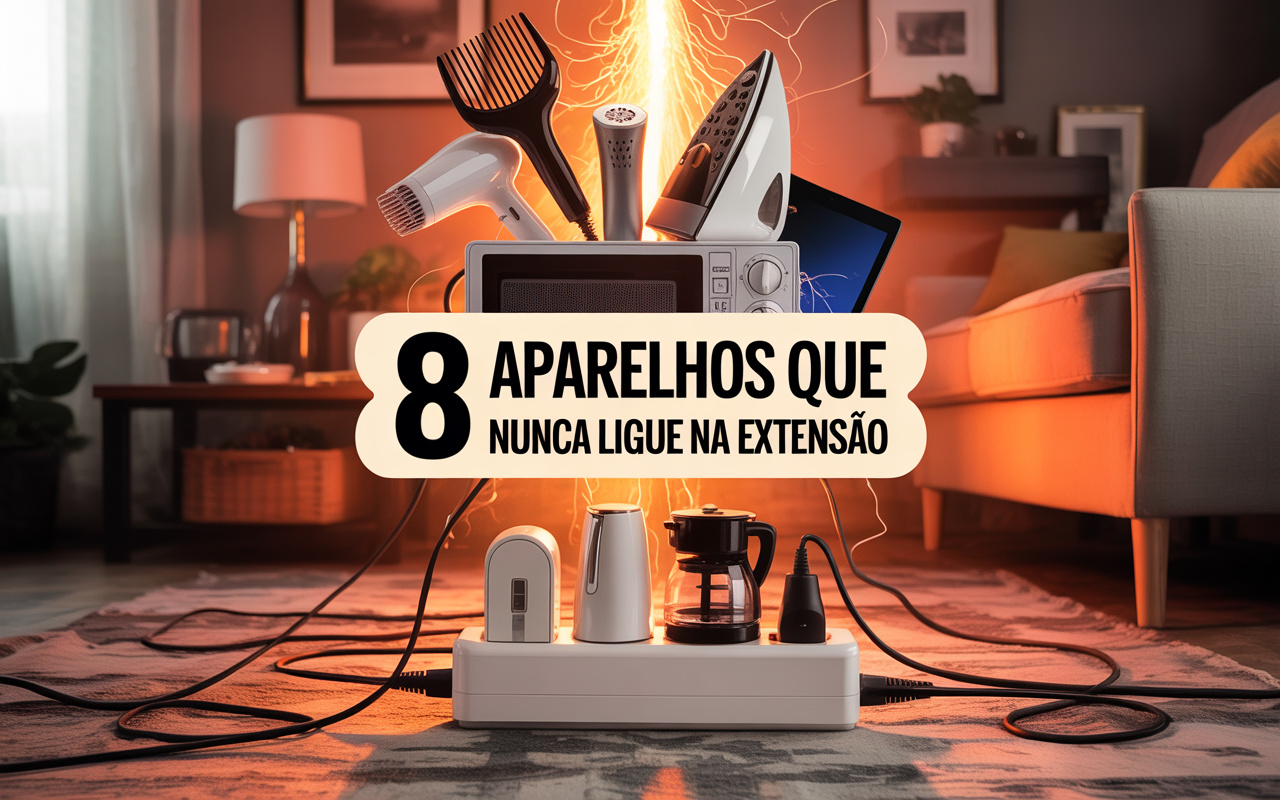

Engineer Warns: Air Conditioner, Refrigerator, Air Fryer And Other 8 Devices Should Never Be Plugged Into Extension Cords. Understand Fire Risks And How To Avoid Overloads.
In Brazil, the use of extension cords is almost a cultural habit. Whether to plug in the television, phone charger, or even the microwave, millions of Brazilians resort to these strips and adapters without realizing that, in many cases, they are creating a ticking time bomb inside their homes. According to electrical engineers, most extension cords available on the market are not designed to support high-consumption devices. The consequence is direct: overheated wires, voltage drops, circuit breaker failures, and, in more serious situations, fires that can spread within minutes.
A study by the Brazilian Association for Electrical Safety Awareness (Abracopel) reveals that more than 600 fires per year in Brazil originate from improvised electrical installations, many of which involve extension cords and overloads.
For this reason, the warning is clear: there are devices that should never be plugged into extension cords.
-
Early Humans Made Beds Nearly 200,000 Years Ago in African Caves, Study Reveals

-
Japanese Smart Bike Detects Cyclist’s Intent to Turn and Potential Falls
-
METTL3 Protein Found to Play Crucial Role in Breast Cancer Metastasis, Surprising Scientists

-
Brazil’s Gaming Market Reaches $2.5 Billion, But Country Plays More Than It Produces


1. Air Conditioner: Current Peaks That Melt Wires
The air conditioner is one of the biggest villains when it comes to electrical consumption. At startup, the compressor demands a current peak that can reach three times the nominal value of the device. A 1,200-watt unit, for example, can draw up to 3,600 watts instantaneously.
Common extension cords, with wires of only 0.75 mm² gauge, were not designed to support this load. The result is the overheating of the wire, which can melt the protective sheath and expose the wiring, increasing the risk of short circuits and fire.
2. Electric Heater: High Consumption in a Short Time
Electric heaters, commonly used in cold regions of Brazil, are among the top consumers. A single device can exceed 2,000 watts of continuous power. In a simple extension, this is equivalent to plugging in several appliances at the same time.
The electrical engineer consulted by TechTudo warns: overload is inevitable. In minutes, the extension heats up to the point of burning the plastic, releasing toxic smoke and potentially causing a fire.
3. Microwave and Electric Ovens: Continuous Power and Performance Drop
Microwave ovens and electric ovens are designed to operate plugged directly into wall outlets. They require constant and high current to maintain efficient operation. When connected to extension cords, there is a voltage drop, which forces the device to work under unstable conditions.
In addition to increasing the risk of accidents, this can also reduce the lifespan of the appliance and raise energy consumption. In other words: it’s not only dangerous, but also more expensive.
4. Refrigerators and Freezers: Constant Peaks in the Compressor
Refrigerators and freezers may seem harmless, but their compressors turn on and off several times a day, always drawing high current at startup. A common extension cannot support this repetitive overload cycle.
The result can be twofold: risk of fire in the wiring and failure of the refrigerator’s motor, causing food loss and financial damages.
5. Washing Machines and Dryers: Powerful Motors, High Risks
Washing machines and dryers use high-power motors to spin and dry clothes. This energy demand requires dedicated outlets with reinforced cables. Using an extension increases the risk of overheating, especially during the spin cycle, when the electric current peaks.
In addition to the risk of fire, there is also the possibility of the machine stopping mid-cycle, damaging clothes and disrupting daily use.
6. Air Fryer: The “New Villain” of Extensions
The electric fryer has become a craze in Brazil, but few consumers know that it consumes between 1,500 and 2,000 watts. This amount is equivalent to that of a medium-sized microwave.
According to experts, plugging an air fryer into an extension can cause the wire to heat up rapidly, creating a risk of short circuit. And the detail: many households plug in more than one air fryer or combine its use with microwaves and coffee makers at the same outlet. This multiplies the risk.
7. Electric Shower: The Champion of Consumption in Brazil
The electric shower accounts for up to 25% of residential energy consumption in some Brazilian homes. It can exceed 4,500 watts, requiring thick wires, dedicated circuit breakers, and reinforced outlets.
Connecting a shower to an extension cord is practically asking for the wire to melt within minutes. The risk of fire is extremely high, and serious accidents have already been recorded due to improper use.
8. Workshop Tools: Energy Concentrated in Seconds
Tools such as welders, circular saws, grinders, and industrial drills draw large currents in short intervals. This electrical effort generates instant heating in simple extension cords.
The engineer explains that, in these cases, it’s not just about the risk of fire, but also failures that can jeopardize the worker, such as sudden jams or unexpected discharges.
Extension Cord: How to Use It Safely
Not every extension cord is dangerous, as long as it is used responsibly. The consulted specialist reminds that the extension must have INMETRO certification and wires with gauge compatible with its use.
Basic recommendations:
- Extensions with 2.5 mm² gauge to support up to 20 A.
- Never use rolled-up extensions, as this increases heating.
- Avoid plugging in more than one high-consuming device at the same outlet.
- Install a residual current circuit breaker (RCCB) to protect against shocks.
In many domestic fires recorded by Abracopel, the scene is the same: a melted extension cord next to furniture and curtains. The cheap option can turn costly: saving on an inadequate extension may cost not only money but lives.
The warning from electrical engineers is clear: these eight devices should never be connected to extension cords. The safest route is to plug them directly into the wall outlet, with proper wiring and duly inspected.