Portuguese
  Spanish


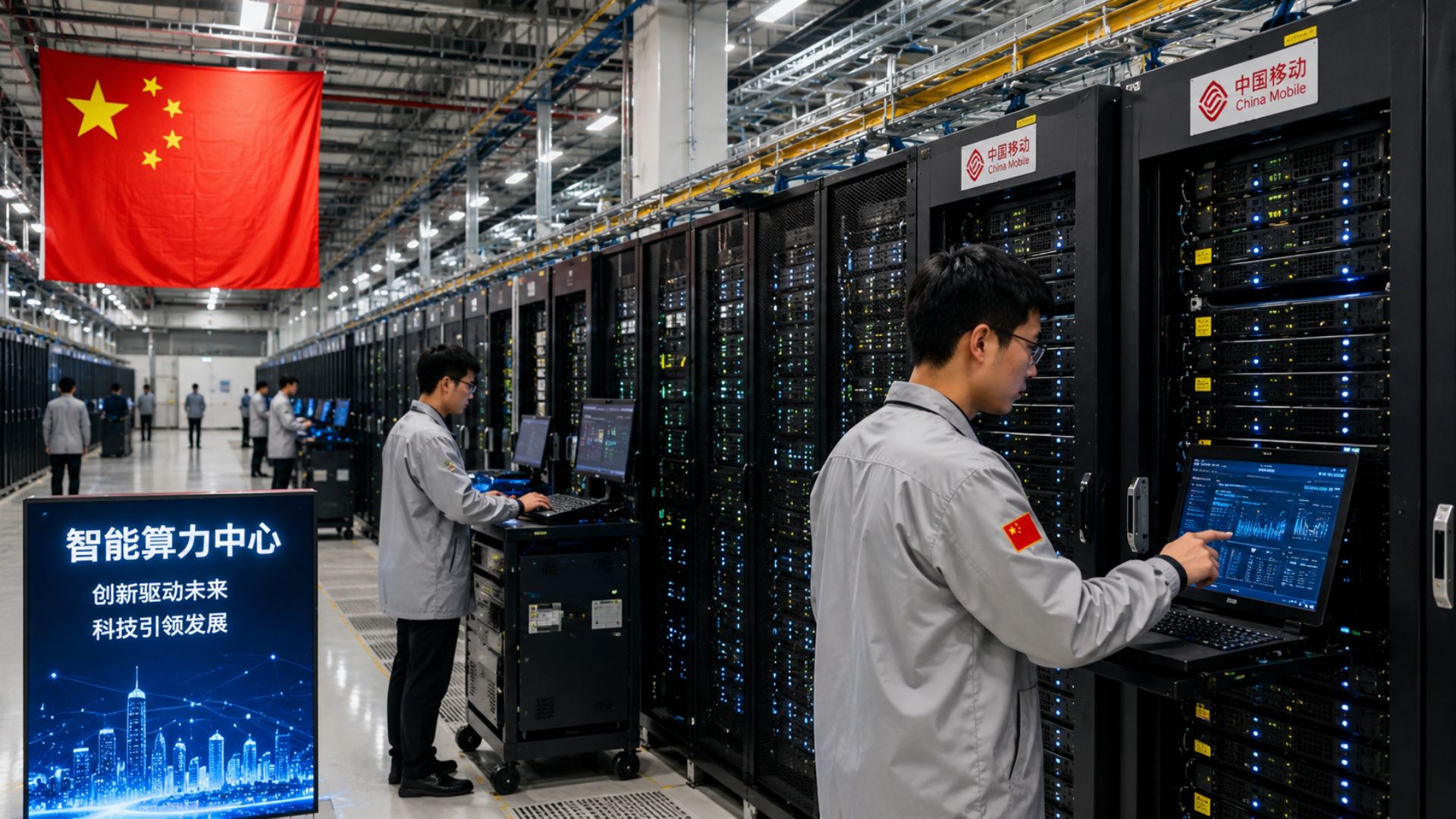

Beijing’s Billion-Dollar Plan to Expand Data Centers and Prioritize Local Technology Reinforces the Competition with the United States for Leadership in Artificial Intelligence, in a Scenario Marked by Restrictions on Advanced Chips, Record Investments, and the Pursuit of Technological Autonomy.
China is preparing a plan of about 2 trillion yuan, equivalent to US$ 295 billion, to expand its artificial intelligence infrastructure over the next five years, according to a Bloomberg News report cited by Reuters on Tuesday (09).
The proposal includes the construction of a national network of interconnected data centers, an initiative presented as part of Beijing’s efforts to close the gap with the United States in the global AI race.
One of the most commercially impactful points is the definition of suppliers that will be able to participate in the project.
-
Scientists Develop Needle-Free Insulin That Penetrates Skin, Reduces Glucose in Animals Within an Hour, Paving the Way for Diabetes Patches and Creams for Humans

-
After 40 Years of Research, Powdered Coconut Water to Be Produced in Brazilian Biorefinery, Aiming to Revolutionize Health for Children, Elderly, and Hospital Patients
-
Queen Guitarist Brian May Collaborates with ESA Scientists to Study Asteroids Bennu and Ryugu Using 3D Simulations
-
Largest Known Single-Piece Meteorite, Weighing 60 Tons, Puzzles Scientists with Its Intact Fall and Lack of Visible Crater



According to the report, the initiative is expected to prioritize Chinese companies in at least 80% of the technology used in the data centers, including artificial intelligence chips, which would reduce the space for foreign companies like Nvidia and AMD.
China Wants to Create a National Network of Data Centers
Among the bodies involved in drafting the proposal is the National Development and Reform Commission, one of China’s main economic planning agencies.
The objective under discussion is to create a national computing structure capable of connecting different regions of the country and supporting the expansion of large-scale AI applications.
According to the design reported by Bloomberg News, state-owned companies like China Mobile and China Telecom would be responsible for operating most of the data centers and ensuring network integration.
This model would place the processing infrastructure under strong participation of companies controlled by the Chinese state, in an area treated by the government as relevant to the digital economy.
Still according to the report, the project remains in the initial phase of debate.
Thus, values, suppliers, technical design, and deadlines may undergo changes before a final decision by the Chinese government.
The proposal indicates that Beijing intends to expand its own processing capacity and reduce dependence on foreign technologies in an area increasingly associated with digital services, industry, research, and security.
Local technology gains space in Chinese strategy
The priority given to domestic suppliers places Huawei Technologies among the companies that may play a significant role in the Chinese plan.
The company is cited as one of the main candidates to supply part of the technology for data centers, in a context of restrictions imposed by the United States on China’s access to advanced chips.
The choice of local suppliers involves more than purchasing equipment for new installations.
AI data centers depend on chips, servers, networks, energy, software, and systems capable of processing large volumes of data efficiently and with operational stability.
By seeking greater participation from national companies in this chain, Beijing tries to reduce external vulnerabilities and strengthen local suppliers, according to the logic presented in Chinese measures aimed at technological self-sufficiency.
This movement, however, occurs in a market where foreign companies still hold significant positions in areas such as advanced semiconductors, software ecosystems, and high-performance equipment.
Reuters reported in November 2025 that China began directing state-funded data center projects to use AI chips manufactured in the country.
The measure would mainly affect new projects or those still in the initial stages, while more advanced initiatives would be evaluated on a case-by-case basis.
United States increases investments in artificial intelligence
The Chinese initiative appears at a time when major U.S. technology companies are increasing investments in AI-focused infrastructure.
According to the report cited by Reuters, American companies are expected to spend more than $700 billion this year to finance expansion plans related to artificial intelligence.
This volume helps explain why the competition involves not only language models, applications, or conversational systems.
In practice, the competition also depends on the ability to build data centers, obtain energy, access advanced chips, and operate large-scale systems.
In the United States, companies like Nvidia, AMD, Microsoft, Google, Amazon, and Meta appear among the main players in the AI ecosystem.
In the Chinese case, the government seeks to coordinate state-owned companies, local chip manufacturers, and private groups to develop a structure less dependent on foreign technology.
Even in the face of restrictions imposed by Washington, Nvidia still tries to maintain space among Chinese clients.
In June 2026, Reuters reported that the company began presenting the Vera processor to clients in China, in an attempt to maintain a presence in the country after a decline in market share caused by export controls and Chinese pressure for self-sufficiency.
Data centers gain weight in the global technological dispute
The construction of data centers has taken on a significant position in the digital economy because AI systems require great processing capacity.
Generative models, humanoid robots, quantum computing, and industrial applications depend on robust infrastructure for training, storage, and continuous operation.
China’s new five-year plan had already indicated the intention to accelerate the adoption of AI in the world’s second-largest economy.
The strategy also includes the development of emerging technologies, such as quantum computing and humanoid robots, areas that Beijing associates with productivity, technological security, and global competitiveness.
With interconnected data centers in different regions, the Chinese government could distribute processing loads according to energy availability and computational capacity.
This type of network, however, requires complex technical integration, stable equipment supply, and coordination between operators, manufacturers, and bodies responsible for industrial policy.
Semiconductor industry experts point out that Chinese chips have advanced in recent years, but still face challenges in performance, production scale, and software ecosystem.
These limitations are relevant because part of the leading solutions used by American companies combines advanced hardware, programming tools, and already consolidated technical support.
Plan still depends on official decision
China Mobile, China Telecom, and the National Development and Reform Commission did not immediately respond to Reuters’ requests for comment.
The lack of official statement keeps part of the plan conditioned to the information attributed by Bloomberg News to sources familiar with the matter.
The technological dispute between China and the United States continues to influence investment decisions, export rules, and supplier choices in the artificial intelligence sector.
As governments treat AI as infrastructure of economic and strategic interest, companies begin to operate in supply chains more affected by national rules, trade controls, and industrial priorities.
If confirmed as reported, the $295 billion plan would represent a significant expansion of China’s data center infrastructure.
The initiative would also expand Beijing’s attempt to build its own base for artificial intelligence, with less involvement from foreign suppliers in one of the most contested areas of global technology.