Portuguese
  Spanish


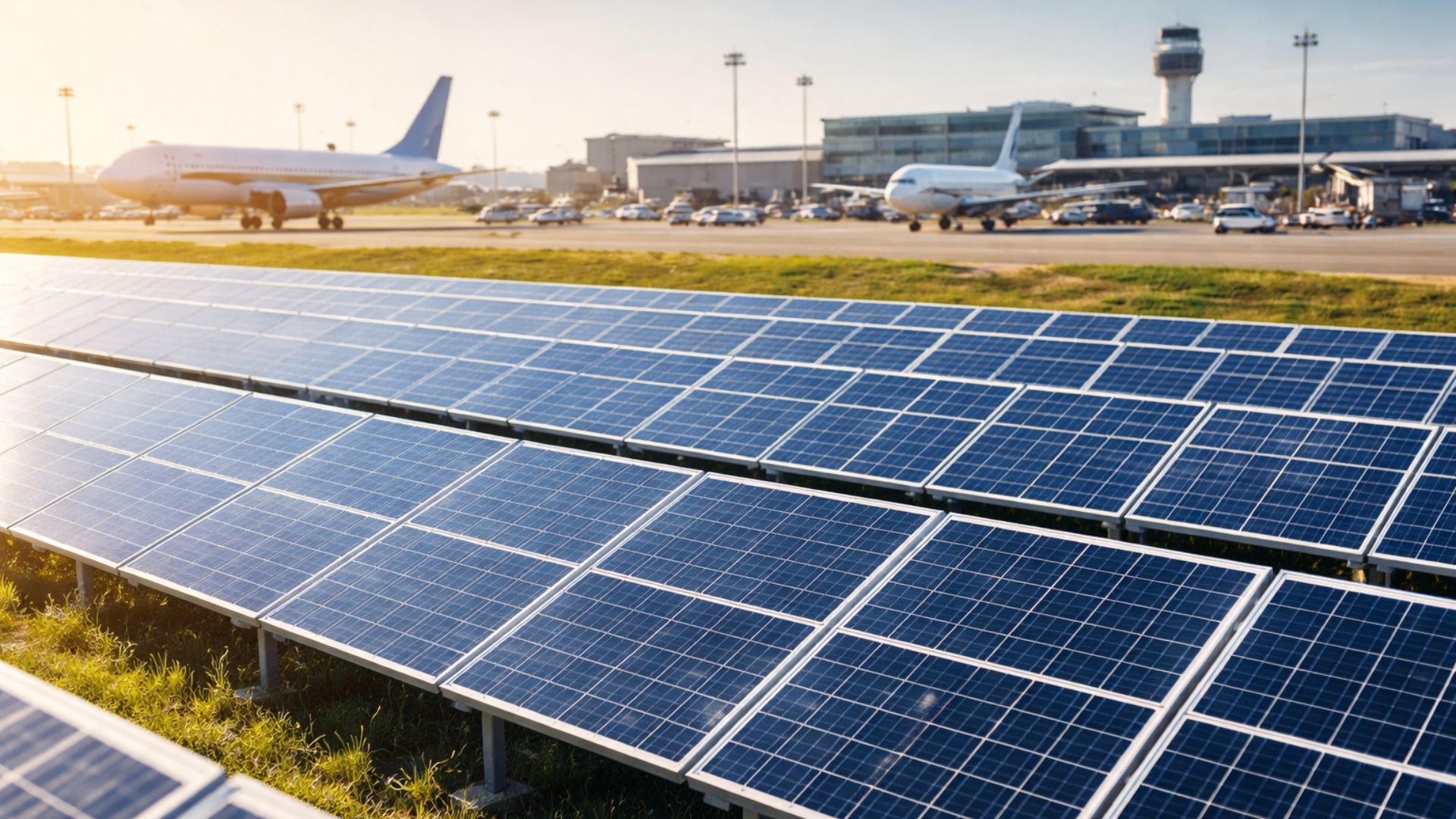


Macaé Stands Out Nationally by Adopting Integral Solar Energy at Its Airport Terminal, Reducing Environmental Impacts, Increasing Operational Efficiency, and Driving Sustainable Modernization of Aviation in Brazil
On February 10, 2026, Macaé recorded a groundbreaking milestone in Brazil’s airport infrastructure. On that date, Macaé Airport began operating entirely on solar energy, becoming the first terminal in the country to run on 100% renewable energy. According to the portal O Dia and other outlets, the initiative, led by the concessionaire responsible for managing the space, placed the municipality at the center of discussions about energy efficiency, environmental responsibility, and modernization of the national air transport sector.
Initiative in Macaé Aims to Reduce Costs and Generate Sustainability
The project involves installing a photovoltaic plant with sufficient capacity to meet the entire electrical demand of the terminal. The achievement is not just symbolic; it is structural. It represents a concrete change in how airports can position themselves in the face of environmental and economic challenges. At the same time, it strengthens the city’s image as a technology and energy hub in the state of Rio de Janeiro.
Since the announcement, the topic has gained national attention by uniting three strategic factors: reduced operational costs, lower environmental impact, and leadership in sustainability. Thus, Macaé’s movement is not limited to the local level. It influences future decisions in other airports and reinforces the trend of energy transition in Brazilian air transport.
-
Over 60 Tractors Take to the Streets in Lopera as Solar Parks Compete with Olive Groves, Affecting 13,000 to 100,000 Trees According to Conflicting Reports

-
Green Hydrogen Projects in Northeastern Brazil Stalled for 18 Months Awaiting Government Decree, Delaying Billions in Investments
-
Brazil Concludes Largest Energy Auction in History, Secures 18.97 GW and Mobilizes $12.8 Billion to Ensure Supply Until 2031
-
How Norway Produces More Energy Than It Consumes with Nearly 1,800 Hydropower Plants and Over 1,100 Reservoirs


Historic Milestone in Macaé Transforms the Concept of Clean Energy Airports in Brazil
Macé’s entry into the history of national aviation occurs at a time when the world is discussing sustainable solutions for large infrastructures. The clean energy airport emerges as a concrete example of technical and economic viability, showing that the adoption of renewable sources can be applied broadly and efficiently.
The relevance of this movement lies in the fact that airports traditionally have high energy consumption. Runway lighting, air conditioning systems, security equipment, and terminal operations require a continuous supply of electricity. Reducing this consumption from conventional sources means directly decreasing environmental impacts.
Furthermore, the pioneering nature creates an important precedent. When a medium-sized city can implement a project of this magnitude, other places begin to see sustainability as a real possibility, not just as institutional discourse. Consequently, the example set by Macaé becomes a strong national reference.
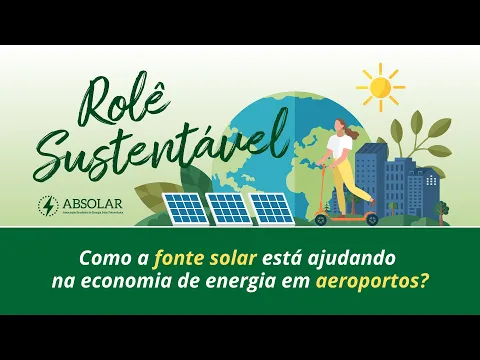

Technical Structure of the Solar Plant and the Basis of Sustainable Innovation at the Terminal
The solar plant installed at the airport consists of about 1,300 photovoltaic panels with an installed capacity of 1 megawatt, enough to fully meet the airport’s energy consumption. The disclosed investment was approximately R$ 2.94 million, an amount directed towards the implementation of electrical infrastructure, engineering, and operational integration.
This technical set-up enables the so-called sustainable innovation, as it combines clean generation technology with medium and long-term financial planning. Cost savings occur not only in the electricity bill but also in expense predictability. This allows airport management to have greater budget control and redirect resources for operational improvements.
Another relevant point is the durability of solar equipment. Photovoltaic panels have a long lifespan and require reduced maintenance compared to conventional systems. Thus, the operational stability becomes a competitive advantage and reinforces the strategic character of the initiative.
Energy Potential of Macaé Drives Sustainable Innovation and Regional Leadership
Macaé was already nationally recognized for its historical connection to the energy and technology sector. The city hosts companies, specialized professionals, and infrastructure geared towards the energy industry, facilitating the implementation of large-scale projects. In this context, the adoption of a sustainable innovation model at the airport arises as a natural extension of this economic vocation.
The choice of the municipality to host the country’s first clean energy airport was not by chance. The favorable environment for technology, combined with the search for modern infrastructure solutions, contributed to making the project viable and well-structured. It reflects planning and economic identity.
In addition, the advancement strengthens the city’s image as a reference in development aligned with environmental awareness. This positioning can attract new investments and consolidate Macaé as an example of integration between economic growth and ecological responsibility.
Economic and Environmental Impacts of the Clean Energy Airport on Brazilian Aviation
The economic benefits of the project are noticeable right from the first operating cycles. Self-generated energy lowers electricity costs and protects the terminal from tariff fluctuations. It is a progressive and predictable saving. At the same time, energy efficiency enhances the airport’s competitiveness compared to other terminals.
From an environmental perspective, the initiative contributes to the reduction of emissions associated with conventional energy consumption. This factor is especially relevant for Brazilian aviation, which faces increasing pressure for more responsible practices aligned with global sustainability goals. The adoption of renewable sources represents a practical response to this scenario.
Moreover, the positive impact extends to public perception. Passengers, companies, and investors tend to value structures committed to environmental responsibility. Therefore, the return is not only financial but also institutional and reputational.
Expansion of the Model and National Influence on Brazilian Aviation
The success of the initiative has paved the way for similar new projects at other airports managed by the same concession group. The proposal to replicate the model demonstrates that Macaé’s experience is not isolated but part of a broader strategy for energy modernization. The model shows scalability and adaptability.
This movement strengthens Brazilian aviation at a time of structural transformation. As airports seek to reduce costs and meet environmental demands, solutions for self-generating renewable energy become strategic alternatives. Thus, the pioneering nature of the Fluminense initiative begins to influence decisions in different regions of the country.
While the international debate involves sustainable fuels and carbon offsets, solar initiatives present immediate and measurable results. This helps to accelerate the energy transition of the national air sector.

A New Horizon for Macaé’s Airport Infrastructure
The milestone achieved on February 10, 2026 highlights that sustainability and economic viability can walk hand in hand. Macaé demonstrates that innovation does not solely depend on large capital but on planning and strategic vision. The airport operating entirely on renewable energy symbolizes a paradigm shift in Brazilian infrastructure.
More than a technical achievement, the project represents a cultural advancement in how cities and companies view environmental responsibility. It shows that concrete solutions are possible when technology, investment, and institutional commitment work together.
The experience is likely to inspire new investments, strengthen renewable energy policies, and consolidate sustainability as a central element of urban development. In this scenario, Macaé ceases to be merely news and becomes a lasting reference in the evolution of aviation and national infrastructure.