Portuguese
  Spanish


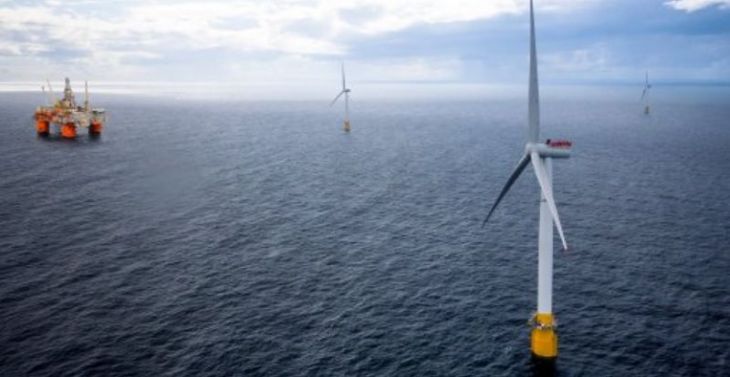

Norwegian Company (Equinor) Seeks to Install Offshore Wind Farm on the Coast of Espírito Santo
The Norwegian oil company Equinor (formerly Statoil) wants to expand its activities in Espírito Santo. The company, which already has oil exploration blocks in the state, aims to use the waters off Espírito Santo to generate clean energy from winds in the Itapemirim region on the southern coast.
Read Also
- Rio de Janeiro Receives Its First Project for the Construction of Offshore Wind Farms That Will Be Located in the Campos Basin
- Solar Energy Grows 22.5% Worldwide in 2019, and Brazil Leads in Latin America, According to Global Renewable Report
- Wind Energy Surpasses 14 GW of Installed Capacity and Rises 7 Positions in the Global Ranking
- Solar Energy – Brazil Reaches Record Number of Connections for Distributed Photovoltaic Generation
Equinor with Another Offshore Wind Energy Project Considering Brazil
Equinor is licensing an offshore wind farm in the state and another one in northern Rio de Janeiro, each with a capacity of 2 gigawatts (GW), totaling 4 GW, according to information published by the newspaper “O Estado de S. Paulo” this Saturday (10). This is the largest wind energy project ever presented to environmental agencies in the country and also the company’s first initiative of this energy source in Brazil, as it has similar operations in Europe since 2017.
To give an idea of the size of Equinor’s venture, the energy generated by the turbines (wind generators) in the two parks would be enough to supply all households in Espírito Santo with some left over. Last year, the energy generated from winds accounted for about 6 GW installed in the country.
-
Giant Batteries Take Center Stage in Chile Auction as Company Offers 960 GWh of Solar Energy for Nighttime Use, Aiming to Stabilize Solar Power Supply

-
After a Year of Success in Switzerland, Solar Railway Attracts Italy’s Interest for Clean Energy Transformation
-
Robots Clean Solar Panels in Desert Power Plants Without Water, Preventing Energy Losses
-
Brazil’s Offshore Wind Energy Potential Worth $1 Trillion Stalled by Long-Delayed Agreement




However, Brazil still has no offshore wind projects. According to Estadão, the projects submitted to the Brazilian Institute of Environment and Renewable Natural Resources (Ibama) have been named Aracatu I, which will be located off the coast of Rio de Janeiro, with energy transmitted via cables to Campos do Goytacazes; and Aracatu II, which will deliver energy to Itapemirim.
Completion of the New Offshore Wind Energy Park is Scheduled to Occur by 2024
The company’s forecast in the study is to complete the projects by 2024. According to the form submitted by the company to environmental authorities, the offshore wind complex will consist of 320 generators (160 in each park) located about 20 kilometers from the coast, in waters between 15 and 35 meters deep.
Equinor also states in the document that it could expand the capacity of each park to 2.33 GW and that the region’s characteristics allow for wind farms of up to 14 MW.
Still without an estimated value, Equinor is expected to invest millions of its budget in Brazil in the coming years on the mega project in Espírito Santo. Due to the size of the venture, the newly appointed interim president of the company in Brazil, Letícia Andrade, stated to the newspaper that the environmental licensing could take between one to three years.