Portuguese
  Spanish


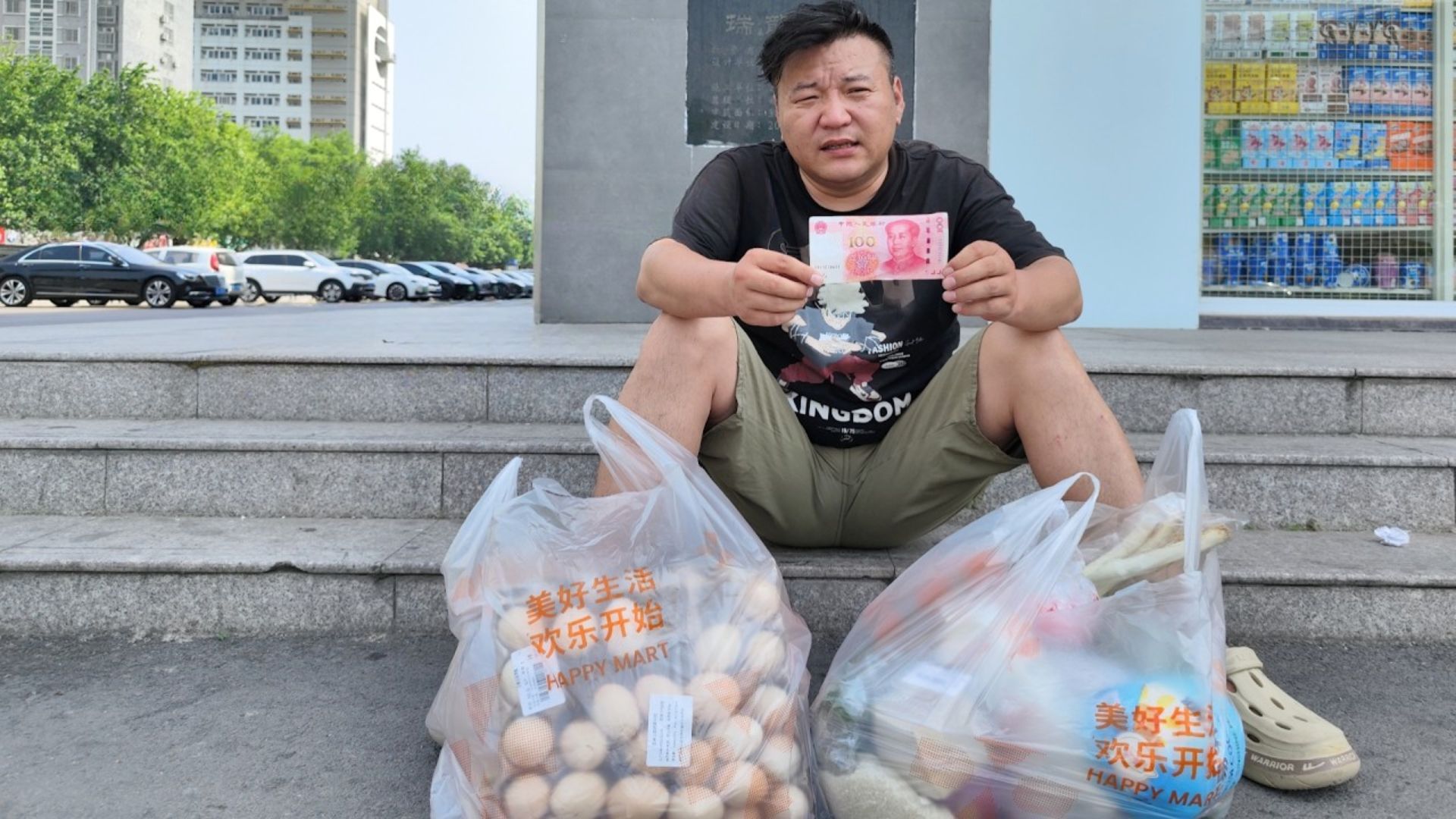

Gangzi lives alone in a small town in China and works as a delivery person. With 100 renminbi, an amount he himself states is equivalent to a day’s local work, he went to a budget supermarket and recorded everything. The cart he filled for $16 will last three days.
Gangzi left home riding his electric bicycle. The supermarket is 3 km away. The heat was 35°C and he went anyway, with 100 renminbi in his pocket. In the video published on the Gangzi channel on YouTube in May 2026, he explains that this amount corresponds to what people earn per day in the region where he lives, in China. The mission was simple: to find out what this single day’s salary can put on the table. The result is a shopping list that will cost Brazilians much more than it seems at first glance.
Gangzi is not filming in Shanghai or Beijing. He is in a city he himself describes as small and ordinary, in a neighborhood budget supermarket, with a cart and 100 renminbi. Each item that goes into the cart has the price noted and displayed on the camera. Nothing is estimated. Nothing is invented.
What 100 renminbi put in the cart in China
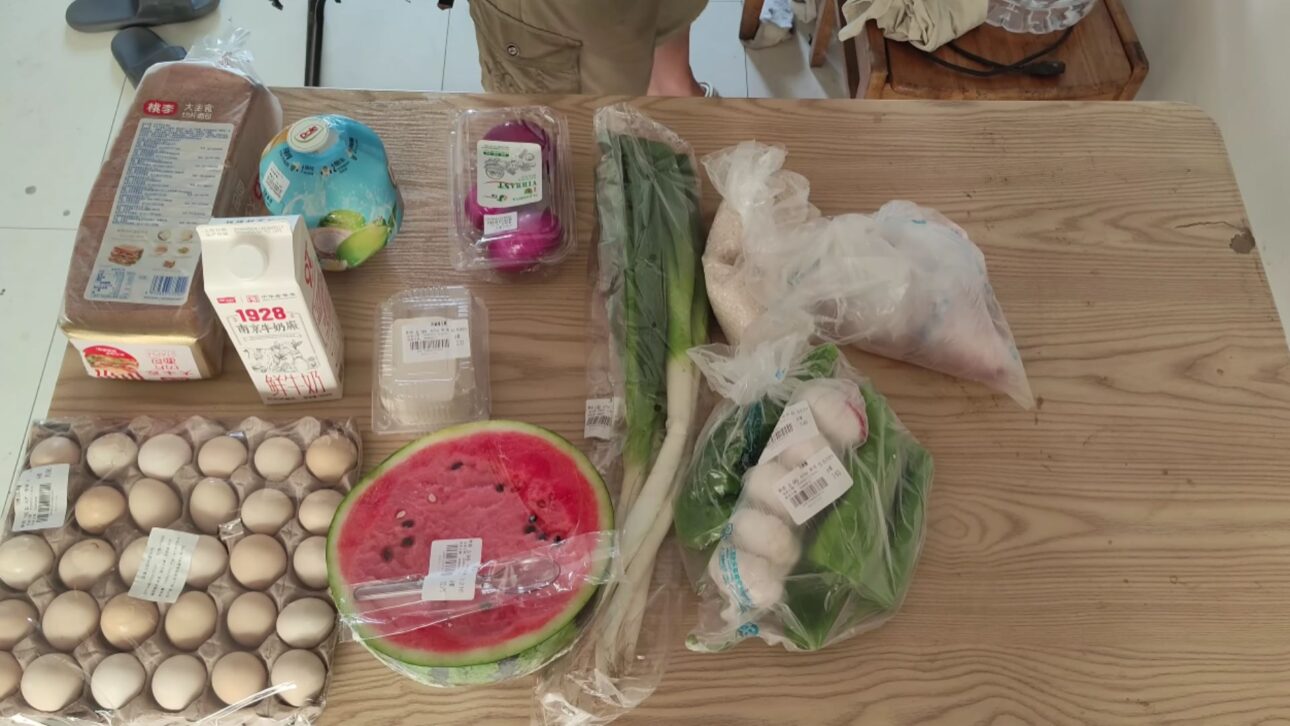
Gangzi bought enough for three days for just 63 cents. Next, 30 eggs for $2.40, which is 8 cents each. Pork, the most common in local cuisine, went into the cart in the cheapest cut available.
-
13-Year-Old Raises Funds to Build Well, Transforming Lives in Cambodian Community Lacking Clean Water

-
Man with Metal Detector Finds Medieval Silver Seal in England, Uncovers 2,000-Year-Old Roman Gem with ‘Richard’s Secret’

-
Brazil’s BNDES Funded Metro and Steel Plant Projects in Venezuela with Brazilian Support

-
Thailand Converts 8 Tons of PET Bottles into 3,500 School Backpacks, Showcasing Circular Economy with Over 40 Factories Involved



The rest included tofu at 30 cents a box, fresh milk at $1.40 a liter, a large bag of bread for $1.40, and green peppers at 42 cents per 500 grams. The watermelon was cut on the spot for $1.81, with a free spoon. At the checkout, the total was $16. Without the coconut he consumed inside the supermarket, it would have been exactly $14.50 for his estimate of three days of food. The fridge, back home, was almost full.
The coconut he drank inside the supermarket
One of the most revealing scenes did not happen at the checkout. Gangzi took a coconut from the cart in the supermarket’s rest area, opened it right there, consumed part of it, put the cork back, and took the rest home. On the way out, he showed the barcode to the cashier and paid as usual. He explains in the video that this is a procedure he frequently practices at that establishment. The supermarket does not prohibit it. There is no embarrassment, no security giving suspicious looks.
This small detail says something bigger about the relationship between consumer and commerce in that context. Gangzi did nothing in secret. It was all open, natural, recorded on camera without hesitation. For him, it’s routine.
Lunch out: $2.50 for a complete meal
After shopping, Gangzi went to have lunch at a local restaurant. He ordered a regional pork dish, a portion of green vegetables, and a seaweed roll. Rice is served for free at will, and most people, according to him, ask for up to two bowls. The total meal cost was $2.50.
He himself notes in the video that the restaurant was a bit expensive by local standards. At a street stall, the same combination would cost at most $1.50. This scale is what makes the experiment revealing: what Gangzi classifies as an expensive meal, the average Brazilian would recognize as cheap in any neighborhood snack bar.
The bill that doesn’t add up the same way in Brazil


Gangzi’s experiment was not designed for international comparison. He went to buy food. But the prices he recorded on camera speak for themselves. Rice at 28 cents per 500 grams. Thirty eggs for $2.40. A bag of bread for $1.40. All this bought with the equivalent of a single day’s work, and there was still change left.
In Brazil, those who go to the supermarket with the equivalent of a day’s minimum wage leave with a significantly emptier cart. Not because Brazilians eat poorly or buy incorrectly, but because the proportion between what is earned per day and what basic foods cost works differently here. This difference is not a cultural curiosity. It is a matter of price structure, agricultural policy, and where what the country produces goes.
A simple purchase with a difficult question to answer
Gangzi did not go to the supermarket for economic analysis. He went to buy food for three days with what he had in his pocket. But what he filmed unintentionally is a direct portrayal of how food purchasing power works in radically different ways depending on where you live and what you earn.
The question the video leaves hanging is not about which country is better or worse. It’s about why the Brazilian worker, who lives in one of the world’s largest food producers, finds it increasingly difficult to fill their own cart with what they earn per day. Gangzi ended the video with a simple question for those watching: “How much does a coconut cost where you live?” The answer, depending on where you read this, already says it all.
The video is from the channel Gangzi, on YouTube (youtube.com/@Chineseruralareas), dedicated to documenting the daily life of a delivery person living alone in a small city in China.
Did you recently go shopping and leave with the feeling that the cart cost more than it should have? Tell us in the comments how much you spent and what you brought home.