






 Portuguese
  Spanish


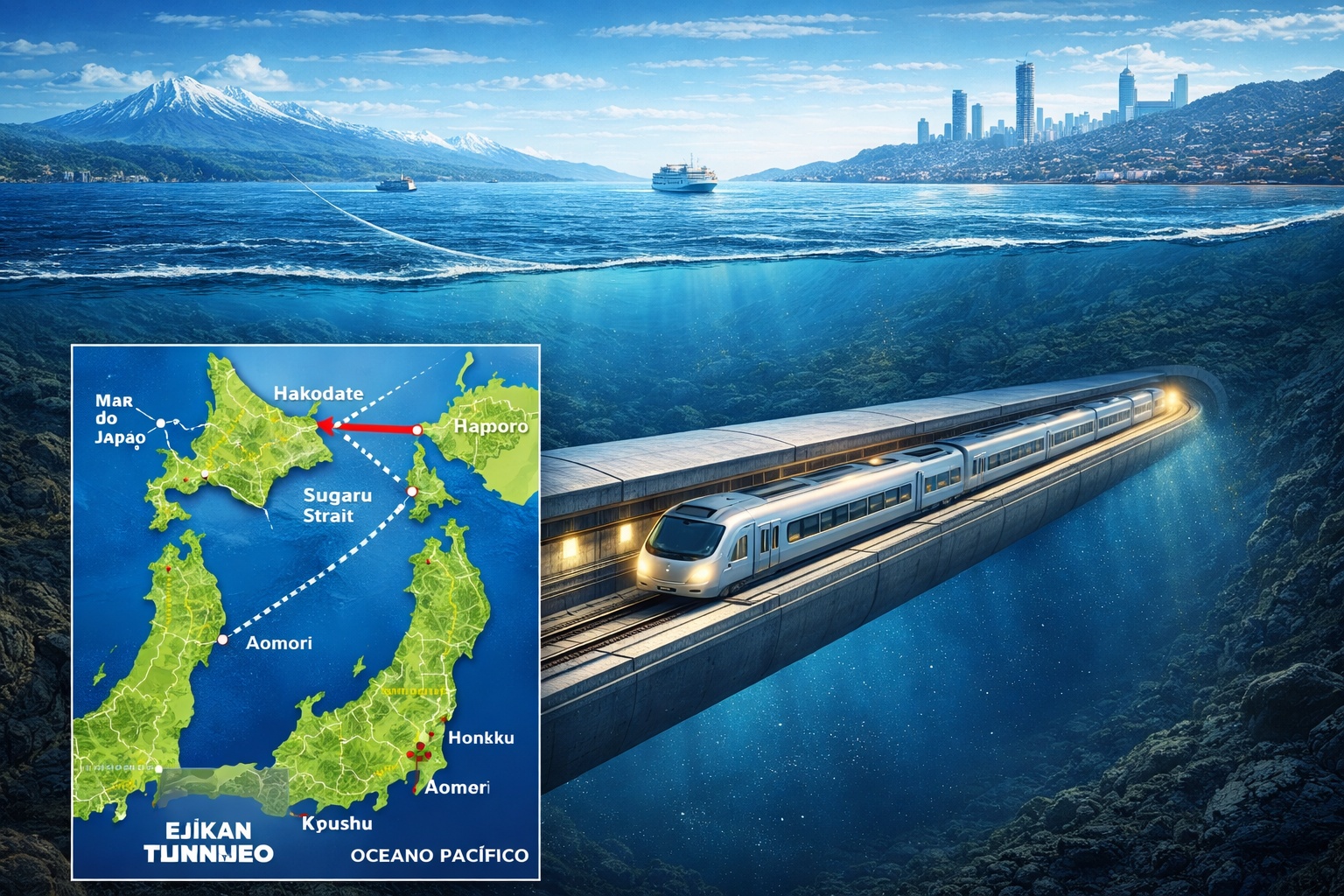


With 53 KM And Up To 240 M Below Sea Level, The Seikan Tunnel Crosses Solid Rock And Connects Honshu And Hokkaido By Rail In Japan.
For centuries, the Tsugaru Strait, in northern Japan, was a natural barrier between the islands of Honshu and Hokkaido. Extreme winds, violent sea currents, and long periods of bad weather made the crossing unstable and dangerous, affecting the transport of people, food, and strategic cargo. For a country highly dependent on efficient logistics, this geographical separation was a permanent risk. The Japanese response was radical: to excavate the Seikan Tunnel, a whole railway tunnel under the ocean floor, crossing solid rock at depths never before achieved by a railway.
A Tunnel Over 53 Kilometers Excavated In Solid Rock
The Seikan Tunnel has a total length of 53.85 kilometers, making it one of the largest railway tunnels on the planet.
Unlike submerged tunnels built by sunk tubes, such as the Marmaray, the Seikan was excavated directly in solid rock, crossing the marine subsoil of the Tsugaru Strait.
-
28-meter, 156-ton titans traveled 20,000 km from China to the port of Santa Catarina: Portonave received 7 fully electric megacranes, part of a R$ 210 million package, to double container handling.

-
They exchanged the idea of a large house for a 35 m² warehouse, spent US$ 12,000 on the structure, and created a tiny house in Colorado with space to live and work.

-
A newly opened terminal in the middle of the Amazon has begun transporting soy and corn through Amapá, eyeing the queue of ships that is congesting the ports in the South.

-
Goodbye to old tiles: renovation technique without construction transforms bathrooms in a few hours, eliminates debris, and reduces costs with coverings using special paints, high-resistance adhesives, and modern finishes that completely renew the space.



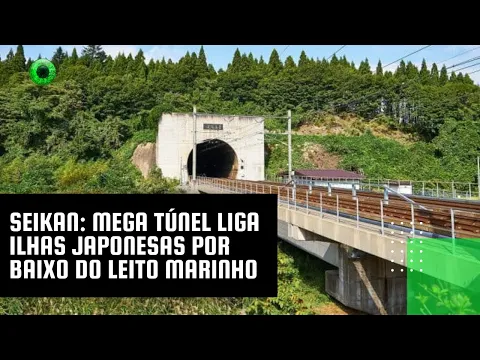

Of this total, approximately 23 kilometers are underwater, in an environment of extremely high geological pressure and constant water infiltration.
The Deepest Railway Tunnel In The World
The Seikan’s great record lies in its depth. At its highest point, the tunnel reaches about 240 meters below sea level, making it the deepest railway tunnel in the world by absolute depth.
This mark is not symbolic. The extreme depth required unprecedented engineering solutions to deal with:
- high hydrostatic pressure,
- geological instability,
- and continuous infiltration of saltwater.
No other railway goes as deep under the ocean.
A Project Born From Maritime Tragedy
The decision to build the Seikan gained urgency after a disaster in 1954, when a typhoon sank several ferries in the Tsugaru Strait, killing more than 1,400 people.
The episode exposed the fragility of maritime transport in the region and accelerated studies for a permanent link between the islands.
The tunnel would not just be an engineering feat, but a direct response to a human and logistical crisis.
Decades Of Excavation In Extreme Conditions
The works officially began in 1971 and lasted for 17 years, until its inauguration in 1988. During this period, engineers and workers faced constant infiltrations, partial collapses, and unexpected pockets of pressurized water.
Millions of cubic meters of rock were excavated, in a slow and extremely controlled process. Any mistake could result in the total flooding of the tunnel.
To make the construction viable and safe, the Seikan was designed with:
- parallel service tunnels,
- emergency galleries,
- advanced ventilation systems,
- and internal maintenance stations.
These structures allow for fire control, evacuation, and maintenance even hundreds of meters below sea level.
A Strategic Railway For Japan
The tunnel directly connects Honshu, the main Japanese island, to Hokkaido, a strategic region for agriculture, energy, and defense. Before the Seikan, transport relied almost exclusively on ferries and favorable weather conditions.
With the railway, Japan ensured:
- continuous supply,
- regional economic integration,
- and greater logistical security in extreme situations.
Adaptation To High Speed
Originally designed for conventional trains, the Seikan was adapted to integrate with the Shinkansen high-speed system. This required structural reinforcements, modernization of tracks, and signaling systems compatible with modern standards.
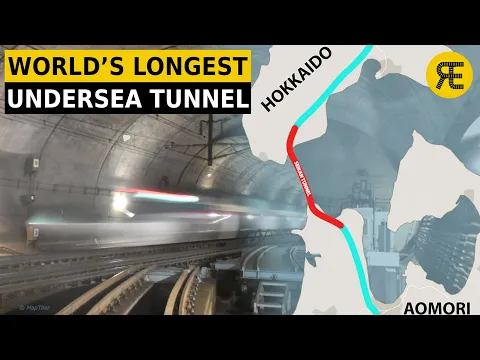
Today, the tunnel is part of the railway corridor that connects northern Japan to the rest of the country with efficiency and reliability.
Excavating Under The Ocean Without Seeing The Surface
One of the greatest technical difficulties was working without any external visual reference. The entire excavation was guided by geological surveys, seismic measurements, and pressure calculations.
In many sections, the margin of error was less than centimeters, even hundreds of meters below the sea.
Since its inauguration, no other railway tunnel has surpassed the Seikan in absolute depth. Even modern projects avoid going down so far, opting for submerged methods or less extreme routes. This makes the Seikan not only a record-holder but a definitive landmark of 20th-century engineering.
When Engineering Conquers The Ocean And Geography
By excavating over 53 kilometers of solid rock and descending 240 meters below sea level, Japan not only connected two islands. It proved that geographical limits can be overcome with planning, time, and extreme engineering.
The Seikan Tunnel remains a reminder that, in some cases, the solution is not above the sea — but far beneath it.




O Japão é um país incrível. A capacidade de realização por si mesmo mostra a resiliência e determinação dessa graça gente. Quisera fosse o Brasil, dirigido pelos japoneses por três décadas… Aí sim teríamos uma revolução de conduta, de produção, de progresso, nos tornando num país de primeiríssimo mundo.
Amen
Devia ser proibido eate tipo de reportagem para a população da baixada santista. Nos sentimos menosprezados neste assunto pelas autoridades que demoraram mais de 50 anos para fazer 1% disto.
We reap what we sow. 17—>>>22
AQUI NA REPÚBLICA das bananas de santos.p o guaruja.